Nanophotonics and Detectors (Coursera)

Nanophotonics and Detectors (Coursera)

This course dives into nanophotonic light emitting devices and optical detectors, including metal semiconductors, metal semiconductor insulators, and pn junctions. We will also cover photoconductors, avalanche photodiodes, and photomultiplier tubes. Weekly homework problem sets will challenge you to apply the principles of analysis and design we cover in preparation for real-world problems.

Class Deals by MOOC List - Click here and see Coursera's Active Discounts, Deals, and Promo Codes.

Course Learning Outcomes
At the end of this course you will be able to…
(1) Use nanophotonic effects (low dimensional structures) to engineer lasers
(2) Apply low dimensional structures to photonic device design
(3) Select and design optical detector for given system and application
Course 2 of 3 in the Active Optical Devices Specialization.

Syllabus

WEEK 1
Quantum Cascade Lasers
The course covers the basics of nanophotonic light emitting devices and optical detectors, including metal semiconductor, metal semiconductor insulator, and pn junctions, photoconductors, avalanche photodiodes and photomultiplier tubes. Low dimensional structures enable an entirely new class of devices. Join me on a journey to understand how this happens and explore powerful examples of successful technologies such as the quantum cascade laser.Module 1 will cover the quantum cascade laser, a laser design based on intersub-band transitions, that enables very long wavelength lasers. It will also talk about lasers that operate on intraband transitions, using low dimensional structures, which enable further control over carrier concentrations.

WEEK 2
Confined photons
In this unit, we will learn how to confine photons just as we do with electrons. This gives us power over the allowed modes of emission, allowing us to enhance the performance of lasers as well as develop 'threshold-less' lasers. I hope you enjoy this exciting topic as much as I do.

WEEK 3
photonic detection
In this module, you will learn about the basics of detection and the key performance metrics that are used to evaluate detectors including noise equivalent power and detectivity. This lays the building blocks for fundamental understanding, design, and use of different photonic detection technology. This is core information that should be in the wheelhouse of any photonics researcher or engineer.

WEEK 4
metal insulator semiconductor structures
In this unit, you will learn about the fundamentals of how metal insulator semiconductor devices operate, their advantages and challenges they face. This information is particularly useful for understanding the operation of charge-coupled devices, discussed in the next section.

WEEK 5
Charge Coupled Devices (CCDs) and Photoconductors
In this module, you will learn about two powerful detection technologies: charge coupled devices (CCDs) based on metal insulator semiconductor structures and photoconductors. These technologies are very useful for photonic systems.

WEEK 6
P/N Junctions and Avalanche photodiodes (APDs)
In this module, you will learn about another very important detector technology: p-n junctions. These junctions can be used to be photodiodes as well as avalanche photodiodes. We will learn these important technologies function, with applications ranging from microscopy to light detection and ranging (LIDAR).
Go to Class
MOOC List is learner-supported. When you buy through links on our site, we may earn an affiliate commission.

Related Courses

The Science of the Solar System (Coursera) Coursera
Caltech

The Science of the Solar System (Coursera)

Learn about the science behind the current exploration of the solar system in this free class. Use principles from physics, chemistry, biology, and geology to understand the latest from Mars, comprehend the outer solar system, ponder planets outside our solar system, and search for habitability in our neighborhood and beyond. This course is generally taught at an advanced level assuming a prior knowledge of undergraduate math and physics, but the majority of the concepts and lectures can be understood without these prerequisites.

Jun 22nd 2026
5-12 Weeks
Light Emitting Diodes and Semiconductor Lasers (Coursera) Coursera
University of Colorado Boulder

Light Emitting Diodes and Semiconductor Lasers (Coursera)

You will learn about semiconductor light emitting diodes (LEDs) and lasers, and the important rules for their analysis, planning, design, and implementation. You will also apply your knowledge through challenging homework problem sets to cement your understanding of the material and prepare you to apply in your career.

Jun 22nd 2026
5-12 Weeks
Digital Thread: Implementation (Coursera) Coursera
University at Buffalo,The State University of New York

Digital Thread: Implementation (Coursera)

There are opportunities throughout the design process of any product to make significant changes, and ultimately impact the future of manufacturing, by embracing the digital thread. In this course, you will dig into the transformation taking place in how products are designed and manufactured throughout the world. It is the second of two courses that focuses on the "digital thread" – the stream that starts at the creation of a product concept and continues to accumulate information and data throughout the product life cycle.

Jun 22nd 2026
5-12 Weeks
Quantitative Methods (Coursera) Coursera
University of Amsterdam

Quantitative Methods (Coursera)

Discover the principles of solid scientific methods in the behavioral and social sciences. Join us and learn to separate sloppy science from solid research! This course will cover the fundamental principles of science, some history and philosophy of science, research designs, measurement, sampling and ethics. The course is comparable to a university level introductory course on quantitative research methods in the social sciences, but has a strong focus on research integrity. We will use examples from sociology, political sciences, educational sciences, communication sciences and psychology.

Jun 22nd 2026
5-12 Weeks
Thermodynamique : fondements (Coursera) Coursera
École Polytechnique Fédérale de Lausanne

Thermodynamique : fondements (Coursera)

Ce cours vous apportera une compréhension des concepts fondamentaux de la thermodynamique du point de vue de la physique, de la chimie et de l’ingénierie. Il est scindé un deux MOOCs. Dans la première partie, le Professeur J.-Ph. Ansermet de l’EPFL et son collaborateur le Dr. Sylvain Bréchet ont rassemblé en quatre leçons tous les principes fondamentaux de la thermodynamique. La deuxième partie du MOOC illustre l’approche thermodynamique par une série d’applications présentées par des spécialistes provenant de diverses institutions partenaires du réseau RESCIF.

Jun 22nd 2026
4 Weeks
Introduction to Embedded Systems Software and Development Environments (Coursera) Coursera
University of Colorado Boulder

Introduction to Embedded Systems Software and Development Environments (Coursera)

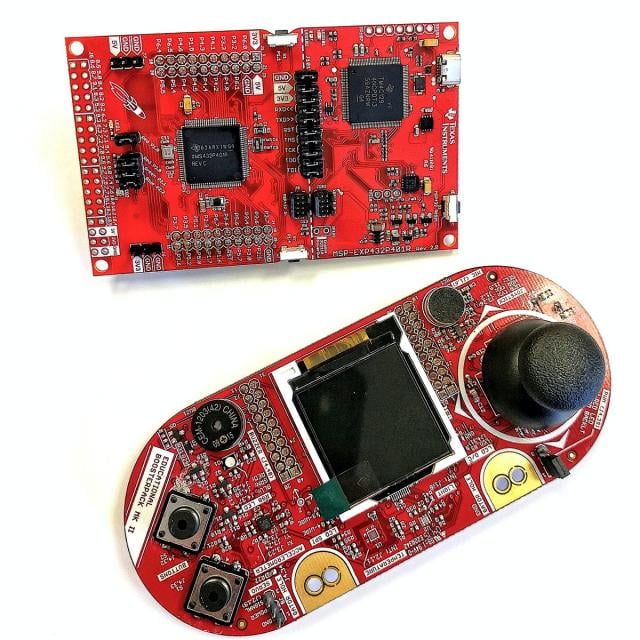
Welcome to the Introduction to Embedded Systems Software and Development Environments. This course is focused on giving you real world coding experience and hands on project work with ARM based Microcontrollers. You will learn how to implement software configuration management and develop embedded software applications. Course assignments include creating a build system using the GNU Toolchain GCC, using Git version control, and developing software in Linux on a Virtual Machine.

Jun 22nd 2026
4 Weeks
Converter Circuits (Coursera) Coursera
University of Colorado Boulder

Converter Circuits (Coursera)

This course introduces more advanced concepts of switched-mode converter circuits. Realization of the power semiconductors in inverters or in converters having bidirectional power flow is explained. Power diodes, power MOSFETs, and IGBTs are explained, along with the origins of their switching times. Equivalent circuit models are refined to include the effects of switching loss. The discontinuous conduction mode is described and analyzed. A number of well-known converter circuit topologies are explored, including those with transformer isolation.

Jun 22nd 2026
4 Weeks
Mechanics of Materials I: Fundamentals of Stress & Strain and Axial Loading (Coursera) Coursera
Georgia Institute of Technology

Mechanics of Materials I: Fundamentals of Stress & Strain and Axial Loading (Coursera)

This course explores the topic of solid objects subjected to stress and strain. The methods taught in the course are used to predict the response of engineering structures to various types of loading, and to analyze the vulnerability of these structures to various failure modes. Axial loading with be the focus in this course.

Jun 22nd 2026
5-12 Weeks
Digital Manufacturing & Design (Coursera) Coursera
University at Buffalo,The State University of New York

Digital Manufacturing & Design (Coursera)

This course will expose you to the transformation taking place, throughout the world, in the way that products are being designed and manufactured. The transformation is happening through digital manufacturing and design (DM&D) – a shift from paper-based processes to digital processes in the manufacturing industry. By the end of this course, you’ll understand what DMD is and how it is impacting careers, practices and processes in companies both large and small.

Jun 22nd 2026
2 Weeks
Creativity, Innovation, and Change (Coursera) Coursera
Pennsylvania State University

Creativity, Innovation, and Change (Coursera)

Our lives are being disrupted by pandemics, global warming, wars, political chaos, and technological innovations. We must prepare for an unpredictable and unknown future - and this is the goal of the course on Creativity, Innovation and Transformation (CIT)! CIT is an upgrade of the former Creativity, Innovation and Change (CIC) course, which is now streamlined and updated with a new module on Transformation.

Jun 22nd 2026
4 Weeks