Anatomy: Human Neuroanatomy (Coursera)

Anatomy: Human Neuroanatomy (Coursera)

In this anatomy course, part of the Anatomy Specialization, you will be introduced to the central and peripheral nervous systems. You will learn about basic neuroanatomy, sensory pathways, motor pathways and the autonomic nervous system. The course includes illustrated lecture videos and quizzes to help you expand and test your knowledge of the nervous system.

Class Deals by MOOC List - Click here and see Coursera's Active Discounts, Deals, and Promo Codes.

By the end of this course, you will have a better understanding of how the entire body influences, and is influenced, by the nervous system.
What You Will Learn

  • Learn the gross anatomy of the central and peripheral nervous systems, and the names and functions of the cranial nerves
  • Understand how sensory information enters the brain
  • Understand how the brain and spinal cord control the muscles
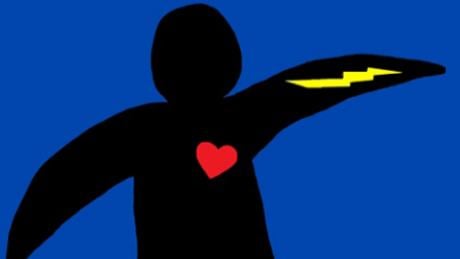
  • Understand how the autonomic nervous system activates the fight or flight response

Course 3 of 4 in the Anatomy Specialization.

Syllabus

WEEK 1: Gross Anatomy of the Nervous System
WEEK 2: Spinal Cord
WEEK 3: Autonomics
WEEK 4: Motor Systems
WEEK 5: Sensory Systems
WEEK 6: Brain Stem and Cranial Nerves
WEEK 7: Cortex

Go to Class
MOOC List is learner-supported. When you buy through links on our site, we may earn an affiliate commission.
Related Courses

Medical Neuroscience (Coursera) Coursera
Duke University

Medical Neuroscience (Coursera)

Medical Neuroscience explores the functional organization and neurophysiology of the human central nervous system, while providing a neurobiological framework for understanding human behavior. In this course, you will discover the organization of the neural systems in the brain and spinal cord that mediate sensation, motivate bodily action, and integrate sensorimotor signals with memory, emotion and related faculties of cognition. The overall goal of this course is to provide the foundation for understanding the impairments of sensation, action and cognition that accompany injury, disease or dysfunction in the central nervous system. The course will build upon knowledge acquired through prior studies of cell and molecular biology, general physiology and human anatomy, as we focus primarily on the central nervous system.

Oct 12th 2026
13-24 Weeks
Movements Are Controlled By Muscle Forces (Coursera) Coursera
University of Colorado Boulder

Movements Are Controlled By Muscle Forces (Coursera)

Movements Are Controlled By Muscle Forces is the first course of the specialization "Science of Movement". In this course, we will delve into the mechanisms by which our nervous system communicates with our muscles, allowing us to perform a wide range of coordinated movements with precision. Whether you are a fitness enthusiast, a sports coach, a medical student, or simply curious about the inner workings of your body, this course will provide you with a comprehensive understanding of how the nervous system plays a vital role in enabling our muscles to produce movements.

Oct 5th 2026
4 Weeks
Essential Human Biology: Cells and Tissues (edX) EdX
University of Adelaide,AdelaideX

Essential Human Biology: Cells and Tissues (edX)

An introduction to the human body's most fundamental building blocks and their behaviours in health and disease. Are you preparing for a health-related career, or planning to study in the health sciences? Perhaps you're just keen to learn more about the wonders of the human body? Our bodies are amazing but complex biological machines. This course will provide you with an outstanding foundation of knowledge in human anatomy and physiology.

Self Paced
Self-Paced
Human Anatomy: Musculoskeletal Cases (edX) EdX
HarvardX,Harvard University

Human Anatomy: Musculoskeletal Cases (edX)

Learn the anatomy basic to understanding five musculoskeletal injuries commonly seen in primary care medicine and orthopedic clinical specialty practice. Follow hypothetical patients from injury to operating room. Human Anatomy: Musculoskeletal Cases invites students to join medical and basic science faculty at Harvard Medical School (HMS) to learn about musculoskeletal injuries commonly seen in clinical practice.

Self Paced
Self-Paced
So You Want to Study Life Science? (FutureLearn) FutureLearn
University of Glasgow

So You Want to Study Life Science? (FutureLearn)

Explore the exciting subjects within life sciences and the rewarding careers that studying life sciences at university lead to. This short, free online course will introduce you to studying life sciences at university level.We’ll take you on a whistle stop tour of the exciting world of life sciences, exploring the vast array of subjects within the discipline – from anatomy to zoology and everything in between, including immunology, cellular and molecular biology, genetics, physiology and parasitology.

Self Paced
2 Weeks
Fundamental Neuroscience for Neuroimaging (Coursera) Coursera
Johns Hopkins University

Fundamental Neuroscience for Neuroimaging (Coursera)

Neuroimaging methods are used with increasing frequency in clinical practice and basic research. Designed for students and professionals, this course will introduce the basic principles of neuroimaging methods as applied to human subjects research and introduce the neuroscience concepts and terminology necessary for a basic understanding of neuroimaging applications.

Oct 5th 2026
4 Weeks
Vital Signs: Understanding What the Body Is Telling Us (Coursera) Coursera
University of Pennsylvania

Vital Signs: Understanding What the Body Is Telling Us (Coursera)

The vital signs – heart rate, blood pressure, body temperature, respiration rate, and pain – communicate important information about the physiological status of the human body. In this six-part course we explore the anatomy and physiology underlying the vital signs so that you will develop a systematic, integrated understanding of how the body functions.

Oct 19th 2026
5-12 Weeks
Anatomy & Physiology: Support & Movement (Coursera) Coursera
Rice University

Anatomy & Physiology: Support & Movement (Coursera)

The second course begins the systems-based approach to human anatomy and physiology at the organ, organ system, and organism level. Three major body systems related to support and movement will be explored in detail: the skeletal and muscular systems. Course material will cover both the structure (anatomy) and function (physiology) of each system with direct application to human development and disease.

Oct 5th 2026
4 Weeks