Moral Foundations of Politics (Coursera)

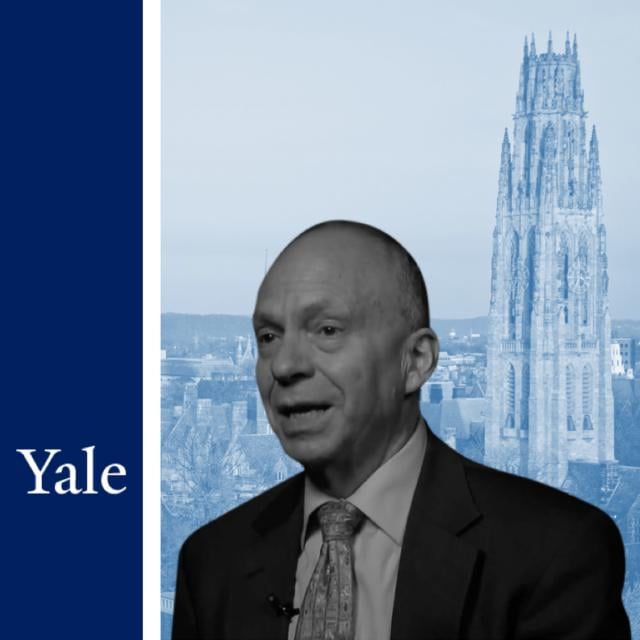
Offered by Yale University,
Moral Foundations of Politics (Coursera)

When do governments deserve our allegiance, and when should they be denied it? This course explores the main answers that have been given to this question in the modern West. We start with a survey of the major political theories of the Enlightenment: Utilitarianism, Marxism, and the social contract tradition. In each case, we begin with a look at classical formulations, locating them in historical context, but then shift to the contemporary debates as they relate to politics today.

Class Deals by MOOC List - Click here and see Coursera's Active Discounts, Deals, and Promo Codes.

Next we turn to the rejection of Enlightenment political thinking, again exploring both classical and contemporary formulations. The last part of the course deals with the nature of, and justifications for, democratic politics, and their relations to Enlightenment and Anti-Enlightenment political thinking.
In addition to exploring theoretical differences among the various authors discussed, considerable attention is devoted to the practical implications of their competing arguments. To this end, we discuss a variety of concrete problems, including debates about economic inequality, affirmative action and the distribution of health care, the limits of state power in the regulation of speech and religion, and difficulties raised by the emerging threat of global environmental decay.

Syllabus

WEEK 1
Welcome to Moral Foundations of Politics
Welcome to the course. Meet your instructor and learn about the structure of the course and what makes it distinctive.

WEEK 2
Enlightenment Political Theory
This module explores what makes a government legitimate. More specifically, was the Third Reich illegitimate and was Eichmann breaking some kind of higher law here?

WEEK 3
Utilitarianism: Classical and Neoclassical
Classical and neoclassical utilitarianism are examined in this module starting with the historical context. Professor Shapiro then shifts to the contemporary debates as they relate to politics today.

WEEK 4
Marxism, Its Failures and Its Legacy
This module on Marx's Enlightenment theory focuses on the foundations of capitalism theory and its major weaknesses.

WEEK 5
The Social Contract Tradition I
This module looks at classical formulations of the Social Contract Tradition, locating them in historical context, but then shifts to the contemporary debates as they relate to politics today.

WEEK 6
The Social Contract Tradition II
This module looks at classical formulations of the Social Contract Tradition, locating them in historical context, but then shifts to the contemporary debates as they relate to politics today.

WEEK 7
Anti-Enlightenment Politics
This module explores the rejection of Enlightenment political thinking, again exploring both classical and contemporary formulations.

WEEK 8
Democracy
This module deals with the nature of, and justifications for, democratic politics, and their relations to Enlightenment and Anti-Enlightenment political thinking.

Go to Class
MOOC List is learner-supported. When you buy through links on our site, we may earn an affiliate commission.

Related Courses

Food Ethics (Coursera) Coursera
Princeton University

Food Ethics (Coursera)

We are what we eat--morally as well as molecularly. So how should concerns about animals, workers, the environment, and community inform our food choices? Can we develop viable foodways for growing populations while respecting race, ethnic, and religious differences? What does food justice look like in a global industrial food system where there are massive differences in resources, education, and food security?

Sep 14th 2026
5-12 Weeks
Découvrir l'anthropologie (edX) EdX
LouvainX,Université Catholique de Louvain - UCL

Découvrir l'anthropologie (edX)

Expérimentez un autre regard sur les sociétés humaines avec des chercheurs en anthropologie prospective. Comment les humains s’organisent-ils en sociétés ? Qu’appelle-t-on « familles » et comment se constituent-elles ? Quel regard et quels types d’analyse l’anthropologie propose-t-elle sur les systèmes de parenté, symboliques, politiques, religieux ?

Self Paced
Self-Paced
Citizen Politics in America: Public Opinion, Elections, Interest Groups, and the Media (edX) EdX
HarvardX,Harvard University

Citizen Politics in America: Public Opinion, Elections, Interest Groups, and the Media (edX)

Learn about the forces in American politics that seek to influence the electorate and shift the political landscape. Public opinion has a powerful yet inexact influence on elected officials. Politicians risk their careers if they ignore it, yet its power is not easy to capture nor quantify. This course will look at how political parties, campaigns, social movements, special interests, and the news media all play a role in influencing public opinion.

Self Paced
Self-Paced
The Ancient Greeks (Coursera) Coursera
Wesleyan University

The Ancient Greeks (Coursera)

This is a survey of ancient Greek history from the Bronze Age to the death of Socrates in 399 BCE. Along with studying the most important events and personalities, we will consider broader issues such as political and cultural values and methods of historical interpretation.

Sep 21st 2026
5-12 Weeks
Global Politics (Coursera) Coursera
University of Naples Federico II

Global Politics (Coursera)

The course explains why international studies originating from the West are currently evolving towards a planetary approach to World politics, with a particular focus on global order and local disorders. Thinking globally helps explain new linkages between changes in the natural environment (demography, climate) and transformations of institutional designs.

Sep 21st 2026
3 Weeks
The Making of the US President: A Short History in Five Elections (Coursera) Coursera
University of Edinburgh

The Making of the US President: A Short History in Five Elections (Coursera)

As Americans choose their next president, this course explores the history of presidential elections via five case studies. It tells the story of key campaigns in US history, and by doing so it explores how politics changed over time—and how understanding the past sheds light on the current campaign.

No sessions available
3 Weeks
Taiwan Law in Focus: Economy, Society and Democracy (Coursera) Coursera
National Taiwan University

Taiwan Law in Focus: Economy, Society and Democracy (Coursera)

“Taiwan Law in Focus” is the first online course provided by the College of Law, National Taiwan University. This course will give you an introduction to the legal system in Taiwan, which includes the topics of Constitution, administration law, criminal law, civil law, corporative law, and some related issues. You will learn about the brief history of Taiwan’s legal system and its transition in recent decades.

Oct 5th 2026
5-12 Weeks
The Modern and the Postmodern (Part 2) (Coursera) Coursera
Wesleyan University

The Modern and the Postmodern (Part 2) (Coursera)

This course examines how the idea of "the modern" develops at the end of the 18th century in European philosophy and literature, and how being modern (or progressive, or hip) became one of the crucial criteria for understanding and evaluating cultural change. Are we still in modernity, or have we moved beyond the modern to the postmodern?

Oct 5th 2026
5-12 Weeks
Securing Digital Democracy (Coursera) Coursera
University of Michigan

Securing Digital Democracy (Coursera)

In this course, you'll learn what every citizen should know about the security risks--and future potential — of electronic voting and Internet voting. We'll take a look at the past, present, and future of election technologies and explore the various spaces intersected by voting, including computer security, human factors, public policy, and more.

Sep 21st 2026
5-12 Weeks
Pets, Politics and Pandemics (Coursera) Coursera
Columbia University

Pets, Politics and Pandemics (Coursera)

This course is designed to be a fun and accessible introduction to the topic of systems theory. Systems theory describes a number of fundamental concepts that undergird a broad array of phenomena across many different social, political and natural arenas. It is from this broad applicability that the course derives its title: Pets (social), politics (political and economic) and Pandemics (natural).

Oct 5th 2026
5-12 Weeks