Molecular Evolution (Bioinformatics IV) (Cousera)

Molecular Evolution (Bioinformatics IV) (Cousera)

In the previous course in the Specialization, we learned how to compare genes, proteins, and genomes. One way we can use these methods is in order to construct a "Tree of Life" showing how a large collection of related organisms have evolved over time.

Class Deals by MOOC List - Click here and see Coursera's Active Discounts, Deals, and Promo Codes.

In the first half of the course, we will discuss approaches for evolutionary tree construction that have been the subject of some of the most cited scientific papers of all time, and show how they can resolve quandaries from finding the origin of a deadly virus to locating the birthplace of modern humans.
In the second half of the course, we will shift gears and examine the old claim that birds evolved from dinosaurs. How can we prove this? In particular, we will examine a result that claimed that peptides harvested from a T. rex fossil closely matched peptides found in chickens. In particular, we will use methods from computational proteomics to ask how we could assess whether this result is valid or due to some form of contamination.
Finally, you will learn how to apply popular bioinformatics software tools to reconstruct an evolutionary tree of ebolaviruses and identify the source of the recent Ebola epidemic that caused global headlines.
Course 4 of 7 in the Bioinformatics Specialization.

Syllabus

WEEK 1
Introduction to Evolutionary Tree Construction
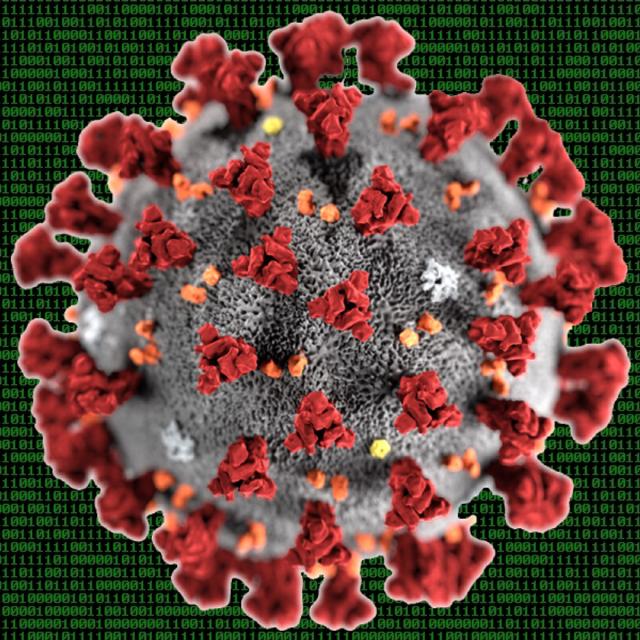
Welcome to our class! In this class, we will consider the following two central biological questions (the computational approaches needed to solve them are shown in parentheses): Weeks 1-3: Which Animal Gave Us SARS? (Evolutionary tree construction) Weeks 4-5: Was T. rex Just a Big Chicken?(Combinatorial Algorithms) In Week 6, you will complete a Bioinformatics Application Challenge to apply evolutionary tree construction algorithms in order to determine the origin of the recent ebola outbreak in Africa.

WEEK 2
More Algorithms for Constructing Trees from Distance Matrices
Last week, we started to see how evolutionary trees can be constructed from distance matrices. This week, we will encounter additional algorithms for this purpose, including the neighbor-joining algorithm, which has become one of the top-ten most cited papers in all of science since its introduction three decades ago.

WEEK 3
Constructing Evolutionary Trees from Characters
Over the last two weeks, we have seen several different algorithms for constructing evolutionary trees from distance matrices. This week, we will conclude the current chapter by considering what happens if we use properties called "characters" instead of distances. We will also see how to infer the ancestral states of organisms in an evolutionary tree, and consider whether it is possible to define an efficient algorithm for this task.

WEEK 4
Did birds evolve from dinosaurs? Over the next two weeks, we will see how we could analyze molecular evidence in support of this theory.

WEEK 5
Resolving the T. rex Peptides Mystery?
Last week, we asked whether it is possible for dinosaur peptides to survive locked inside of a fossil for 65 million years. This week, we will see what this question has to do with statistics; in the process, we will see how a monkey typing out symbols on a typewriter can be used to address it.

WEEK 6
Bioinformatics Application Challenge
In this week's Bioinformatics Application Challenge, we will use reconstruct an evolutionary tree of ebolaviruses and use it to determine the origin of the pathogen that caused the recent outbreak in Africa.


Go to Class
MOOC List is learner-supported. When you buy through links on our site, we may earn an affiliate commission.

Related Courses

The Social and Technical Context of Health Informatics (Coursera) Coursera
Johns Hopkins University

The Social and Technical Context of Health Informatics (Coursera)

Improving health and healthcare institutions requires understanding of data and creation of interventions at the many levels at which health IT interact and affect the institution. These levels range from the external “world” in which the institution operates down to the specific technologies. Data scientists find that, when they aim at implementing their models in practice, it is the “socio” components that are both novel to them and mission critical to success. At the end of this course, students will be able to make a quick assessment of a health informatics problem—or a proposed solution—and to determine what is missing and what more needs to be learned.

Jun 22nd 2026
4 Weeks
Philosophy, Science and Religion: Religion and Science (Coursera) Coursera
University of Edinburgh

Philosophy, Science and Religion: Religion and Science (Coursera)

Philosophy, Science and Religion mark three of the most fundamental modes of thinking about the world and our place in it. Are these modes incompatible? Put another way: is the intellectually responsible thing to do to ‘pick sides’ and identify with one of these approaches at the exclusion of others? Or, are they complementary or mutually supportive? As is typical of questions of such magnitude, the devil is in the details. For example, it is important to work out what is really distinctive about each of these ways of inquiring about the world. In order to gain some clarity here, we’ll be investigating what some of the current leading thinkers in philosophy, science and religion are actually doing.

Jun 16th 2026
5-12 Weeks
Genome Sequencing (Bioinformatics II) (Coursera) Coursera
University of California, San Diego

Genome Sequencing (Bioinformatics II) (Coursera)

You may have heard a lot about genome sequencing and its potential to usher in an era of personalized medicine, but what does it mean to sequence a genome? Biologists still cannot read the nucleotides of an entire genome as you would read a book from beginning to end. However, they can read short pieces of DNA. In this course, we will see how graph theory can be used to assemble genomes from these short pieces. We will further learn about brute force algorithms and apply them to sequencing mini-proteins called antibiotics.

Jun 22nd 2026
5-12 Weeks
Healthcare Data Management and Information Systems (Coursera) Coursera
Northeastern University

Healthcare Data Management and Information Systems (Coursera)

This course is the continuation of the Health Informatics for Healthcare Professionals course. If you have not yet taken the introductory course, it is recommend that you complete that course prior to this course. The foundational knowledge from the introduction is carried through in this deeper dive into informatics in healthcare.

Jun 22nd 2026
4 Weeks
Philosophy, Science and Religion: Science and Philosophy (Coursera) Coursera
University of Edinburgh

Philosophy, Science and Religion: Science and Philosophy (Coursera)

Philosophy, Science and Religion mark three of the most fundamental modes of thinking about the world and our place in it. Are these modes incompatible? Put another way: is the intellectually responsible thing to do to ‘pick sides’ and identify with one of these approaches at the exclusion of others? Or, are they complementary or mutually supportive? As is typical of questions of such magnitude, the devil is in the details. For example, it is important to work out what is really distinctive about each of these ways of inquiring about the world. In order to gain some clarity here, we’ll be investigating what some of the current leading thinkers in philosophy, science and religion are actually doing.

Jun 22nd 2026
5-12 Weeks
Predictive Modeling and Transforming Clinical Practice (Coursera) Coursera
University of Colorado System

Predictive Modeling and Transforming Clinical Practice (Coursera)

This course teaches you the fundamentals of transforming clinical practice using predictive models. This course examines specific challenges and methods of clinical implementation, that clinical data scientists must be aware of when developing their predictive models.

Jun 22nd 2026
5-12 Weeks
Healthcare Data Literacy (Coursera) Coursera
University of California, Davis

Healthcare Data Literacy (Coursera)

This course will help lay the foundation of your healthcare data journey and provide you with knowledge and skills necessary to work in the healthcare industry as a data scientist. Healthcare is unique because it is associated with continually evolving and complex processes associated with health management and medical care.

Jun 22nd 2026
4 Weeks
Healthcare Data Quality and Governance (Coursera) Coursera
University of California, Davis

Healthcare Data Quality and Governance (Coursera)

Career prospects are bright for those qualified to work with healthcare data or as Health Information Management (HIM) professionals. Perhaps you work in data analytics but are considering a move into healthcare, or you work in healthcare but are considering a transition into a new role. In either case, Healthcare Data Quality and Governance will provide insight into how valuable data assets are protected to maintain data quality. This serves care providers, patients, doctors, clinicians, and those who carry out the business of improving health outcomes.

Jun 22nd 2026
4 Weeks
Dino 101: Dinosaur Paleobiology (Coursera) Coursera
University of Alberta

Dino 101: Dinosaur Paleobiology (Coursera)

Dino 101: Dinosaur Paleobiology is a 12-lesson course teaching a comprehensive overview of non-avian dinosaurs. Topics covered: anatomy, eating, locomotion, growth, environmental and behavioral adaptations, origins and extinction. Lessons are delivered from museums, fossil-preparation labs and dig sites. Estimated workload: 3-5 hrs/week.

Jun 27th 2026
5-12 Weeks