EdX

Molecular Biology - Part 2: Transcription and Transposition (edX)

Offered by MIT, MITx,
Molecular Biology - Part 2: Transcription and Transposition (edX)

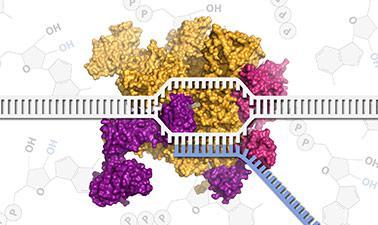
Strengthen your scientific thinking and experimental design skills in this adventure through transcription and transposition. In Part 2 of this Molecular Biology course, you’ll explore transcription of DNA to RNA, a key part of the central dogma of biology and the first step of gene expression.

Class Deals by MOOC List - Click here and see EdX's Active Discounts, Deals, and Promo Codes.

Did you know that transposable elements, the genetic information that can move from location to location, make up roughly 50 % of the human genome? Did you know that scientists have linked their movement into specific genes to the causes of certain diseases? You’ll also learn how these “jumping genes” work and how scientists study them in Molecular Biology: Transcription and Transposition.

Are you ready to go beyond the “what" of scientific information presented in textbooks and explore how scientists deduce the details of these molecular models?
Take a behind-the-scenes look at modern molecular genetics, from the classic experimental events that identified the proteins and elements involved in transcription and transposition to cutting-edge assays that apply the power of genome sequencing. We've designed the problems in this course to build your experimental design and data analysis skills.
Let’s explore the limits of our current knowledge about the transcription machinery and mechanisms of transposition.

What you'll learn:

  • How to compare and contrast transcription in prokaryotes and eukaryotes
  • How to describe several mechanisms of transposition
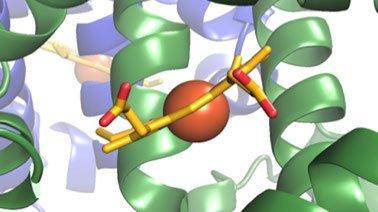
  • How to analyze protein structures to infer functional information
  • How to design the best experiment to test a hypothesis
  • How to interpret data from transcription and transposition experiments

Prerequisites:
7.00x Introduction to Biology or similar (undergraduate biochemistry, molecular biology, and genetics), 7.28.1x Molecular Biology or similar (advanced DNA replication and repair).

Syllabus

Week 1 : Machinery and Promoters of Bacterial Transcription
Week 2 : Bacterial Regulation of Bacterial Transcription
Week 3 : Machinery and Promoters of Eukaryotic Transcription
Week 4 : Regulation of Eukaryotic Transcription I
Week 5 : Regulation of Eukaryotic Transcription II
Week 6 : Transposition
Week 7 : CRISPR

Go to Class
MOOC List is learner-supported. When you buy through links on our site, we may earn an affiliate commission.

Related Courses

Cell Biology: Mitochondria (edX) EdX
HarvardX,Harvard University

Cell Biology: Mitochondria (edX)

A human-centered approach to the fundamentals of cell biology with a focus on the power plants of the cell - mitochondria. The cell is a powerful case study to help us explore the functional logic of living systems. All organisms, from single-celled algae to complex multicellular organisms like us, are made up of cells. In this course, you will learn the how and why of biology by exploring the function of the molecular components of cells, and how these cellular components are organized in a complex hierarchy.

Self Paced
Self-Paced
Innovate & Regulate: Drug Research, Costs, Clinical Trials & Approval (edX) EdX
Davidson College,DavidsonX

Innovate & Regulate: Drug Research, Costs, Clinical Trials & Approval (edX)

At some point in their life, essentially everyone needs to use medication for some type of disease treatment or cure. While medications offer great benefits, the cost of drugs, especially new drugs, and the lack of treatment for some diseases can raise questions about business activity behind the creation of new drugs. Better understanding of how drugs are discovered and developed as well as the legal and regulatory factors that affect the industry can help one better recognize both the shortcomings and opportunities faced by the drug industry at large.

Self Paced
Self-Paced
The Chemistry of Life (edX) EdX
Kyoto University,KyotoUx

The Chemistry of Life (edX)

Learn how to generate ideas at the interface between chemistry and biology. Chemistry and biology are traditionally taught as separate subjects at the high school level, where students memorize fundamental scientific principles that are universally accepted. However, at the university level and in industry, we learn that science is not as simple as we once thought. We are constantly confronted by questions about the unknown and required to use creative, integrated approaches to solve these problems.

Self Paced
Self-Paced
Bipedalism: The Science of Upright Walking (edX) EdX
DartmouthX

Bipedalism: The Science of Upright Walking (edX)

Upright walking is a hallmark of being human. Explore how this unusual form of locomotion evolved and why. Have you ever wondered why humans walk on two legs rather than four? In this course, we will explore how science investigates this unusual form of locomotion. We will start our investigation by looking at the mechanics of upright walking in humans and comparing that to bipedal locomotion in large birds, bears, and apes.

Self Paced
5-12 Weeks
Fundamentals of Neuroscience, Part 2: Neurons and Networks (edX) EdX
HarvardX,Harvard University

Fundamentals of Neuroscience, Part 2: Neurons and Networks (edX)

Discover what makes your brain tick in this second part of a four-part introductory series in Neuroscience. Neurons in isolation are fascinating and complicated, but the real magic of neuroscience happens in the interaction between neurons. In this course, we examine how neurons pass signals to one another and how complex dynamics can result from just a few neurons arranged in relatively simple circuits.

Self Paced
Self-Paced
Industrial Fermentation (edX) EdX
Delft University of Technology,DelftX

Industrial Fermentation (edX)

Get introduced to the essentials of industrial fermentation processes, which convert renewable feedstocks into biomaterials, chemicals, nutrition products and biofuels with the help of microorganisms. Industrial fermentation is the central operation in a broad, sustainable value chain, also involving the upstream generation and supply of renewable feedstocks, and downstream purification of the products formed.

Self Paced
Self-Paced
AP® Biology - Part 2: Genetics (edX) EdX
Rice University,RiceX

AP® Biology - Part 2: Genetics (edX)

The second course in a comprehensive series designed to prepare you for the AP Biology exam, focusing on genetics and DNA. Preparing for the AP Biology exam requires a deep understanding of many different topics in biology as well as an understanding of the format of the AP exam and the types of questions it asks. This course is Part 2 of the AP Biology series designed to prepare you for the AP Biology exam.

No sessions available
5-12 Weeks
Nutrition and Health: Macronutrients and Overnutrition (edX) EdX
Wageningen University,WageningenX

Nutrition and Health: Macronutrients and Overnutrition (edX)

Learn the fundamentals of nutrition and its impact on human health. There is an overload of information about nutrition and health, but what is the truth and what can you do to improve the health of your patients? Learn more about nutrition and how our diet profoundly impacts our current and future health. This course addresses the relationship between nutrition and human health, with a focus on health problems related to overnutrition.

Self Paced
Self-Paced
Global Warming Science (edX) EdX
MIT,MITx

Global Warming Science (edX)

Learn about the physics, chemistry, biology, and geology of the earth’s climate system. Global Warming Science teaches you about the risks and uncertainties of future climate change by examining the science behind the earth’s climate. You will be able to answer such questions as, “What is the Greenhouse Effect?” and “How and why has earth’s climate changed through geologic history?”

No sessions available
13-24 Weeks