EdX

Modern Biotechnologies for Wastewater Treatment (edX)

Offered by Purdue University, PurdueX,
Modern Biotechnologies for Wastewater Treatment (edX)

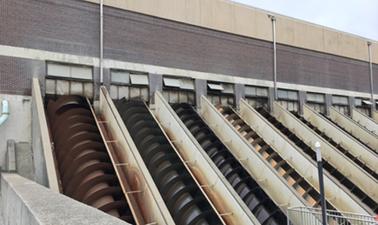
This course introduces modern biotechnologies for wastewater treatment. Modern biotechnologies have been widely used in clinical diagnosis, food production, and the pharmaceutical industry. Their applications in wastewater treatment have greatly improved the accuracy and efficiency of characterizing biological systems in biological wastewater treatment plants and the natural environment.

Class Deals by MOOC List - Click here and see EdX's Active Discounts, Deals, and Promo Codes.

This course is designed for graduate students and working professionals who would like to learn modern biotechnologies in wastewater treatment and how to apply these biotechnologies to understand, characterize, and optimize wastewater treatment systems and plants. At the end of the course, students are expected to understand modern biotechnologies and their applications in wastewater treatment, select appropriate biotechniques to understand, characterize, and optimize wastewater treatment systems, and assess public health risks associated with antibiotic resistant bacteria and viruses in wastewater.
This course is part of the Water and Wastewater Treatment MicroMasters program.

What you'll learn

  • fundamentals of microbiology
  • stoichiometry and microbial metabolism
  • membrane treatment systems and biofouling
  • molecular microbiology tools
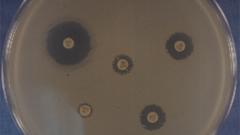
  • antibiotic resistance
  • viruses

Syllabus

Week 1:

  • Introduction of Microbiology
  • Fields of Microbiology
  • Microbe Types and Metabolic Lifestyles

Week 2:

  • Electron Donor and Acceptor
  • Stoichiometry and Half-reactions
  • Free Energy
  • Cell Synthesis
  • Developing Overall Stoichiometric Equations

Week 3:

  • Membrane Filtration
  • Membrane Filtration Challenges
  • Microbial Aggregation and Biofilm
  • Biofouling and Control

Week 4:

  • Molecular Ecology Study
  • Microbial Community Analysis
  • Activity Assays and FAME
  • Fluorescence in situ Hybridization
  • Molecular Microbiology Tools

Week 5:

  • Antibiotics
  • Antibiotic Resistance
  • Horizontal Gene Transfer
  • Evolution and Selfish Gene
  • Viruses
Go to Class
MOOC List is learner-supported. When you buy through links on our site, we may earn an affiliate commission.

Related Courses

Biological Principles in Wastewater Treatment (edX) EdX
Purdue University,PurdueX

Biological Principles in Wastewater Treatment (edX)

This course introduces biological principles used in the design and operation of biological wastewater treatment plants. Water scarcity is one of the most critical challenges in human society. Billions of people in the world have poor access to clean water and such a situation is getting worse with rapid population growth and industrial development.

Jan 9th 2023
5-12 Weeks
Medical Technology and Evaluation (Coursera) Coursera
University of Minnesota

Medical Technology and Evaluation (Coursera)

Innovations in medical technologies are one of the leading areas of economic growth in the world. Whether new technologies take the form of pharmaceutical, medical device, biotechnology, information technology of some combination of these innovations, the opportunities for both private enterprise and social welfare are substantial. However, these innovations are not without cost, and require reimbursement from either a privately or publicly financed health care delivery system to enter the marketplace.

Aug 24th 2026
4 Weeks
Tropical Parasitology: Protozoans, Worms, Vectors and Human Diseases (Coursera) Coursera
Duke University,Kilimanjaro Christian Medical University College

Tropical Parasitology: Protozoans, Worms, Vectors and Human Diseases (Coursera)

This course provides students an understanding of important human parasitic diseases, including their life cycles, vectors of transmission, distribution and epidemiology, pathophysiology and clinical manifestations, treatment, and prevention and control. Tropical Parasitology is taught by faculty from an area highly impacted by tropical parasites- the Kilimanjaro Christian Medical University College in Moshi, Tanzania. The faculty include Drs. Frank Mosha and Mramba Nyindo (and two lecturers, Drs. Johnson Matowo and Jovin Kitau). Dr. John Bartlett, Professor of Medicine, Global Health and Nursing at Duke University, joins his faculty colleagues in this effort.

Sep 7th 2026
5-12 Weeks
Antimicrobial Stewardship: Managing Antibiotic Resistance (FutureLearn) FutureLearn
University of Dundee,British Society for Antimicrobial Chemotherapy - BSAC

Antimicrobial Stewardship: Managing Antibiotic Resistance (FutureLearn)

Understand antibiotic resistance, and how antimicrobial stewardship can slow down or reduce it, with this free online course. Antimicrobial stewardship is a fast-growing field that aims to address this issue by managing our use of antibiotics to slow down or reduce the occurrence of antimicrobial resistance. Designed for healthcare professionals, this six-week course will inform you about - and empower you to provide - safe, high-quality antibiotic use.

Self Paced
5-12 Weeks
La Química de las Reacciones (Coursera) Coursera
Universidad Autónoma Metropolitana

La Química de las Reacciones (Coursera)

En este curso aprenderás los conocimientos básicos de reacciones químicas, lo cual te permitirá tener una mejor comprensión del estudio de la química, así como de la naturaleza. En general la mayoría de la gente le tiene miedo a la palabra química; sin embargo, debido a que la química es una ciencia central es necesario comprenderla y hacerla nuestra amiga.

Sep 7th 2026
4 Weeks
Introduction to Chemistry: Reactions and Ratios (Coursera) Coursera
Duke University

Introduction to Chemistry: Reactions and Ratios (Coursera)

This is an introductory course for students with limited background in chemistry; basic concepts involved in chemical reactions, stoichiometry, the periodic table, periodic trends, nomenclature, and chemical problem solving will be emphasized with the goal of preparing students for further study in chemistry as needed for many science, health, and policy professions.

Sep 7th 2026
5-12 Weeks
Algae Biotechnology (Coursera) Coursera
University of California, San Diego

Algae Biotechnology (Coursera)

For decades, researchers have been studying microalgae to understand their biological functions and how we can use technology to harness algae’s power to create a wide range of commercial products. In this course, we will cover how synthetic biology, genetic engineering, and metabolic engineering is used in algae biotechnology, and also examine the current state of algae biotechnology research and tools. We’ll also explore some of the common bio-products we can make from algae, and take a look at some real-world algae companies that are using algae biotechnology to create products consumers can buy today.

Sep 14th 2026
5-12 Weeks
Dynamical Modeling Methods for Systems Biology (Coursera) Coursera
Icahn School of Medicine at Mount Sinai

Dynamical Modeling Methods for Systems Biology (Coursera)

An introduction to dynamical modeling techniques used in contemporary Systems Biology research. We take a case-based approach to teach contemporary mathematical modeling techniques. The course is appropriate for advanced undergraduates and beginning graduate students. Lectures provide biological background and describe the development of both classical mathematical models and more recent representations of biological processes. The course will be useful for students who plan to use experimental techniques as their approach in the laboratory and employ computational modeling as a tool to draw deeper understanding of experiments.

Sep 7th 2026
5-12 Weeks
Introduction to Systems Biology (Coursera) Coursera
Icahn School of Medicine at Mount Sinai

Introduction to Systems Biology (Coursera)

This course will introduce the student to contemporary Systems Biology focused on mammalian cells, their constituents and their functions. Biology is moving from molecular to modular. As our knowledge of our genome and gene expression deepens and we develop lists of molecules (proteins, lipids, ions) involved in cellular processes, we need to understand how these molecules interact with each other to form modules that act as discrete functional systems.

Sep 7th 2026
5-12 Weeks
Industrial Biotechnology (Coursera) Coursera
University of Manchester

Industrial Biotechnology (Coursera)

Fossil fuels have been the primary energy source for society since the Industrial Revolution. They provide the raw material for the manufacture of many everyday products that we take for granted, including pharmaceuticals, food and drink, materials, plastics and personal care. As the 21st century progresses we need solutions for the manufacture of chemicals that are smarter, more predictable and more sustainable.

Sep 7th 2026
5-12 Weeks