Mente e cervello: dalla neuropsicologia alle neuroscienze cognitive (Federica Web Learning)

Mente e cervello: dalla neuropsicologia alle neuroscienze cognitive (Federica Web Learning)

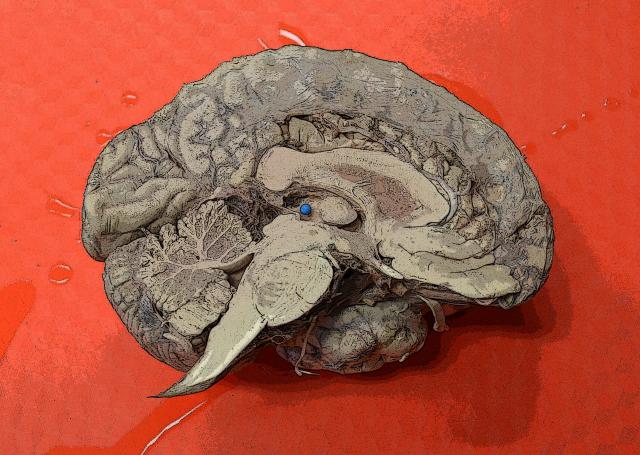
Il nostro cervello ci permette di muoverci e di percepire l'ambiente che ci circonda, ma anche di parlare, di leggere e scrivere, di prestare attenzione, di vivere ricordi ed emozioni. Fin dall'antichità ci si è chiesto come queste funzioni "mentali" possano emergere dal funzionamento cerebrale.

Dalla seconda metà dell'ottocento, la neuropsicologia ha affrontato la questione studiando il comportamento di pazienti neurologici con lesioni cerebrali e analizzando gli effetti della lesione sulle funzioni cognitive.
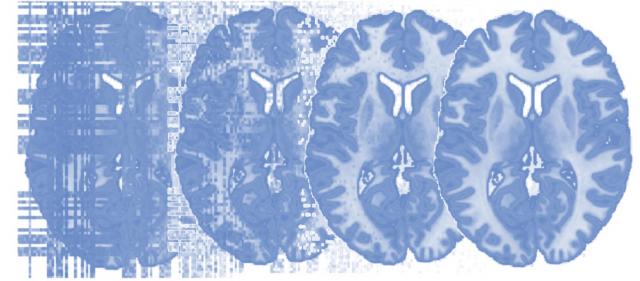
Negli ultimi decenni, le neuroscienze cognitive hanno inoltre utilizzato metodi di neuroimmagini e di neurostimolazione su individui normali. In questo corso, verranno ripercorse le tappe salienti dello sviluppo storico di queste scienze dall'antichità ai nostri giorni, al fine di meglio comprendere i modelli contemporanei delle relazioni tra mente e cervello.

Go to Class
MOOC List is learner-supported. When you buy through links on our site, we may earn an affiliate commission.

Related Courses

Biohacking Your Brain's Health (Coursera) Coursera
Emory University

Biohacking Your Brain's Health (Coursera)

With deteriorating health, particularly brain health, occurring at a global level, this course introduces you to methods for maximizing your brain's fitness through nutrition, exercise, meditation, and sleep. We'll debunk popular myths about prescribed practices for overall health and then uncover studies from the last few decades revealing practical routines and interventions that are proven to help improve the brain.

Jun 8th 2026
4 Weeks
Sleep: Neurobiology, Medicine, and Society (Coursera) Coursera
University of Michigan

Sleep: Neurobiology, Medicine, and Society (Coursera)

The objective of this course is to give students the most up-to-date information on the biological, personal, and societal relevance of sleep. Personal relevance is emphasized by the fact that the single best predictor of daytime performance is the quality of the previous night's sleep. The brain actively generates sleep, and the first section of the course is an overview of the neurobiological basis of sleep control.

May 25th 2026
5-12 Weeks
Medical Neuroscience (Coursera) Coursera
Duke University

Medical Neuroscience (Coursera)

Medical Neuroscience explores the functional organization and neurophysiology of the human central nervous system, while providing a neurobiological framework for understanding human behavior. In this course, you will discover the organization of the neural systems in the brain and spinal cord that mediate sensation, motivate bodily action, and integrate sensorimotor signals with memory, emotion and related faculties of cognition. The overall goal of this course is to provide the foundation for understanding the impairments of sensation, action and cognition that accompany injury, disease or dysfunction in the central nervous system. The course will build upon knowledge acquired through prior studies of cell and molecular biology, general physiology and human anatomy, as we focus primarily on the central nervous system.

May 25th 2026
13-24 Weeks
Introducción a la Neurociencia (Coursera) Coursera
Universidad de Palermo

Introducción a la Neurociencia (Coursera)

¿Qué es la neurociencia? ¿Cuáles son sus objetivos? ¿Cómo está compuesto y cómo funciona tu cerebro? ¿De qué modo incide sobre tus conductas y comportamientos? ¿Cómo se interrelacionan el cerebro y la mente? ¿Qué son los neurotransmisores y qué tipos de neurotransmisores existen? ¿Qué son las neuronas?

Jun 8th 2026
3 Weeks
Lesson Planning with the ELL in Mind (Coursera) Coursera
Arizona State University

Lesson Planning with the ELL in Mind (Coursera)

In this course you will learn how to design lesson plans around the needs of your ELL students and their language level through the analysis of content language and cognitive demands. You will learn how to align language objectives to the adopted standards of your school and content area. You will learn how to modify existing course materials as well as develop graphic organizers and languages frames to support ELLs’ access to content. Analysis of second language acquisition theories will be applied to lesson planning.

Jun 1st 2026
5-12 Weeks
The Brain and Space (Coursera) Coursera
Duke University

The Brain and Space (Coursera)

This course is about how the brain creates our sense of spatial location from a variety of sensory and motor sources, and how this spatial sense in turn shapes our cognitive abilities. Knowing where things are is effortless. But “under the hood,” your brain must figure out even the simplest of details about the world around you and your position in it.

May 25th 2026
5-12 Weeks
Understanding the Brain: The Neurobiology of Everyday Life (Coursera) Coursera
University of Chicago

Understanding the Brain: The Neurobiology of Everyday Life (Coursera)

Learn how the nervous system produces behavior, how we use our brain every day, and how neuroscience can explain the common problems afflicting people today. We will study functional human neuroanatomy and neuronal communication, and then use this information to understand how we perceive the outside world, move our bodies voluntarily, stay alive, and play well with others.

Jun 1st 2026
5-12 Weeks
Introduction to Psychology (Coursera) Coursera
University of Toronto

Introduction to Psychology (Coursera)

This course highlights the most interesting experiments within the field of psychology, discussing the implications of those studies for our understanding of the human mind and human behavior. We will explore the brain and some of the cognitive abilities it supports like memory, learning, attention, perception and consciousness. We will examine human development - both in terms of growing up and growing old - and will discuss the manner in which the behavior of others affect our own thoughts and behavior.

Jun 8th 2026
5-12 Weeks
Know Thyself - The Value and Limits of Self-Knowledge: The Examined Life (Coursera) Coursera
University of Edinburgh

Know Thyself - The Value and Limits of Self-Knowledge: The Examined Life (Coursera)

According to legend, inscribed on walls of the temple on the sacred site of Delphi in Ancient Greece were two premier injunctions: NOTHING IN EXCESS, and KNOW THYSELF. This course will be an examination of the latter injunction in an effort to discover what self-knowledge is, why it might be valuable, and what, if any, limitations it might face.

Jun 1st 2026
4 Weeks
Soul Beliefs: Causes and Consequences - Unit 3: How Does It All End? (Coursera) Coursera
Rutgers University

Soul Beliefs: Causes and Consequences - Unit 3: How Does It All End? (Coursera)

Throughout history, the vast majority of people around the globe have believed they have, however defined, a “soul.” While the question of whether the soul exists cannot be answered by science, what we can study are the causes and consequences of various beliefs about the soul and its prospects of surviving the death of the body. Why are soul and afterlife beliefs so common in human history? Are there adaptive advantages to assuming souls exist?

Jun 8th 2026
5-12 Weeks