Planning with Climate Change in Mind (Coursera)

Planning with Climate Change in Mind (Coursera)

This course focuses on the climate impacts occurring and expected to occur across the United States. Our approach will be regional and sectoral, with consideration of impacts on water resources, transportation, energy, agriculture, forests, health, and coastal/marine resources. We will also look at how you can apply information about climate risks to motivate climate action in your household, in your community, or in your workplace.

Class Deals by MOOC List - Click here and see Coursera's Active Discounts, Deals, and Promo Codes.

What You Will Learn

  • Navigate the National Climate Assessment as a resource for information about impacts and adaptation
  • Describe how place and context relate to climate risk and potential mitigation and adaptation choices
  • Identify opportunities for communities, governments, and businesses to manage climate risks
  • Explain the challenges and competing interests that make climate change a difficult issue for communities, governments, and businesses to address

Course 3 of 3 in the Exploring Our Responses to Climate Change Specialization

Syllabus

WEEK 1
Sectoral Impacts and Adaptation

Climate change affects almost all sectors of our economy. This module will summarize key messages regarding these impacts, drawing upon the Fourth National Climate Assessment.

WEEK 2
Regional Impacts and Adaptation
Across the country, climate impacts are occurring. These impacts often affect the places and resources that are intertwined with our livelihoods and identities. This module takes a regional approach, drawing upon the Fourth National Climate Assessment.

WEEK 3
Taking Climate Action
This module provides examples and resources for taking climate action on your own.

Go to Class
MOOC List is learner-supported. When you buy through links on our site, we may earn an affiliate commission.

Related Courses

Introduction to Sustainability (Coursera) Coursera
University of Illinois at Urbana-Champaign

Introduction to Sustainability (Coursera)

This course introduces the academic approach of Sustainability and explores how today’s human societies can endure in the face of global change, ecosystem degradation and resource limitations. The course focuses on key knowledge areas of sustainability theory and practice, including population, ecosystems, global change, energy, agriculture, water, environmental economics and policy, ethics, and cultural history.

Oct 26th 2026
5-12 Weeks
Planning: Principled, Proposing, Proofing, and Practicing to a Success Plan (Coursera) Coursera
Michigan State University

Planning: Principled, Proposing, Proofing, and Practicing to a Success Plan (Coursera)

According to Steven Blank a business startup, or any new venture startup is essentially a proto-type. Thus the startup process essentially becomes a learning process to refine that business proto-type into a scalable, replicable finished 'product'. At the end of this course learners will be able to: complete a business model summarizing assumptions about what value they will offer to whom, and how they will make money; systematically test and validate these assumptions within the constraints of their available resources, and; use these validated assumptions to generate financial projections that are based on actual resources and efforts expended.

Oct 26th 2026
5-12 Weeks
Greening the Economy: Sustainable Cities (Coursera) Coursera
Lund University

Greening the Economy: Sustainable Cities (Coursera)

How can we shape urban development towards sustainable and prosperous futures? This course will explore sustainable cities as engines for greening the economy. We place cities in the context of sustainable urban transformation and climate change. Sustainable urban transformation refers to structural transformation processes – multi-dimensional and radical change – that can effectively direct urban development towards ambitious sustainability and climate goals. We will connect the key trends of urbanization, decarbonisation and sustainability.

Oct 26th 2026
5-12 Weeks
An Introduction to the U.S. Food System: Perspectives from Public Health (Coursera) Coursera
Johns Hopkins University

An Introduction to the U.S. Food System: Perspectives from Public Health (Coursera)

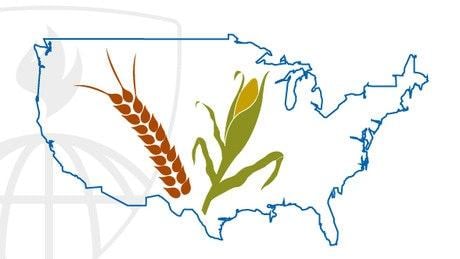
A food system encompasses the activities, people and resources involved in getting food from field to plate. Along the way, it intersects with aspects of public health, equity and the environment. In this course, we will provide a brief introduction to the U.S. food system and how food production practices and what we choose to eat impacts the world in which we live. Through several case studies, we will discuss some key historical and political factors that have helped shape the current food system and consider alternative approaches from farm to fork.

Oct 26th 2026
5-12 Weeks
Energy, Environment, and Everyday Life (Coursera) Coursera
University of Illinois at Urbana-Champaign

Energy, Environment, and Everyday Life (Coursera)

This course teaches you everything you need to know about energy, the environment, and at least a number of things in everyday life. It starts by talking about energy itself and where it comes from. This includes how much we have, who has it, who uses it, and what that all means. The video clips are produced in a fast-paced multimedia format during which Professor Ruzic throws in fun and demonstrations. There are multiple-choice questions to check your understanding and some more in-depth exercises to guide you deeper into the subject.

Oct 26th 2026
5-12 Weeks
Unravelling solutions for Future Food problems (Coursera) Coursera
Universiteit Utrecht

Unravelling solutions for Future Food problems (Coursera)

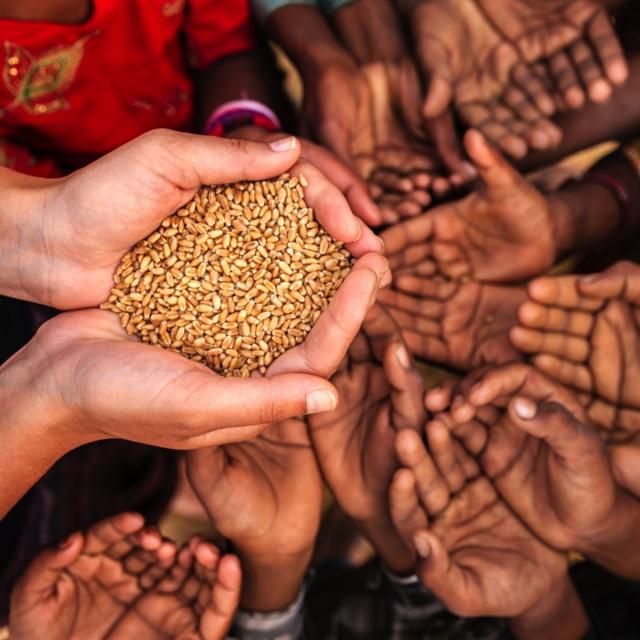
Our society depends on the availability of food and accessibility to it. According to the United Nations nearly 800 million people are hungry and on the other hand, over 650 million people are obese. While many people in developing countries experience food shortage, in industrialized countries people are throwing food away. These facts show how paradoxical and complex the world’s food problem is.

Nov 1st 2026
5-12 Weeks
Curanderismo: Traditional Healing of the Mind, Energy & Spirit (Coursera) Coursera
University of New Mexico

Curanderismo: Traditional Healing of the Mind, Energy & Spirit (Coursera)

As the third of four courses on Curanderismo, the art of Hispanic/Latino traditional medicine, this course focuses specifically on traditional healing of mind, energy and spirit. As an educational and cultural platform, this course will share a number of traditional body therapies. Trained traditional healers will share their knowledge of cleansings from different cultures such as spiritual, energetic and Tonalli Cleansing.

Oct 26th 2026
5-12 Weeks
Learning to Teach Online (Coursera) Coursera
UNSW Sydney - University of New South Wales

Learning to Teach Online (Coursera)

Are you an educator? Have you ever wanted to understand more about how to design your class to make better use of educational technology – whether fully online or in blended contexts? Would you like to learn from those who have extensive practical experience with online technologies? The Learning to Teach Online (LTTO) MOOC will help you develop a working understanding of successful online teaching strategies that you can apply in your own practice. The course is based upon the multi award winning open educational resource developed by Dr Simon McIntyre and Karin Watson.

Oct 26th 2026
5-12 Weeks
Soul Beliefs: Causes and Consequences - Unit 3: How Does It All End? (Coursera) Coursera
Rutgers University

Soul Beliefs: Causes and Consequences - Unit 3: How Does It All End? (Coursera)

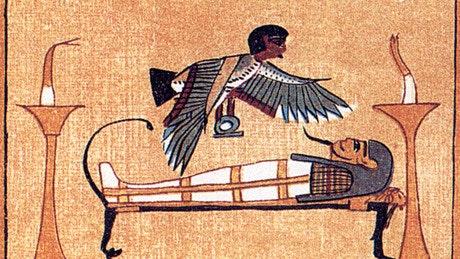
Throughout history, the vast majority of people around the globe have believed they have, however defined, a “soul.” While the question of whether the soul exists cannot be answered by science, what we can study are the causes and consequences of various beliefs about the soul and its prospects of surviving the death of the body. Why are soul and afterlife beliefs so common in human history? Are there adaptive advantages to assuming souls exist?

Oct 26th 2026
5-12 Weeks
An Introduction to Global Health (Coursera) Coursera
University of Copenhagen

An Introduction to Global Health (Coursera)

This course will provide you with an overview of the most important health challenges facing the world today. You will gain insight into how challenges have changed over time, we will discuss the likely determinants of such changes and examine future projections. Successful international strategies and programs promoting human health will be highlighted and global health governance structures will be mapped and the role of the key actors explored.

Oct 26th 2026
5-12 Weeks
Introduction to the Threat Intelligence Lifecycle (Coursera) Coursera
IBM

Introduction to the Threat Intelligence Lifecycle (Coursera)

Today, we are faced with the increasing challenges of dealing with more aggressive and persistent threat actors, while being inundated with information, which is full of misinformation and false flags across multiple, unconnected systems. With information coming from such a wide variety of sources, how do you tell what is reliable and actionable, and what isn't?

Oct 26th 2026
4 Weeks