EdX

Mechanics of Deformable Structures: Part 1 (edX)

Offered by MIT, MITx,
Mechanics of Deformable Structures: Part 1 (edX)

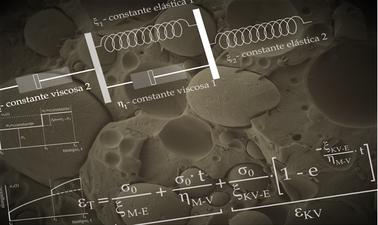
Study the foundational mechanical engineering subject “Strength of Materials”. Learn to predict deformation and failure in structures composed of elastic, elastic-plastic and viscoelastic elements. Many natural and man-made structures can be modeled as assemblages of interconnected structural elements loaded along their axis (bars), in torsion (shafts) and in bending (beams). In this course you will learn to use equations for static equilibrium, geometric compatibility and constitutive material response to analyze structural assemblages.

Class Deals by MOOC List - Click here and see EdX's Active Discounts, Deals, and Promo Codes.

This course provides an introduction to behavior in which the shape of the structure is permanently changed by loading the material beyond its elastic limit (plasticity), and behavior in which the structural response changes over time (viscoelasticity).
This is the second course in a 3-part series. In this series you will learn how mechanical engineers can use analytical methods and “back of the envelope” calculations to predict structural behavior. The three courses in the series are:
Part 1 – 2.01x: Elements of Structures. (Elastic response of Structural Elements: Bars, Shafts, Beams). Fall Term
Part 2 – 2.02.1x Mechanics of Deformable Structures: Part 1. (Assemblages of Elastic, Elastic-Plastic, and Viscoelastic Bars in axial loading). Spring Term
Part 3 – 2.02.2x Mechanics of Deformable Structures: Part 2.(Assemblages of bars, shafts, and beams. Multi-axial Loading and Deformation. Energy Methods). Summer Term
These courses are based on the first subject in solid mechanics for MIT Mechanical Engineering students. Join them and learn to rely on the notions of equilibrium, geometric compatibility, and constitutive material response to ensure that your structures will perform their specified mechanical function without failing.

What you'll learn

  • Use Free Body Diagrams to formulate equilibrium equations in structural assemblages
  • Identify geometric constraints to formulate compatibility equations in structural assemblages
  • Understand the formulation of thermo-elastic, elastic-perfectly-plastic and linear viscoelastic models for the material response
  • Analyze and predict the mechanical behavior of statically determinate and statically indeterminate assemblages with deormable bars in axial loading.
Go to Class
MOOC List is learner-supported. When you buy through links on our site, we may earn an affiliate commission.

Related Courses

Ideal Gases (Coursera) Coursera
University of Colorado Boulder

Ideal Gases (Coursera)

Course 3 of Statistical Thermodynamics, Ideal Gases, explores the behavior of systems when intermolecular forces are not important. This done by evaluating the appropriate partition functions for translational, rotational, vibrational and/or electronic motion. We start with pure ideal gases including monatomic, diatomic and polyatomic species.

Jun 8th 2026
3 Weeks
Dense Gases, Liquids and Solids (Coursera) Coursera
University of Colorado Boulder

Dense Gases, Liquids and Solids (Coursera)

Course 4 of Statistical Thermodynamics addresses dense gases, liquids, and solids. As the density of a gas is increased, intermolecular forces begin to affect behavior. For small departures from ideal gas behavior, known as the dense gas limit, one can estimate the change in properties using the concept of a configuration integral, a modification to the partition function.

Jun 8th 2026
4 Weeks
Structure of Materials (edX) EdX
MIT,MITx

Structure of Materials (edX)

Discover the structure of the materials that make up our modern world and learn how this underlying structure influences the properties and performance of these materials. Structure determines so much about a material: its properties, its potential applications, and its performance within those applications. This course from MIT’s Department of Materials Science and Engineering explores the structure of a wide variety of materials with current-day engineering applications.

No sessions available
13-24 Weeks
Modeling and Simulation of Multibody Systems - Part II (edX) EdX
LouvainX,Université Catholique de Louvain - UCL

Modeling and Simulation of Multibody Systems - Part II (edX)

90% of daily life multibody systems contain loops of bodies, e.g. vehicle or bike suspensions, parallel manipulators or robots, and musculoskeletal systems. They can also include joint constraints. In this second course about multibody systems, learn how to model them and how to deal with more advanced numerical analyses.

Self Paced
Self-Paced
Caer o No caer. El secreto de las estructuras (edX) EdX
Universidad Carlos III de Madrid - UC3M,UC3Mx

Caer o No caer. El secreto de las estructuras (edX)

Las estructuras están presentes en todos los sistemas que nos rodean. Descubrirlas y comprender cómo funcionan es sencillo y fascinante. Las estructuras están implicadas en nuestras vidas: las plantas, los animales, casi todo lo que fabrica el ser humano, incluso nuestro propio cuerpo, deben soportar una serie de fuerzas sin romperse, y por lo tanto prácticamente cualquier elemento de nuestro entorno es una estructura de una clase u otra.

Self Paced
Self-Paced
The Engineering of Structures Around Us (edX) EdX
DartmouthX,Dartmouth College

The Engineering of Structures Around Us (edX)

Explore how engineers design bridges and buildings in our communities and iconic structures around the world. In this introductory course, you’ll learn some engineering principles that can be applied to structural systems everywhere: in nature, in furniture, in mechanical and aerospace systems, and in any solid object that resists a load. Together we’ll explore how structures work, why they were designed the way they were designed, how they support loads, and where forces flow through them.

Self Paced
Self-Paced
Mastering Quantum Mechanics (edX) EdX
MIT,MITx

Mastering Quantum Mechanics (edX)

Learn the foundations of quantum mechanics – wave mechanics, spin one-half, vector spaces and linear operators, the Heisenberg uncertainty principle, quantum dynamics, two-state systems, entanglement, and angular momentum. This course offers a sophisticated view of quantum mechanics and its proper mathematical foundation. Completing the course will give you the tools needed to do research in quantum mechanics and to understand many current developments.

No sessions available
13-24 Weeks
How Stuff Moves, Part 3: Wave Motion (edX) EdX
Harvey Mudd College,HarveyMuddX

How Stuff Moves, Part 3: Wave Motion (edX)

WHAT IS “HOW STUFF MOVES”? Mechanics is the study of how things move. It was the first quantitative science to achieve wide power to predict behavior, including things never before directly observed. Newton, Leibniz, and others invented calculus to describe motion and we will find both differential and integral calculus extremely useful throughout this course.

No sessions available
4 Weeks
On-Ramp to AP* Physics C: Mechanics (edX) EdX
Weston High School

On-Ramp to AP* Physics C: Mechanics (edX)

This course will help the students who have taken intro-level high-school physics to get ready for more advanced courses including AP Physics C: Mechanics. This short course is intended for the high-school students who have taken an introductory-level physics course, acquired some background in Mechanics and intend to take a more advanced course – for instance, AP Physics C.

Self Paced
Self-Paced
Quantum Mechanics (edX) EdX
Georgetown University,GeorgetownX

Quantum Mechanics (edX)

Learn the quantum mechanics needed to prepare you for the second quantum revolution (focused on quantum sensing). We use a new way to teach quantum for undergraduates by focusing on conceptual ideas and operator manipulations. This allows us to discuss more applications to experiment usually done. You need a background in the full calculus sequence and in math methods. Freshman physics and modern physics is recommended. This course is appropriate for physicists, chemists and engineers.

Aug 21st 2023
13-24 Weeks
AP® Physics 1 - Part 4: Exam Prep (edX) EdX
Rice University,RiceX

AP® Physics 1 - Part 4: Exam Prep (edX)

The fourth of four courses in a dynamic, comprehensive series that provides a solid base in introductory physics and helps prepare you for the AP Physics 1 Exam. Free textbook included! In this four-part series, we will explore AP Physics 1 concepts and prepare for the AP Physics 1 Exam in an exciting and entirely new way. Increase your skills – and your readiness – for the AP Exam though quality videos, inquiry labs, Hollywood-style Concept Trailers™, Direct Measurement Videos, AP problem-solving sessions and more!

No sessions available
4 Weeks