EdX

How Stuff Moves, Part 1: Linear Motion (edX)

How Stuff Moves, Part 1: Linear Motion (edX)

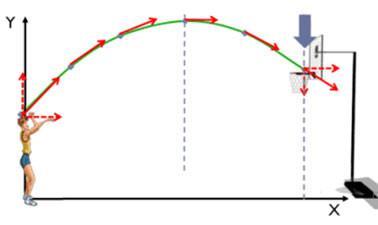
A Calculus-based introduction to Newtonian mechanics that emphasizes problem-solving. WHAT IS “HOW STUFF MOVES”? Mechanics is the study of how things move. It was the first quantitative science to achieve wide power to predict behavior, including things never before directly observed. Newton, Leibniz, and others invented calculus to describe motion and we will find both differential and integral calculus extremely useful throughout this course.

Class Deals by MOOC List - Click here and see EdX's Active Discounts, Deals, and Promo Codes.

This is the first in a 3-part series of courses that parallels the second-semester mechanics course taught at Harvey Mudd College. Part 1 explores the concepts of momentum, force, and energy, and how these properties define the motion of objects at everyday speeds. Part 2 examines angular motion, and Part 3 examines wave motion. This course is an invitation to develop your problem-solving skills and to learn how to apply mathematics to all sorts of problems of the physical world. Learning the rules that govern how stuff moves in the world around us is exciting; using those rules to predict correctly something that you haven’t observed means that you really understand something. It‘s a great feeling.
What Should I Know Before we Start?
You need not have taken physics before, but we assume that you have studied mathematics, up to and including a first course in calculus. You may be taking a calculus course concurrently with this course; that should be a good strategy. We will introduce important calculus ideas and methods as the need arises and provide examples.
There is a Mathematics Diagnostic Test that you can take at the beginning of this course to ensure that your mathematics background will set you up for success in this course.

What you'll learn

  • The basic physics of how objects move
  • The concepts of momentum, force, and energy
  • How these properties define the motion of objects at everyday speeds

Go to Class
MOOC List is learner-supported. When you buy through links on our site, we may earn an affiliate commission.

Related Courses

Math in Sports (edX) EdX
University of Notre Dame,NotreDameX

Math in Sports (edX)

In this course you will learn to use some mathematical tools that can help predict and analyze sporting performances and outcomes. This course will help coaches, players, and enthusiasts to make educated decisions about strategy, training, and execution. We will discuss topics such as the myth of the Hot Hand and the curse of the Sports Illustrated cover; how understanding data can improve athletic performance; and how best to pick your Fantasy Football team.

No sessions available
4 Weeks
Robot Mechanics and Control, Part I (edX) EdX
Seoul National University,SNUx

Robot Mechanics and Control, Part I (edX)

A mathematical introduction to the mechanics and control of robots. This course provides a mathematical introduction to the mechanics and control of robots that can be modeled as kinematic chains. Topics covered include the concept of a robot’s configuration space and degrees of freedom, static grasp analysis, the description of rigid body motions, kinematics of open and closed chains, and the basics of robot control.

No sessions available
4 Weeks
Global Warming Science (edX) EdX
MIT,MITx

Global Warming Science (edX)

Learn about the physics, chemistry, biology, and geology of the earth’s climate system. Global Warming Science teaches you about the risks and uncertainties of future climate change by examining the science behind the earth’s climate. You will be able to answer such questions as, “What is the Greenhouse Effect?” and “How and why has earth’s climate changed through geologic history?”

No sessions available
13-24 Weeks
Astrophysics: The Violent Universe (edX) EdX
Australian National University - ANU,ANUx

Astrophysics: The Violent Universe (edX)

Explore the deadliest places in the universe, from black holes to supernovae. Interested in exploring the deadliest and most mysterious parts of our universe? Or, investigating black holes, which warp the very fabric of space-time around them? We will look at what we know about these objects, and also at the many unsolved mysteries that surround them. We will also study white-dwarf stars and neutron stars, where the mind-bending laws of quantum mechanics collide with relativity. And, examine dwarf novae, classical novae, supernovae and even hypernovae: the most violent explosions in the cosmos.

Self Paced
Self-Paced
Quantum Mechanics and Quantum Computation (edX) EdX
University of California, Berkeley,BerkeleyX

Quantum Mechanics and Quantum Computation (edX)

A simple conceptual introduction to quantum mechanics and quantum computation. Quantum computation is a remarkable subject building on the great computational discovery that computers based on quantum mechanics are exponentially powerful. This course aims to make this cutting-edge material broadly accessible to undergraduate students, including computer science majors who do not have any prior exposure to quantum mechanics.

No sessions available
5-12 Weeks
Fundamentals of Transistors (edX) EdX
Purdue University,PurdueX

Fundamentals of Transistors (edX)

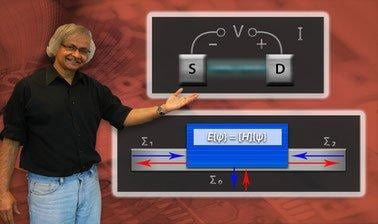
This course develops a simple framework for understanding the essential physics of transistors, including modern nanoscale transistors. Important technology considerations and circuit applications are also discussed. The transistor has been called the greatest invention of the 20th century - it enabled the electronics systems that have shaped the world we live in. Today's nanotransistors are a high volume, high impact success of the nanotechnology revolution.

Feb 13th 2023
5-12 Weeks
Topology in Condensed Matter: Tying Quantum Knots (edX) EdX
Delft University of Technology,DelftX

Topology in Condensed Matter: Tying Quantum Knots (edX)

Get a simple and hands-on overview of topological insulators, Majoranas, and other topological phenomena. The idea behind topological systems is simple: if there exists a quantity, which cannot change in an insulating system where all the particles are localized, then the system must become conducting and obtain propagating particles when the quantity (called a "topological invariant") finally changes.

No sessions available
5-12 Weeks
Fundamentos de Mecánica para Ingeniería (edX) EdX
Universitat Politècnica de València,UPValenciaX

Fundamentos de Mecánica para Ingeniería (edX)

Estudiaremos la cinemática y la dinámica del punto, los conceptos de trabajo y potencia y la energía mecánica. Se aborda el estudio del universo físico analizando objetos en movimiento. Se definen y analizan todas las magnitudes y leyes físicas que permiten describir geométrica y causalmente el movimiento de cuerpos representados por un punto.

Self Paced
Self-Paced
Quantum Mechanics for Everyone (edX) EdX
Georgetown University,GeorgetownX

Quantum Mechanics for Everyone (edX)

Learn the fundamental notions of quantum mechanics at a level that is accessible to everyone. Quantum Mechanics for Everyone is a six-week long MOOC that teaches the basic ideas of quantum mechanics with a method that requires no complicated math beyond taking square roots (and you can use a calculator for that).

Jun 8th 2023
5-12 Weeks
How Stuff Moves, Part 3: Wave Motion (edX) EdX
Harvey Mudd College,HarveyMuddX

How Stuff Moves, Part 3: Wave Motion (edX)

WHAT IS “HOW STUFF MOVES”? Mechanics is the study of how things move. It was the first quantitative science to achieve wide power to predict behavior, including things never before directly observed. Newton, Leibniz, and others invented calculus to describe motion and we will find both differential and integral calculus extremely useful throughout this course.

No sessions available
4 Weeks