Mathematics for economists (Coursera)

Mathematics for economists (Coursera)

This course is an important part of the undergraduate stage in education for future economists. It's also useful for graduate students who would like to gain knowledge and skills in an important part of math. It gives students skills for implementation of the mathematical knowledge and expertise to the problems of economics.

Class Deals by MOOC List - Click here and see Coursera's Active Discounts, Deals, and Promo Codes.

Its prerequisites are both the knowledge of the single variable calculus and the foundations of linear algebra including operations on matrices and the general theory of systems of simultaneous equations. Some knowledge of vector spaces would be beneficial for a student.
The course covers several variable calculus, both constrained and unconstrained optimization. The course is aimed at teaching students to master comparative statics problems, optimization problems using the acquired mathematical tools.
Home assignments will be provided on a weekly basis.
The objective of the course is to acquire the students’ knowledge in the field of mathematics and to make them ready to analyze simulated as well as real economic situations.
Students learn how to use and apply mathematics by working with concrete examples and exercises. Moreover this course is aimed at showing what constitutes a solid proof. The ability to present proofs can be trained and improved and in that respect the course is helpful. It will be shown that math is not reduced just to “cookbook recipes”. On the contrary the deep knowledge of math concepts helps to understand real life situations.

Syllabus

Week 1
The basics of the set theory. Functions in Rn
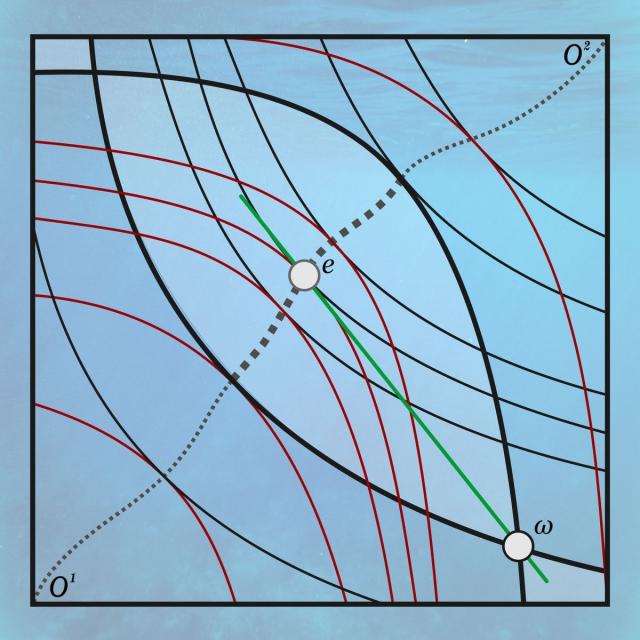
Week 1 of the Course is devoted to the main concepts of the set theory, operation on sets and functions in Rn. Of special attention will be level curves. Also in this week introduced definitions of sequences, bounded and compact sets, domain and limit of the function. Also from this week students will grasp the concept of continuous function.

Week 2
Differentiation. Gradient. Hessian.
Week 2 of the Course is devoted to the main concepts of differentiation, gradient and Hessian. Of special attention is the chain rule. Also students will understand economic applications of the gradient.

Week 3
Implicit Function Theorems and their applications.
Week 3 of the Course is devoted to implicit function theorems. In this week three different implicit function theorems are explained. This week students will grasp how to apply IFT concept to solve different problems.

Week 4
Unconstrained and constrained optimization.
Week 4 of the Course is devoted to the problems of constrained and unconstrained optimization. Of special attention are quadratic forms, critical points and their classification.

Week 5
Constrained optimization for n-dim space. Bordered Hessian.
Week 5 of the Course is devoted to the extension of the constrained optimization problem to the n-dimensional space. This week students will grasp how to apply bordered Hessian concept to classification of critical points arising in different constrained optimization problems.

Week 6
Envelope theorems. Concavity and convexity.
Week 6 of the Course is devoted to envelope theorems, concavity and convexity of functions. This week students will understand how to interpret Lagrange multiplier and get to learn the criteria of convexity and concavity of functions in n-dimensional space.

Week 7
Global extrema. Constrained optimization with inequality constraints.
Week 7 of the Course is devoted to identification of global extrema and constrained optimization with inequality constraints. This week students will grasp the concept of binding constraints and complementary slackness conditions.

Week 8
Kunh-Tucker conditions. Homogeneous functions.
Week 8 of the Course is devoted to Kuhn-Tucker conditions and homogenous functions. This week students will find out how to use Kuhn-Tucker conditions for solving various economic problems.
Go to Class
MOOC List is learner-supported. When you buy through links on our site, we may earn an affiliate commission.

Related Courses

Conceptos y Herramientas para la Física Universitaria (Coursera) Coursera
Tecnológico de Monterrey

Conceptos y Herramientas para la Física Universitaria (Coursera)

Este curso provee al estudiante con conceptos y herramientas matemáticas para modelar problemas en física, que al aplicar podrá enfrentar con éxito los cursos de física universitarios. Así pues, la filosofía de este curso consiste en cubrir temas conceptuales relativos a la Física y desarrollar tu capacidad de aprender y aplicarlos en tu vida profesional.

Jun 22nd 2026
5-12 Weeks
Differential Equations for Engineers (Coursera) Coursera
The Hong Kong University of Science and Technology - HKUST

Differential Equations for Engineers (Coursera)

This course is about differential equations and covers material that all engineers should know. Both basic theory and applications are taught. In the first five weeks we will learn about ordinary differential equations, and in the final week, partial differential equations. The course is composed of 56 short lecture videos, with a few simple problems to solve following each lecture. And after each substantial topic, there is a short practice quiz. Solutions to the problems and practice quizzes can be found in instructor-provided lecture notes. There are a total of six weeks in the course, and at the end of each week there is an assessed quiz.

Jun 22nd 2026
5-12 Weeks
Pre-MBA Quantitative Skills: Data Analysis (Coursera) Coursera
Rice University

Pre-MBA Quantitative Skills: Data Analysis (Coursera)

This course will equip students with the quantitative skills needed to begin any Masters of Business Administration program. The goal is not to build foundational skills or expert mastery but rather, to provide some middle ground to “shake the rust off” skills that a typical MBA student probably knows, but may not have thought about for quite some time.

Jun 22nd 2026
4 Weeks
Introduction to Linear Algebra (Coursera) Coursera
The University of Sydney

Introduction to Linear Algebra (Coursera)

Linear algebra and calculus are the two most important foundational pillars on which modern mathematics is built. They are studied by almost all mathematics students at university, though typically labelled as different subjects and taught in parallel. Over time, students discover that linear algebra and calculus are inseparable (but not identical) twins that interlock to form the backbone of almost all applications of mathematics to physical and biological sciences, engineering and computer science. It is recommended that participants in the MOOC Introduction to Linear Algebra have already taken, or take in parallel, the MOOC Introduction to Calculus.

Jun 22nd 2026
4 Weeks
Image and video processing: From Mars to Hollywood with a stop at the hospital (Coursera) Coursera
Duke University

Image and video processing: From Mars to Hollywood with a stop at the hospital (Coursera)

In this course, you will learn the science behind how digital images and video are made, altered, stored, and used. We will look at the vast world of digital imaging, from how computers and digital cameras form images to how digital special effects are used in Hollywood movies to how the Mars Rover was able to send photographs across millions of miles of space.

Jun 15th 2026
5-12 Weeks
Essential Linear Algebra for Data Science (Coursera) Coursera
University of Colorado Boulder

Essential Linear Algebra for Data Science (Coursera)

Are you interested in Data Science but lack the math background for it? Has math always been a tough subject that you tend to avoid? This course will teach you the most fundamental Linear Algebra that you will need for a career in Data Science without a ton of unnecessary proofs and concepts that you may never use. Consider this an expressway to Data Science with approachable methods and friendly concepts that will guide you to truly understanding the most important ideas in Linear Algebra.

Jun 22nd 2026
5-12 Weeks
Aprendizaje de las matemáticas de primaria (Coursera) Coursera
Universidad de los Andes

Aprendizaje de las matemáticas de primaria (Coursera)

En este segundo curso de acceso gratuito* del programa especializado Educación Matemática para profesores de primaria, conocerás las cuestiones particulares sobre el aprendizaje de las matemáticas y las dificultades y los errores más frecuentes que tienen que enfrentar los estudiantes al aprenderlas. El curso tiene una duración aproximada de seis semanas, con una dedicación promedio de 4 horas semanales. Todas las evaluaciones tienen retroalimentación y podrás descargar la mayoría de los recursos del curso.

Jun 22nd 2026
5-12 Weeks
Positioning: What you need for a successful Marketing Strategy (Coursera) Coursera
IE Business School

Positioning: What you need for a successful Marketing Strategy (Coursera)

Positioning, the must have for a successful Marketing Strategy Positioning is the heart of any Marketing Strategy, the core that you must get right. It does not matter whether you start with a clearly defined target group or with a differential value proposition: You are going to end up with a clear Positioning upon which we build our Marketing Plan. In this course - the second in our Marketing Strategy Specialization - IE professor Ignacio Gafo will guide you through the essential stages of this key marketing process, starting with the basic elements that you will require and deciding on the market segmentation and marketing.

Jun 15th 2026
4 Weeks
Algebra: Elementary to Advanced - Functions & Applications (Coursera) Coursera
Johns Hopkins University

Algebra: Elementary to Advanced - Functions & Applications (Coursera)

After completing this course, students will learn how to successfully apply functions to model different data and real world occurrences. This course reviews the concept of a function and then provide multiple examples of common and uncommon types of functions used in a variety of disciplines. Formulas, domains, ranges, graphs, intercepts, and fundamental behavior are all analyzed using both algebraic and analytic techniques. From this core set of functions, new functions are created by arithmetic operations and function composition.

Jun 22nd 2026
3 Weeks
The Finite Element Method for Problems in Physics (Coursera) Coursera
University of Michigan

The Finite Element Method for Problems in Physics (Coursera)

This course is an introduction to the finite element method as applicable to a range of problems in physics and engineering sciences. The treatment is mathematical, but only for the purpose of clarifying the formulation. The emphasis is on coding up the formulations in a modern, open-source environment that can be expanded to other applications, subsequently.

Jun 15th 2026
13-24 Weeks