Introduction à la théorie de Galois (Coursera)

Introduction à la théorie de Galois (Coursera)

Le cours expose la théorie de Galois, du classique critère de non-résolubilité des équations polynomiales aux méthodes plus avancées de calcul de groupes de Galois par réduction modulo un nombre premier. Le thème général de cette théorie est l'étude des racines d'un polynôme et concerne en particulier la possibilité de les exprimer à partir des coefficients de ce polynôme. Evariste Galois considère les symétries de ces racines et associe ainsi à ce polynôme un groupe de permutations de ses racines, que l'on appelle maintenant son groupe de Galois.

Class Deals by MOOC List - Click here and see Coursera's Active Discounts, Deals, and Promo Codes.

Il dégage à cette occasion pour la première fois, dans ce cadre, la notion de groupe, maintenant omniprésente en mathématiques. Son étude lui permet d'expliquer pourquoi les racines d'une équation prise au hasard ne s'expriment en général pas par des formules algébriques faisant intervenir ses coefficients à partir du degré 5, un résultat démontré auparavant par Abel. Plus généralement, l'étude du groupe de Galois du polynôme permet de dire exactement quand une telle formule existe. C'est ce que l'on appelle la correspondance de Galois : elle relie d'une part la théorie des corps, d'autre part la théorie des groupes.
Ce cours expliquera cette théorie en n'utilisant que des résultats de base d'algèbre linéaire. Nous étudierons d'un côté la théorie des corps, c'est-à-dire la façon dont les corps s'emboîtent les uns dans les autres, en introduisant la notion de nombre algébrique (essentiellement les racines de polynômes). D'un autre côté, nous introduirons les éléments nécessaires à l'étude des groupes de permutations. Cela nous permettra d'expliquer la théorie de Galois, non seulement dans son cadre d'origine, c'est-à-dire quand les coefficients du polynôme sont des nombres entiers, mais aussi dans un cadre plus général, par exemple lorsqu'on réduit ces coefficients modulo un nombre premier p.
Le cours culminera avec une comparaison des groupes de Galois dans ces deux situations (« entière » et après réduction modulo p), fournissant ainsi un outil de calcul puissant de ces groupes.
Ce cours est l'occasion d'aborder des notions d'algèbre variées, essentielles dans de nombreux domaines des mathématiques, de manière très simple pour très rapidement aboutir à des résultats tout à fait remarquables. Nous n'avons pas cherché la généralité maximale mais au contraire à aller rapidement à l'essentiel en utilisant le minimum de formalisme abstrait. Le MOOCueur intéressé sera alors armé pour aller plus loin, notamment grâce à la bibliographie ou à des cours plus avancés.

Syllabus

WEEK 1
Introduction
description du problème et quelques résultats sur les polynômes d'une variable comme échauffement

WEEK 2
Extensions de corps
algébricité, corps algébriquement clos, lemme de l'élément primitif

WEEK 3
Polynôme minimal
éléments conjugués

WEEK 4
Corps fini
Frobenius, automorphismes, extensions de corps finis

WEEK 5
Théorie des groupes I
résultats de base, ordre d’un élément, théorème de Lagrange

WEEK 6
Correspondance de Galois
lemme d'Artin, groupes de Galois, correspondance de Galois

WEEK 7
Théorie des groupes II
groupes résolubles, non résolubilité du groupe symétrique Sn pour n plus grand ou égal à 5

WEEK 8
Cyclotomie I
extension cyclotomique générale, théorie de Kummer

WEEK 9
Théorèmes de résolubilité de Galois
critère de résolubilité, théorème de Galois en degré p

WEEK 10
Réduction mod p
groupes de Galois de polynômes à coefficients entiers par réduction modulo p

WEEK 11
Compléments
Cyclotomie sur Q (grâce à la réduction modulo p) et autres applications.

Go to Class
MOOC List is learner-supported. When you buy through links on our site, we may earn an affiliate commission.

Related Courses

Jugar y Aprender Matemática en aulas heterogéneas (Coursera) Coursera
Universidad Austral

Jugar y Aprender Matemática en aulas heterogéneas (Coursera)

Cuando se asume la enseñanza de la matemática con el compromiso de la participación de todos los alumnos en una comunidad de producción, en la que se resuelven problemas con distintos procedimientos, se comparan producciones, se analiza la validez de las afirmaciones que se hacen, la tarea resulta todo un desafío. En el caso del plurigrado, el desafío parece aún mayor. ¿Cómo presentar problemas que involucren en este trabajo reflexivo a niños y niñas de distintas edades y con distintos conocimientos?

Jun 8th 2026
4 Weeks
Cálculo Diferencial e Integral unidos por el Teorema Fundamental del Cálculo (Coursera) Coursera
Tecnológico de Monterrey

Cálculo Diferencial e Integral unidos por el Teorema Fundamental del Cálculo (Coursera)

Los cursos de Cálculo Diferencial y Cálculo Integral tradicionalmente se ofrecen separados y respetando ese orden. El primero estudia la derivada, y el segundo, la integral, siendo este momento en el que aparece el Teorema Fundamental del Cálculo (TFC) para establecer la relación entre ambos conceptos. En el presente curso vamos a hacer una diferencia: introduciremos la derivada y la integral como conceptos relacionados desde un principio.

Jun 1st 2026
5-12 Weeks
Fibonacci Numbers and the Golden Ratio (Coursera) Coursera
The Hong Kong University of Science and Technology - HKUST

Fibonacci Numbers and the Golden Ratio (Coursera)

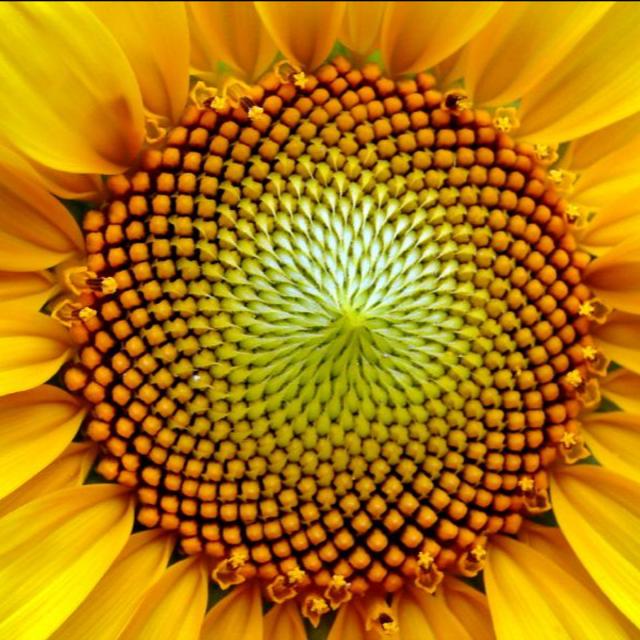
Learn the mathematics behind the Fibonacci numbers, the golden ratio, and how they are related. These topics are not usually taught in a typical math curriculum, yet contain many fascinating results that are still accessible to an advanced high school student. The course culminates in an explanation of why the Fibonacci numbers appear unexpectedly in nature, such as the number of spirals in the head of a sunflower.

Jun 8th 2026
3 Weeks
Discrete Mathematics (Coursera) Coursera
Shanghai Jiao Tong University

Discrete Mathematics (Coursera)

Discrete mathematics forms the mathematical foundation of computer and information science. It is also a fascinating subject in itself. Learners will become familiar with a broad range of mathematical objects like sets, functions, relations, graphs, that are omnipresent in computer science. Perhaps more importantly, they will reach a certain level of mathematical maturity - being able to understand formal statements and their proofs; coming up with rigorous proofs themselves; and coming up with interesting results.

Jun 8th 2026
5-12 Weeks
Data Manipulation at Scale: Systems and Algorithms (Coursera) Coursera
University of Washington

Data Manipulation at Scale: Systems and Algorithms (Coursera)

Data analysis has replaced data acquisition as the bottleneck to evidence-based decision making --- we are drowning in it. Extracting knowledge from large, heterogeneous, and noisy datasets requires not only powerful computing resources, but the programming abstractions to use them effectively. The abstractions that emerged in the last decade blend ideas from parallel databases, distributed systems, and programming languages to create a new class of scalable data analytics platforms that form the foundation for data science at realistic scales.

Jun 8th 2026
4 Weeks
Álgebra Básica (Coursera) Coursera
Universidad Nacional Autónoma de México

Álgebra Básica (Coursera)

Galileo dijo: "El Universo está escrito en lenguaje matemático y los caracteres son triángulos, círculos y otras figuras geométricas, sin las que es humanamente imposible entender una sola palabra". Para entender el Universo, es necesario plantear leyes que expliquen su comportamiento, como pueden ser las leyes de la gravedad, la propagación del calor, el electromagnetismo, la reproducción celular, el crecimiento poblacional, la propagación de las enfermedades, la variación de los precios de las acciones en la bolsa de valores, el comportamiento de las masas ante un conflicto, etcétera.

Jun 1st 2026
5-12 Weeks
Differential Equations for Engineers (Coursera) Coursera
The Hong Kong University of Science and Technology - HKUST

Differential Equations for Engineers (Coursera)

This course is about differential equations and covers material that all engineers should know. Both basic theory and applications are taught. In the first five weeks we will learn about ordinary differential equations, and in the final week, partial differential equations. The course is composed of 56 short lecture videos, with a few simple problems to solve following each lecture. And after each substantial topic, there is a short practice quiz. Solutions to the problems and practice quizzes can be found in instructor-provided lecture notes. There are a total of six weeks in the course, and at the end of each week there is an assessed quiz.

Jun 8th 2026
5-12 Weeks
Differential Equations Part II Series Solutions (Coursera) Coursera
Korea Advanced Institute of Science and Technology - KAIST

Differential Equations Part II Series Solutions (Coursera)

This introductory courses on (Ordinary) Differential Equations are mainly for the people, who need differential equations mostly for the practical use in their own fields. So we try to provide basic terminologies, concepts, and methods of solving various types of differential equations as well as a rudimentary but indispensable knowledge of the underlying theory and some related applications.

Jun 8th 2026
5-12 Weeks
Calculus: Single Variable Part 4 - Applications (Coursera) Coursera
University of Pennsylvania

Calculus: Single Variable Part 4 - Applications (Coursera)

Calculus is one of the grandest achievements of human thought, explaining everything from planetary orbits to the optimal size of a city to the periodicity of a heartbeat. This brisk course covers the core ideas of single-variable Calculus with emphases on conceptual understanding and applications. The course is ideal for students beginning in the engineering, physical, and social sciences.

Jun 8th 2026
5-12 Weeks
Analysis of Algorithms (Coursera) Coursera
Princeton University

Analysis of Algorithms (Coursera)

This course teaches a calculus that enables precise quantitative predictions of large combinatorial structures. In addition, this course covers generating functions and real asymptotics and then introduces the symbolic method in the context of applications in the analysis of algorithms and basic structures such as permutations, trees, strings, words, and mappings.

Jun 8th 2026
5-12 Weeks
Enseñanza de las matemáticas de primaria (Coursera) Coursera
Universidad de los Andes

Enseñanza de las matemáticas de primaria (Coursera)

En este tercer curso de acceso gratuito* del programa especializado Educación Matemática para profesores de primaria, conocerás los conceptos y técnicas para planificar e implementar tus clases. El curso tiene una duración aproximada de seis semanas, con una dedicación promedio de 4 horas semanales. Todas las evaluaciones tienen retroalimentación y podrás descargar la mayoría de los recursos del curso.

Jun 8th 2026
5-12 Weeks