Linear Regression and Modeling (Coursera)

Offered by Duke University,
Linear Regression and Modeling (Coursera)

This course introduces simple and multiple linear regression models. These models allow you to assess the relationship between variables in a data set and a continuous response variable. Is there a relationship between the physical attractiveness of a professor and their student evaluation scores? Can we predict the test score for a child based on certain characteristics of his or her mother? In this course, you will learn the fundamental theory behind linear regression and, through data examples, learn to fit, examine, and utilize regression models to examine relationships between multiple variables, using the free statistical software R and RStudio.

Class Deals by MOOC List - Click here and see Coursera's Active Discounts, Deals, and Promo Codes.

Course 3 of 5 in the Statistics with R Specialization

Syllabus

WEEK 1
About Linear Regression and Modeling
This short module introduces basics about Coursera specializations and courses in general, this specialization: Statistics with R, and this course: Linear Regression and Modeling. Please take several minutes to browse them through. Thanks for joining us in this course!
Linear Regression
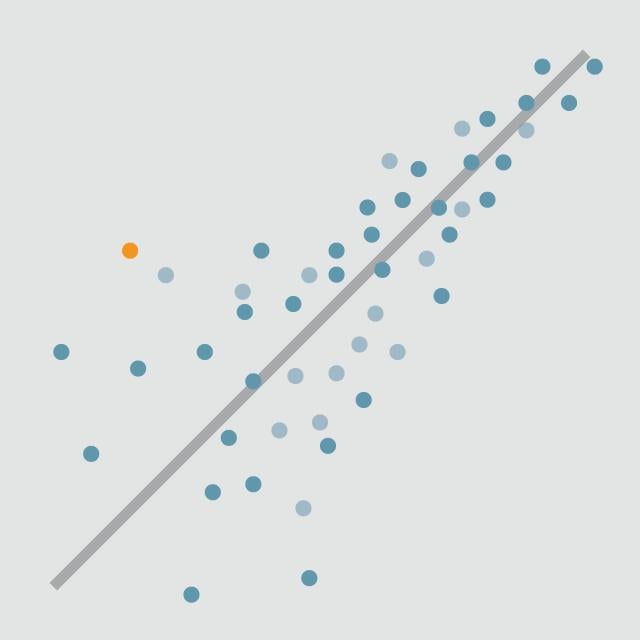
In this week we’ll introduce linear regression. Many of you may be familiar with regression from reading the news, where graphs with straight lines are overlaid on scatterplots. Linear models can be used for prediction or to evaluate whether there is a linear relationship between two numerical variables.

WEEK 2
More about Linear Regression
Welcome to week 2! In this week, we will look at outliers, inference in linear regression and variability partitioning. Please use this week to strengthen your understanding on linear regression. Don't forget to post your questions, concerns and suggestions in the discussion forum!

WEEK 3
Multiple Regression
In this week, we’ll explore multiple regression, which allows us to model numerical response variables using multiple predictors (numerical and categorical). We will also cover inference for multiple linear regression, model selection, and model diagnostics. Hope you enjoy!

WEEK 4
Final Project
In this week you will use the data set provided to complete and report on a data analysis question.


Go to Class
MOOC List is learner-supported. When you buy through links on our site, we may earn an affiliate commission.

Related Courses

Calculus: Single Variable Part 2 - Differentiation (Coursera) Coursera
University of Pennsylvania

Calculus: Single Variable Part 2 - Differentiation (Coursera)

Calculus is one of the grandest achievements of human thought, explaining everything from planetary orbits to the optimal size of a city to the periodicity of a heartbeat. This brisk course covers the core ideas of single-variable Calculus with emphases on conceptual understanding and applications. The course is ideal for students beginning in the engineering, physical, and social sciences.

Jun 8th 2026
3 Weeks
Regression Models (Coursera) Coursera
Johns Hopkins University

Regression Models (Coursera)

Linear models, as their name implies, relates an outcome to a set of predictors of interest using linear assumptions. Regression models, a subset of linear models, are the most important statistical analysis tool in a data scientist’s toolkit. This course covers regression analysis, least squares and inference using regression models.

Jun 8th 2026
4 Weeks
Big Data Modeling and Management Systems (Coursera) Coursera
University of California, San Diego

Big Data Modeling and Management Systems (Coursera)

Once you’ve identified a big data issue to analyze, how do you collect, store and organize your data using Big Data solutions? In this course, you will experience various data genres and management tools appropriate for each. You will be able to describe the reasons behind the evolving plethora of new big data platforms from the perspective of big data management systems and analytical tools.

Jun 8th 2026
5-12 Weeks
Marketing Analytics (Coursera) Coursera
University of Virginia

Marketing Analytics (Coursera)

Organizations large and small are inundated with data about consumer choices. But that wealth of information does not always translate into better decisions. Knowing how to interpret data is the challenge -- and marketers in particular are increasingly expected to use analytics to inform and justify their decisions. Marketing analytics enables marketers to measure, manage and analyze marketing performance to maximize its effectiveness and optimize return on investment (ROI). Beyond the obvious sales and lead generation applications, marketing analytics can offer profound insights into customer preferences and trends, which can be further utilized for future marketing and business decisions.

Jun 8th 2026
5-12 Weeks
Understanding Clinical Research: Behind the Statistics (Coursera) Coursera
University of Cape Town

Understanding Clinical Research: Behind the Statistics (Coursera)

If you’ve ever skipped over`the results section of a medical paper because terms like “confidence interval” or “p-value” go over your head, then you’re in the right place. You may be a clinical practitioner reading research articles to keep up-to-date with developments in your field or a medical student wondering how to approach your own research. Greater confidence in understanding statistical analysis and the results can benefit both working professionals and those undertaking research themselves.

Jun 8th 2026
5-12 Weeks
Introduction to Probability and Data with R (Coursera) Coursera
Duke University

Introduction to Probability and Data with R (Coursera)

This course introduces you to sampling and exploring data, as well as basic probability theory and Bayes' rule. You will examine various types of sampling methods, and discuss how such methods can impact the scope of inference. A variety of exploratory data analysis techniques will be covered, including numeric summary statistics and basic data visualization.

Jun 8th 2026
5-12 Weeks
Basic Statistics (Coursera) Coursera
University of Amsterdam

Basic Statistics (Coursera)

Understanding statistics is essential to understand research in the social and behavioral sciences. In this course you will learn the basics of statistics; not just how to calculate them, but also how to evaluate them. This course will also prepare you for the next course in the specialization - the course Inferential Statistics. In the first part of the course we will discuss methods of descriptive statistics. You will learn what cases and variables are and how you can compute measures of central tendency (mean, median and mode) and dispersion (standard deviation and variance). Next, we discuss how to assess relationships between variables, and we introduce the concepts correlation and regression.

Jun 8th 2026
5-12 Weeks
Machine Learning Foundations: A Case Study Approach (Coursera) Coursera
University of Washington

Machine Learning Foundations: A Case Study Approach (Coursera)

Do you have data and wonder what it can tell you? Do you need a deeper understanding of the core ways in which machine learning can improve your business? Do you want to be able to converse with specialists about anything from regression and classification to deep learning and recommender systems? In this course, you will get hands-on experience with machine learning from a series of practical case-studies.

Jun 8th 2026
5-12 Weeks
Machine Learning With Big Data (Coursera) Coursera
University of California, San Diego

Machine Learning With Big Data (Coursera)

Want to make sense of the volumes of data you have collected? Need to incorporate data-driven decisions into your process? This course provides an overview of machine learning techniques to explore, analyze, and leverage data. You will be introduced to tools and algorithms you can use to create machine learning models that learn from data, and to scale those models up to big data problems.

Jun 8th 2026
5-12 Weeks