Marte tra scienza e cultura (POK)

Offered by Politecnico di Milano,
Marte tra scienza e cultura (POK)

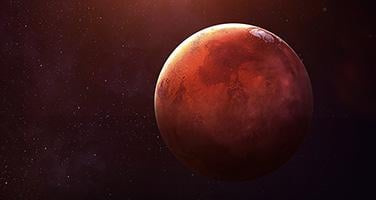
Il corso offre una panoramica a 360° sul pianeta Marte, trattato nei suoi molteplici aspetti: dall’esplorazione spaziale, alla geologia, al clima, passando per l’ipotetica presenza di forme di vita e per la fantascienza. Dopo un'introduzione storico/culturale, dedicata alla storia delle osservazioni marziane, al mito dei marziani e alla sua origine, Marte verrà descritto da un punto di vista più scientifico. Si parlerà pertanto della sua struttura, della sua geologia, dei grandi vulcani (un tempo attivi) e della presenza dell’acqua nelle sue varie forme.

Seguirà una parte dedicata all’esplorazione robotica di Marte, effettuata tramite satelliti in orbita, rover e, dal febbraio 2021, anche dal drone Ingenuity. Si affronterà poi la ricerca di eventuali forme di vita marziane passate o presenti, per concludere con una breve panoramica dei progetti di colonizzazione umana di Marte, attualmente in fase di studio.

Il corso è strutturato su 4 week, o settimane, che non corrispondono necessariamente a settimane di apprendimento, ma piuttosto a blocchi logici.
Week 1 – Marte nella cultura, nella storia e nella fantascienza
Week 2 - Geologia e struttura marziane
Week 3 - Esplorazione di Marte
Week 4 - La colonizzazione e la ricerca di vita su Marte
La prima settimana del corso è dedicata a un'introduzione generale al Pianeta Rosso e alla sua figurazione nell’immaginario popolare. Come è nato il mito dei marziani? Perché in antichità Marte era associato al dio della guerra?
La seconda settimana descrive approfonditamente la struttura interna del pianeta, la sua superficie (crateri da impatto, canyon, vulcani…), l’atmosfera e il clima marziani.
La terza settimana è dedicata all’esplorazione robotica di Marte dalla superficie e dall’orbita. Una lezione speciale è riservata alle esplorazioni del rover Perseverance e del drone Ingenuity.
La quarta settimana affronta i temi dell’astrobiologia marziana e dell’umanità su Marte.

Go to Class
MOOC List is learner-supported. When you buy through links on our site, we may earn an affiliate commission.

Related Courses

Oil & Gas Industry Operations and Markets (Coursera) Coursera
Duke University

Oil & Gas Industry Operations and Markets (Coursera)

The oil and gas industry has an enormous impact on all aspects of daily life. Individuals, corporations, and national governments make financial and policy decisions based on the cost, use, and availability of these two natural resources. This two-week course looks at the two most fundamental aspects of the oil and gas industry, its operations and markets, each of which is addressed as a separate module in the course.

Aug 5th 2026
2 Weeks
Quantitative Methods (Coursera) Coursera
University of Amsterdam

Quantitative Methods (Coursera)

Discover the principles of solid scientific methods in the behavioral and social sciences. Join us and learn to separate sloppy science from solid research! This course will cover the fundamental principles of science, some history and philosophy of science, research designs, measurement, sampling and ethics. The course is comparable to a university level introductory course on quantitative research methods in the social sciences, but has a strong focus on research integrity. We will use examples from sociology, political sciences, educational sciences, communication sciences and psychology.

Aug 17th 2026
5-12 Weeks
La legge di gravitazione universale (POK) Polimi OPEN KNOWLEDGE
Politecnico di Milano

La legge di gravitazione universale (POK)

Indaghiamo assieme una delle leggi fisiche più belle dell’Universo, ma non solo! Sveliamo i concetti fondamentali della meccanica orbitale, del volo e della propulsione aerospaziale. La forza di gravità è ciò che dà la forma ad ogni oggetto e corpo presente nell’Universo. I pianeti stessi e le loro orbite sono soggetti a questa forza tanto potente quanto misteriosa, come scoprirete seguendo queste lezioni.

Available
2 Weeks
Super-Earths And Life (edX) EdX
HarvardX,Harvard University

Super-Earths And Life (edX)

Learn about the Earth, life, and how we can search for life elsewhere in the universe. Are we alone in this universe? What new information and observations on exoplanets have we discovered? In the past decade, astronomers have made incredible advances in the discovery of planets outside our solar system. Thirty years ago, we knew only of the planets in our own solar system. Now we know of thousands circling nearby stars.

Self Paced
Self-Paced
Roches et Minéraux Courants: Genèse, Identification et Utilisations (FUN) FUN
Institut Mines-Telecom

Roches et Minéraux Courants: Genèse, Identification et Utilisations (FUN)

Le but du cours est d'identifier les roches et les minéraux courants et de découvrir leurs applications ainsi que leur impact environnemental. Cette quatrième session du cours a été revue en fonction des remarques faites lors des 3 premières sessions. Elle comporte de nouvelles vidéos et des activités pédagogiques très innovantes. Vous êtes invité à reconnaître les roches sur site avec votre smartphone pour les prendre en photo et les géolocaliser, pour échanger avec vos pairs sur le terrain même.

No sessions available
5-12 Weeks
How to Survive on Mars: the Science Behind the Human Exploration of Mars (FutureLearn) FutureLearn
Monash University

How to Survive on Mars: the Science Behind the Human Exploration of Mars (FutureLearn)

Learn the basic science needed for humans to survive on Mars, with this free online science course. Mars has captivated the human imagination since the very earliest civilisations. It is the most explored planet in the solar system and that is unlikely to change. Getting to Mars is relatively easy, surviving on Mars will be the real challenge.

No sessions available
4 Weeks
Extreme Geological Events (FutureLearn) FutureLearn
Cardiff University

Extreme Geological Events (FutureLearn)

Explore how extreme geological events have shaped Earth and what challenges future events might pose to our planet. Discover how extreme geological events have transformed our planet. Retrace how Earth formed 4.5 billion years ago and has evolved to become the planet we know today. On this course, you’ll get an introduction to the geological history of planet Earth, and explore the extreme events that shaped it and created conditions for life.

Self Paced
3 Weeks
Disaster Preparedness (Coursera) Coursera
University of Pittsburgh

Disaster Preparedness (Coursera)

Have you ever viewed a news report depicting the aftermath of a devastating natural disaster? The damage to human life and property are both staggering and heartbreaking. All parts of the world face the possibility of floods, hurricanes, tornados, fires, landslides, earthquakes, tsunamis, and other natural phenomena. Are you prepared if disaster would strike you? This course will help you prepare!

Aug 17th 2026
5-12 Weeks
The Dynamic Earth: A Course for Educators (Coursera) Coursera
American Museum of Natural History

The Dynamic Earth: A Course for Educators (Coursera)

The AMNH course The Dynamic Earth: A Course for Educators provides students with an overview of the origin and evolution of the Earth. Informed by the recently released Next Generation Science Standards, this course examines geological time scales, radiometric dating, and how scientists “read the rocks.” We will explore dramatic changes in the Earth over the last 4 billion years, including how the evolution of life on Earth has affected its atmosphere. In addition to looking at geology on a global scale, participants will take to their own backyards to explore and share their local geologic history.

Jul 27th 2026
4 Weeks