EdX

Geoscience: the Earth and its Resources (edX)

Geoscience: the Earth and its Resources (edX)

Your introduction to modern Earth Sciences with application to the Geology of hydrocarbon and water. Are you fascinated by Geosciences and willing to take the challenge of predicting the nature and behavior of the Earth subsurface? This is your course!

Class Deals by MOOC List - Click here and see EdX's Active Discounts, Deals, and Promo Codes.

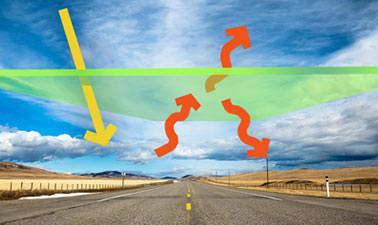
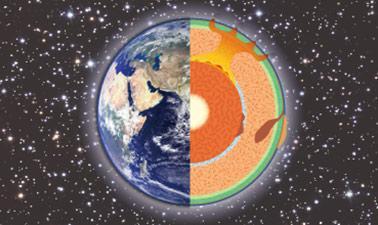
In a voyage through the Earth, Geoscience: the Earth and its Resources will explore the Earth interior and the processes forming mountains and sedimentary basins. You will understand how the sediments are formed, transported, deposited and deformed.

You will develop knowledge on the behavior of petroleum and water resources.
The course has an innovative approach focusing on key fundamental processes, exploring their nature and quantitative interactions. It will be shown how this acquired knowledge is used to predict the nature and behavior of the Earth subsurface.
This is your ideal first step as a future Geoscientists or professional to upgrade your knowledge in the domain of Earth Sciences.

What you'll learn:

  • The basics of plate tectonics
  • Processes that control the formation of mountains and sedimentary basins
  • How sediments are formed, transported and deposited
  • How rocks are deformed and how knowledge of deformation increases the reliability of subsurface predictions
  • Petroleum geology
  • Water geology

Syllabus

Week 1: Warming up. The three main rock types, the structure of the Earth and plate tectonics
Week 2: Horizontal deformations, vertical movements and the formation of mountains and basins
Week 3: Climate and how siliciclastic sediments are produced and transported
Week 4: Deposition in the marine domain
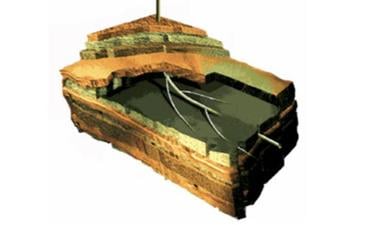
Week 5: Hydrocarbon geology
Week 6: Geology of geothermal energy
Weeks 7 & 8: Round-up
Go to Class
MOOC List is learner-supported. When you buy through links on our site, we may earn an affiliate commission.

Related Courses

Environmental Engineering: Drinking Water Treatment (edX) EdX
Seoul National University,SNUx

Environmental Engineering: Drinking Water Treatment (edX)

Understand what makes water clean or dirty and what are being done at water treatment facilities to make water safe to drink. This course will cover fundamental science and engineering principles dealing with natural and water environmental systems. First, we focus on what influences water quality and what are sources, characteristics, and effects of water pollutants. Second, we will explore the basic chemical concepts needed to understand how pollutants may change their forms and influence water quality.

Self Paced
Self-Paced
Hydraulique fluviale 1 - Écoulements à surface libre (edX) EdX
LouvainX,Université Catholique de Louvain - UCL

Hydraulique fluviale 1 - Écoulements à surface libre (edX)

Apprenez à calculer la quantité de sédiments transportés par les rivières et à comprendre leurs interactions avec la rivière et son environnement. Comment décrire l’écoulement d’une rivière ou d’un fleuve ? Quelle influence un rétrécissement local ou une pile de pont dans la rivière peuvent-ils avoir sur le niveau d’eau ? Quels aménagements vont permettre de limiter les impacts d’événements naturels tels qu’une crue ou une inondation sur la population et les villes avoisinantes ? Autant de questions qui reflètent l’importance de la compréhension du fonctionnement des cours d’eau.

Self Paced
Self-Paced
Climate Change Education (edX) EdX
Inter-American Development Bank - IDB,IDBx

Climate Change Education (edX)

Learn how to work with your students to help them explore climate change through the use of interactive and engaging activities. These activities are designed for students at the primary and secondary levels. Our climate is changing rapidly, and now more than ever we need to be ready to act and prepare the next generation to take care of our planet. This course explores the basic science behind climate change and presents the tools to teach it in a positive, engaging and participatory way. The course also introduces some of the ethical and social issues around climate change.

Self Paced
Self-Paced
The Next Generation of Infrastructure (edX) EdX
Delft University of Technology,DelftX

The Next Generation of Infrastructure (edX)

Explore the challenges and complexity of both global and local infrastructure (IT/Telecom, Energy, Water and Transportation) and how to make the best decisions to improve it. We increasingly depend on reliable and affordable supply of energy, water, transport, telecommunication and information services to improve livability and facilitate economic development. However, today's infrastructure systems are drastically changing. They are becoming more and more web-based, interconnected and transnational, with increasingly fragmented public and private ownership, while new technologies are on their way.

This course is archived
5-12 Weeks
Nitrogen: A Global Challenge (edX) EdX
University of Edinburgh,EdinburghX

Nitrogen: A Global Challenge (edX)

Learn about the global nitrogen challenge, how nitrogen has helped human civilization to develop, and how its misuse now threatens us. It’s a perfect storm. Limited food, water and energy unequally spread between an expanding population, and a warming climate as the bitter icing on the cake. In all these global challenges nitrogen has a leading role to play. Here you will learn just how hard-wired into all of human civilisation nitrogen is, and whether the future will see it as our quiet savior or the toxic villain of the piece.

Self Paced
Self-Paced
Water and Wastewater Treatment Engineering: Biochemical Technology (edX) EdX
Tsinghua University,TsinghuaX

Water and Wastewater Treatment Engineering: Biochemical Technology (edX)

Learn the basic principles and characteristics of biochemical technology in water and wastewater treatment engineering. Biochemical technology in water and wastewater treatment engineering is essential in the field of water treatment. In this environmental studies course you will learn the basic principles and characteristics of biochemical technology.

Self Paced
Self-Paced
Religious Symbols of the World (edX) EdX
Seoul National University,SNUx

Religious Symbols of the World (edX)

This course is the third and final course in the series following “Understanding Religious Symbolism” and “Myths, Rituals, and Cosmos.” Through the theories and patterns that you learned in these three courses, I hope that you will be able to interpret the various religious phenomena in different cultures, and through this gain a better understanding of culture and human beings.

Self Paced
Self-Paced
#EarthOptimism (edX) EdX
Smithsonian,SmithsonianX

#EarthOptimism (edX)

A 5-session workshop focused on identifying conservation success stories and sharing them on Twitter.Join others from around the world who care about changing the conversation around conservation from one of doom and gloom to one of hope and optimism...and who believe that change is positively possible.

Self Paced
Self-Paced
Agua en América Latina: Abundancia en medio de la escasez mundial (edX) EdX
Inter-American Development Bank - IDB,IDBx

Agua en América Latina: Abundancia en medio de la escasez mundial (edX)

Un MOOC desarrollado en colaboración con la Universidad de los Andes (Uniandes) de Colombia, donde diferentes visiones y profesiones se unen para construir alternativas que ayudan a comprender la crisis mundial del agua. Si en el mundo existe tanta agua dulce, 35 millones de km3 para ser exactos, ¿cómo es posible que hoy más de 750 millones de personas no tengan acceso al agua? Al mismo tiempo, el continente americano cuenta con el 31% de las reservas de agua dulce del mundo. ¿Es posible que los países que conforman América Latina puedan aprovechar esta situación y transformarla en una gran oportunidad?

Self Paced
Self-Paced
Climate Change in Water and Sanitation Utilities (edX) EdX
Inter-American Development Bank - IDB,IDBx

Climate Change in Water and Sanitation Utilities (edX)

Did you know that some water and sanitation utilities are beginning to lead the transition towards a carbon-neutral future? If you are a professional or an active stakeholder in the water and sanitation sector and want to learn more about how to reduce greenhouse gas emissions at every stage of the urban water cycle, this course is for you. In this course, you will learn about the actions to reduce greenhouse gas emissions in urban water and sanitation utilities and the benefits this brings in terms of economics, environmental impact, and efficiency. Discover the unexplored potential of water and sanitation utilities in global greenhouse gas emissions reduction.

Self Paced
Self-Paced