Manufacturing Process with Autodesk Fusion 360 (Coursera)

Offered by Autodesk,
Manufacturing Process with Autodesk Fusion 360 (Coursera)

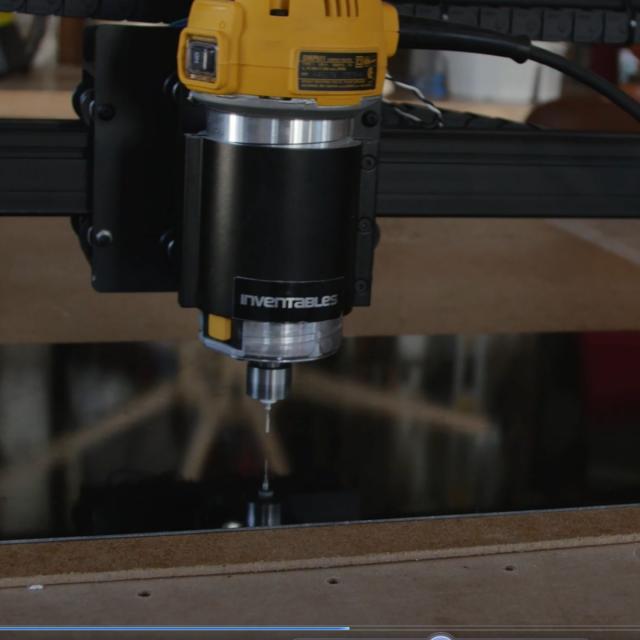
Designing a product is only part of the process. Now, can that product be manufactured? A CNC machinist works with computer numeric controlled (CNC) machines from generating the machine code to machine setup and run. Understanding both CAD and CAM is essential to this portion of a design.

Class Deals by MOOC List - Click here and see Coursera's Active Discounts, Deals, and Promo Codes.

Even if you are not the end user who programs a machine, it is invaluable to know how it’s done. This knowledge translates directly to part design by helping make intelligent design decisions with manufacturing in mind. This course introduces you to the integrated CAD/CAM approach behind Fusion 360 CAD/CAM as well as 3D printed design setup and finally assembly and testing. All stages of product design in one place!
After completing this course, you will be able to:
• Explain the Fusion 360 integrated CAD/CAM manufacturing workflow.
• Summarize the trends that are influencing the future of manufacturing.
• Demonstrate knowledge and skills in foundational concepts of Fusion 360 CAD/CAM software.
• Set up a Flight Controller.
• Assemble a quadcopter.
• Fly the final design.

Course 5 of 5 in theCAD and Digital Manufacturing Specialization

Syllabus

WEEK 1
Waterjet Program
Most retail production quad and multirotor chassis are made of flat plates of carbon fiber or injection molded plastic. Flat plates of composite materials are often cut on a machine that uses high pressure water and abrasives. This allows you to cut almost any material without introducing heat, which could affect its structure and properties. In this week's lessons, we'll explore how to setup and validate a 2D waterjet cut on a quadcopter chassis.

WEEK 2
Propeller Program
Autodesk® Fusion 360™ is capable of much more complex CNC programs beyond a 2D cut. We explore some of the advanced functionality by creating toolpaths on a propeller to explore multi-axis machining.

WEEK 3
Quadcopter Assembly
You finally have a complete design and all the parts in hand, now what? This stage of the process can be a rather large task the first time through. From complex wiring, cable management, and overall assembly, we will step through the process. Even if you aren’t designing and building your own quadcopter, this is great information to have for when you do.

WEEK 4
Setup and Test Flights
Go to Class
MOOC List is learner-supported. When you buy through links on our site, we may earn an affiliate commission.

Related Courses

Factory Automation: Shaping the Future of Manufacturing (Coursera) Coursera
Starweaver

Factory Automation: Shaping the Future of Manufacturing (Coursera)

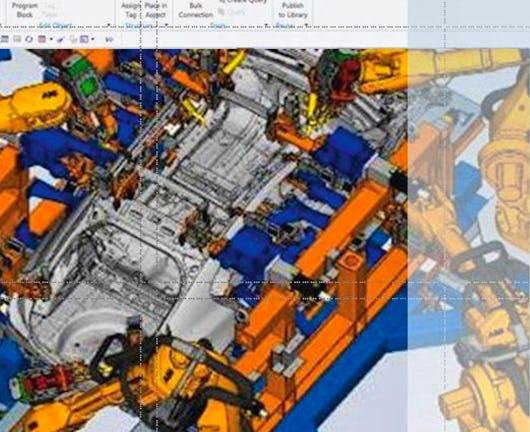
This course provides a comprehensive understanding of factory automation, covering foundational concepts to practical applications. Participants explore the evolution of automation technology, including robotics and control systems, witnessing its role in optimizing production processes and enhancing productivity. Through real-world case studies, they learn how automation improves efficiency, safety, and innovation in manufacturing.

Sep 14th 2026
4 Weeks
Roadmap to Success in Digital Manufacturing & Design (Coursera) Coursera
University at Buffalo,The State University of New York

Roadmap to Success in Digital Manufacturing & Design (Coursera)

Learners will create a roadmap to achieve their own personal goals related to the digital manufacturing and design (DM&D) profession, which will help them leverage relevant opportunities. The culminating project provides a tangible element to include in their professional portfolios that showcases their knowledge of Industry 4.0.

Sep 7th 2026
5-12 Weeks
Introduction to Solid Edge (Coursera) Coursera
Siemens

Introduction to Solid Edge (Coursera)

The Introduction to Siemens Solid Edge software will enable you to learn basic design concepts in both 2D and 3D environments using Computer-Aided Design (CAD) software. The concepts include 2D sketches, basic shapes, 3D models, and simple assemblies. You’ll gain experience using commands such as extrude, revolve, rounds, blend, and thinwall to more efficiently design solid models. Additionally, you’ll learn about drafting concepts such as detailing, drawing view, section cuts, and design intent.

Aug 31st 2026
5-12 Weeks
Machine Design Part I (Coursera) Coursera
Georgia Institute of Technology

Machine Design Part I (Coursera)

“Machine Design Part I” is the first course in an in-depth three course series of “Machine Design.” The “Machine Design” Coursera series covers fundamental mechanical design topics, such as static and fatigue failure theories, the analysis of shafts, fasteners, and gears, and the design of mechanical systems such as gearboxes. Throughout this series of courses we will examine a number of exciting design case studies, including the material selection of a total hip implant, the design and testing of the wing on the 777 aircraft, and the impact of dynamic loads on the design of an bolted pressure vessel. In this first course, you will learn robust analysis techniques to predict and validate design performance and life.

Sep 14th 2026
5-12 Weeks
Designing Hardware for Raspberry Pi Projects (Coursera) Coursera
Johns Hopkins University

Designing Hardware for Raspberry Pi Projects (Coursera)

This is course 4 of this specialization (although it can be taken out of order) and focuses on applying experience and knowledge gained in the first three courses to build physical electronics hardware. Specifically, this course focuses on four areas: circuit simulation, schematic entry, PCB layout, and 3D CAD modeling. There are many excellent commercial applications available in these areas, however to give everyone access we'll be using all free and open-source software.

Aug 31st 2026
4 Weeks
Introduction to Basic Vibrations (Coursera) Coursera
Korea Advanced Institute of Science and Technology - KAIST

Introduction to Basic Vibrations (Coursera)

Introduction to Basic Vibrations starts with the fundamental principle of vibrations with a single and double degree of freedom systems. These fundamental vibration systems provide a solid platform not only to understand general vibrations but also to apply or use them into simple mechanical problems.

Sep 7th 2026
5-12 Weeks
MBSE: Model-Based Systems Engineering (Coursera) Coursera
University at Buffalo,The State University of New York

MBSE: Model-Based Systems Engineering (Coursera)

This Model-Based Systems Engineering (MBSE) course and the Digital Thread courses featured earlier in this specialization bring together the concepts from across digital manufacturing and design, forming a vision in which the geometry of a product is just one way of describing it. MBSE is where the model resulting from the evolution of system requirements, design, analysis, verification and validation activities is the focus of design and manufacturing.

Aug 31st 2026
4 Weeks
Introduction to Engineering Design (Coursera) Coursera
Starweaver

Introduction to Engineering Design (Coursera)

In today's fast-paced technological environment, understanding the fundamentals of engineering design is crucial for aspiring engineers and professionals alike. This comprehensive course serves as a primer, introducing participants to key concepts and methodologies essential for designing innovative solutions to complex problems. It provides an overview of the engineering design process, emphasizing the integration of creativity and functionality in problem-solving.

Sep 14th 2026
4 Weeks
Supply Chain Principles (Coursera) Coursera
Georgia Institute of Technology

Supply Chain Principles (Coursera)

This course will provide a solid understanding of what a supply chain is all about. The course: provides an introduction to Supply Chain; leverages graphics to promote the Integrated Supply Chain model; emphasizes understanding the Extended Supply Chain; presents a holistic approach – Incorporating People, Process, and Technology; calls-out industry-specific supply chain; leverages discussions, videos, quizzes, and questions for consideration; provides awareness of career path opportunities; presents emerging and futuristic trends in supply chain and given that at GT we are focused on developing what’s next in the world, we include Discussion of emerging and futuristic trends in supply chain. There is very little math involved in this course – so don’t worry at all about your math skills.

Aug 31st 2026
5-12 Weeks
Material Behavior (Coursera) Coursera
Georgia Institute of Technology

Material Behavior (Coursera)

Have you ever wondered why ceramics are hard and brittle while metals tend to be ductile? Why some materials conduct heat or electricity while others are insulators? Why adding just a small amount of carbon to iron results in an alloy that is so much stronger than the base metal? In this course, you will learn how a material’s properties are determined by the microstructure of the material, which is in turn determined by composition and the processing that the material has undergone.

Sep 7th 2026
5-12 Weeks
Rigid Body Dynamics (Coursera) Coursera
Korea Advanced Institute of Science and Technology - KAIST

Rigid Body Dynamics (Coursera)

This course teaches dynamics, one of the basic mechanics subjects of Mechanical Engineering. Students would be able to organize their knowledge about force and motion, work-energy, impulse-momentum in view of Newton's 2nd law and its integration over time and displacement. The Engineering Dynamics consists of two parts: particle dynamics and rigid body dynamics. This is the second part of the dynamics: rigid body dynamics.

Sep 14th 2026
13-24 Weeks