Cybersecurity Policy for Water and Electricity Infrastructures (Coursera)

Cybersecurity Policy for Water and Electricity Infrastructures (Coursera)

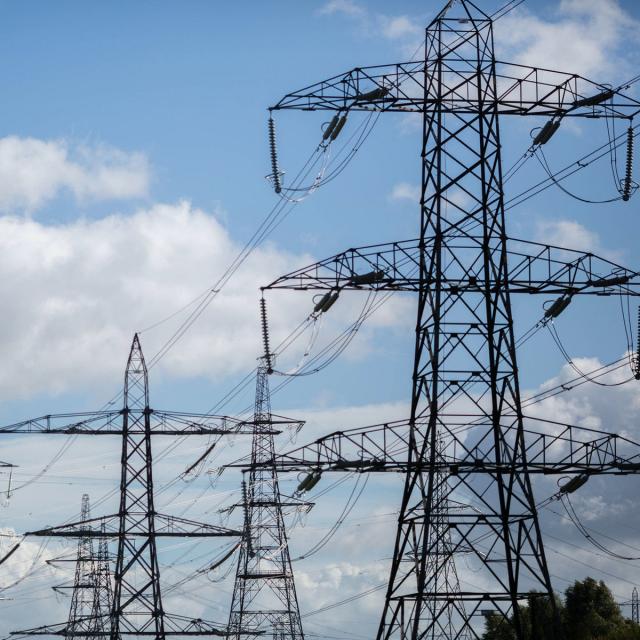
This course will examine the drinking water and electricity infrastructures, and various policies that have been developed to help guide and strengthen their cybersecurity programs. The drinking water and electricity infrastructures are two of fourteen subsectors comprising what are known as "lifeline infrastructure". The 2013 National Infrastructure Protection Plan identifies four lifeline infrastructure sectors: 1) water, 2) energy, 3) transportation, and 4) communications. These sectors are designated "lifeline" because many other infrastructures depend upon them.

Class Deals by MOOC List - Click here and see Coursera's Active Discounts, Deals, and Promo Codes.

The drinking water subsector is part of the water sector, and the electricity subsector is part of the energy sector. Both subsectors are overseen by the Department of Homeland Security National Protection and Programs Directorate which manages the DHS National Infrastructure Protection Program. The NIPP employs a five-step continuous improvement program called the Risk Management Framework. NIPP implementation is overseen by DHS-designated Sector-Specific Agencies staffed by various Federal departments. The Sector-Specific Agencies work in voluntary cooperation with industry representatives to apply the Risk Management Framework and document results in corresponding Sector-Specific Plans. The program began in 2007 and the most recent Sector-Specific Plans were published in 2016. In February 2013, President Obama issued Executive 13636 directing the National Institute of Standards and Technology to develop a voluntary set of recommendations for strengthening infrastructure cybersecurity measures. EO13636 also asked Federal agencies with regulating authority to make a recommendation whether the NIST Cybersecurity Framework should be made mandatory. The Environmental Protection Agency who is both the SSA and regulatory authority for the drinking water subsector recommended voluntary application of the NIST Cybersecurity Framework. The Department of Energy who is both the SSA and regulatory authority for the electricity subsector replied that it was already implementing the Electricity Subsector Cybersecurity Capability Maturity Model, which indeed was what the NIST Cybersecurity Framework was based on. The Department of Energy, though, recommended voluntary application of the ES-C2M2. This module will examine both the drinking water and electricity lifeline infrastructure subsectors, and elements and application of the NIST Cybersecurity Framework and ES-C2M2.

Course 2 of 4 in the Homeland Security and Cybersecurity Specialization.

Syllabus

WEEK 1
Module 5: Water Infrastructure & NIST Cybersecurity Framework
In this module we will examine the drinking water subsector and the NIST Cybersecurity Framework for strengthening this infrastructure's cybersecurity practices.

WEEK 2
Module 6: Applied NIST Cybersecurity Framework
In this module we will take a closer look at the NIST Cybersecurity Framework and apply its tenets to different hypothetical situations. Also included in this module is course exam #3. Good luck!

WEEK 3
Module 7: Electricity Infrastructure & ES-C2M2
In this module we will examine the North American electric grid and the Electricity Subsector Cyber Capability Maturity Model for strengthening this infrastructure's cybersecurity practices.

WEEK 4
Module 8: Applied ES-C2M2
In this module we will take a closer look at the Electricity Subsector Cyber Capability Maturity Model and apply its tenets to different hypothetical situations. Also included in this module is course exam #4 and related project assignment. Good luck!
Go to Class
MOOC List is learner-supported. When you buy through links on our site, we may earn an affiliate commission.

Related Courses

Detecting and Mitigating Cyber Threats and Attacks (Coursera) Coursera
University of Colorado System

Detecting and Mitigating Cyber Threats and Attacks (Coursera)

Computer attacks and data breaches are inevitable. It seems like every day a data breach occurs and the victims of the data breach suffer. Their information is stolen or posted online. The company’s or businesses who had the breach go on, learn a little from the attack, and just give credit monitoring out as if nothing happened. What if you could help prevent a data breach in your organization? This is the third course in the Practical Computer Security specialization. This course looks at detection and mitigation of threats and attack vectors and discusses how to use tools and principles to protect information.

Jun 8th 2026
5-12 Weeks
Cybersecurity Awareness and Innovation (Coursera) Coursera
EIT Digital

Cybersecurity Awareness and Innovation (Coursera)

It’s not you, it’s me! What’s going on? This course empowers students, professionals and wider community to deal with cybersecurity attacks and risks focused on identity management and it is an introduction to the upcoming full course focused on cybersecurity awareness. It is provided a practical overview of challenging issues like identity credentials management and security, e-mail threats and web impersonation, or web hacking.

Jun 8th 2026
5-12 Weeks
Enterprise and Infrastructure Security (Coursera) Coursera
New York University

Enterprise and Infrastructure Security (Coursera)

This course introduces a series of advanced and current topics in cyber security, many of which are especially relevant in modern enterprise and infrastructure settings. The basics of enterprise compliance frameworks are provided with introduction to NIST and PCI. Hybrid cloud architectures are shown to provide an opportunity to fix many of the security weaknesses in modern perimeter local area networks.

Jun 8th 2026
4 Weeks
Water Supply and Sanitation Policy in Developing Countries Part 2: Developing Effective Interventions (Coursera) Coursera
University of Manchester

Water Supply and Sanitation Policy in Developing Countries Part 2: Developing Effective Interventions (Coursera)

Water Supply and Sanitation Policy in Developing Countries Part 2 is our second MOOC in a two-part sequence, and looks at ‘Developing Effective Interventions’. Here we invite you to develop analytical skills and deep understanding about a complex, controversial policy problem – one with no simple, easy answers. About half a billion people on our planet still lack access to improved water supplies and about two billion do not have improved sanitation services, leading to an unknown but very large number of avoidable deaths each year from water-related diseases. Millions of dollars are spent on avoidable health care expenditures, and people – mostly women – spend many billions of hours carrying water from sources outside the home.

Jun 8th 2026
5-12 Weeks
Mathematical Foundations for Cryptography (Coursera) Coursera
University of Colorado System

Mathematical Foundations for Cryptography (Coursera)

Welcome to Course 2 of Introduction to Applied Cryptography. In this course, you will be introduced to basic mathematical principles and functions that form the foundation for cryptographic and cryptanalysis methods. These principles and functions will be helpful in understanding symmetric and asymmetric cryptographic methods examined in Course 3 and Course 4. These topics should prove especially useful to you if you are new to cybersecurity. It is recommended that you have a basic knowledge of computer science and basic math skills such as algebra and probability.

Jun 8th 2026
4 Weeks
Segurança de TI: Defesa Contra as Artes Obscuras do Mundo Digital (Coursera) Coursera
Google

Segurança de TI: Defesa Contra as Artes Obscuras do Mundo Digital (Coursera)

Este curso aborda uma série de conceitos, ferramentas e práticas recomendadas de segurança de TI. Nele, temos uma introdução às ameaças e ataques e suas muitas formas de se manifestar. Daremos a você uma base de conhecimento sobre algoritmos de criptografia e como eles são usados para proteger dados. Depois, vamos estudar a fundo os três tipos de segurança da informação: autenticação, autorização e registro. Além disso, vamos abordar soluções de segurança de rede, de firewalls a opções de criptografia Wi-Fi.

Jun 8th 2026
5-12 Weeks
Outsmarting intermittency (Coursera) Coursera
École Polytechnique

Outsmarting intermittency (Coursera)

Solar and wind offer clean and renewable ways to produce large amounts of electricity. They have boomed over the last few years, evolving from an eco-daydream to a major market and showing unprecedented growth rates. Yet, installing solar panels and wind turbines is by no means the end of the story. The electrical grid, which connects production means to the end-users’ sockets, is not a simple electron pipe. It is the beating heart of our electricity system and ensures its stability. Solar and wind raise specific challenges for the grid, and these challenges will have to be tackled if we want to deploy larger amounts of renewable sources.

Jun 8th 2026
4 Weeks
Classical Cryptosystems and Core Concepts (Coursera) Coursera
University of Colorado System

Classical Cryptosystems and Core Concepts (Coursera)

Welcome to Introduction to Applied Cryptography. Cryptography is an essential component of cybersecurity. The need to protect sensitive information and ensure the integrity of industrial control processes has placed a premium on cybersecurity skills in today’s information technology market. Demand for cybersecurity jobs is expected to rise 6 million globally by 2019, with a projected shortfall of 1.5 million, according to Symantec, the world’s largest security software vendor. According to Forbes, the cybersecurity market is expected to grow from $75 billion in 2015 to $170 billion by 2020.

Jun 8th 2026
3 Weeks
NIST 800-171 (Coursera) Coursera
Infosec

NIST 800-171 (Coursera)

NIST SP 800-171 is a cybersecurity framework of 110 controls in 14 families published by the National Institute of Standards and Technology (NIST). This learning path will teach you how to comply with the requirements of NIST 800-171. You will understand what CUI is and how to identify it; what a nonfederal information systems is; how to understand each of the 110 requirements in the framework and satisfy each of them if necessary; how to create a Body of Evidence (BOE) including Organizational Policy or Procedures; a System Security Plan (SSP) and Plans of Action and Milestones (POAM).

Jun 8th 2026
5-12 Weeks
Cybersecurity Compliance Framework & System Administration (Coursera) Coursera
IBM

Cybersecurity Compliance Framework & System Administration (Coursera)

This course gives you the background needed to understand the key cybersecurity compliance and industry standards. This knowledge will be important for you to learn no matter what cybersecurity role you would like to acquire or have within an organization. You will learn the basic commands for user and server administration as it relates to security. You will need this skill to be able to understand vulnerabilities within your organizations operating systems.

Jun 8th 2026
4 Weeks