FUN

Les conduites suicidaires : identifier et prévenir (FUN)

Les conduites suicidaires : identifier et prévenir (FUN)

Faire face à un suicide abouti ou une personne suicidaire nous questionne sur notre propre expérience. Ces personnes sont des personnes comme les autres, comme nous tous, pour lesquelles la vie est devenue source de souffrance. Les comprendre, c'est nous comprendre, découvrir les faiblesses de notre personnalité, les manques de notre environnement, de notre société. Avec ce MOOC, nous proposons une formation accessible à toutes les personnes s’intéressant à la problématique suicidaire, pour des raisons personnelles, professionnelles, scientifiques voire philosophiques.

Nous tenterons d’avoir une approche transversale du suicide : épidémiologie, déterminants sociaux et culturels, théories psychologiques, facteurs cliniques, méthodes de prévention ou encore études scientifiques dessinant le cerveau suicidaire.

Format du cours
Ce MOOC se déroulera sur 7 semaines.
Chaque semaine aborde une thématique concrète en proposant 3 vidéos de 10 à 15 minutes (dont une vidéo d’approfondissement), un quizz et des outils didactiques.
L’équipe pédagogique animera un forum de discussion en ligne pour répondre à vos questions.
Au cours de ce MOOC, vous ferez la connaissance d’experts dans le domaine de la suicidologie à travers certaines vidéos didactiques ou entretiens.

Plan du cours

SEMAINE 0 : Introduction au MOOC

SEMAINE 1 : Où en sommes-nous ?
Suicide et société
Psycho-épidémiologie des conduites suicidaires
Vulnérabilité suicidaire

SEMAINE 2 : Comment repérer le risque suicidaire ?
Dépistage des situations à risque
Gestion du risque et de la crise suicidaire
Evaluation des idées suicidaires et utilisation d'un outil de screening

SEMAINE 3 : Le suicide : un choix ?
Risque suicidaire et troubles psychiatriques
Risque suicidaire et maladie somatique
Suicide assisté
Le suicide et la radicalisation

SEMAINE 4 : Quelle géographie des risques suicidaires ?
Risque suicidaire à travers le monde et selon l'orientation sexuelle
Suicide dans les minorités à risque
Suicide dans le cadre professionnel

SEMAINE 5 : Quelles réponses apporter ?
Prévention et postvention
Thérapeutiques ayant démontré leur efficacité : pharmacologie et psychothérapie
Perspectives de recherche

SEMAINE 6 : Mise en situation clinique aux urgences
Prise en charge après une tentative de suicide (accueil aux urgences)
Safety plan
Le risque suicidaire et sa prévention en période de post hospitalisation

SEMAINE 7 : Vivre avec son temps
Psychoéducation, stratégies basées sur la mindfulness et conduites suicidaires
Détresse et conduites suicidaires à l’heure des réseaux sociaux
Les conduites suicidaires chez l'adolescent
Go to Class
MOOC List is learner-supported. When you buy through links on our site, we may earn an affiliate commission.

Related Courses

History of Medical Cannabis (Coursera) Coursera
University of Colorado Boulder

History of Medical Cannabis (Coursera)

This History of Medical Cannabis course is designed to have you think critically about past, present, and future research on the health effects of cannabis by developing a more nuanced understanding of the barriers to research as well as different approaches to research. You will learn about the history of cannabis cultivation, the legal history of cannabis or "marijuana", and the obstacles that led to the lack of science on its medicinal use.

Jun 1st 2026
4 Weeks
Global Health Diplomacy (Coursera) Coursera
The State University of New York

Global Health Diplomacy (Coursera)

The field of global health is often thought of purely in medical or public health terms, but there are important geopolitical and policy dimensions of global health that underlie programmatic responses to global health challenges. By completing this course, learners will be able to explain the specific institutions and initiatives that are fundamental to current global health diplomacy activities and functions, and how these influence global health outcomes. Learners will further be able to summarize real-world examples where global health diplomacy either helped or limited global health outcomes, and explain the reasons for those outcomes.

Jun 1st 2026
5-12 Weeks
Tuberculosis (FUN) FUN
Institut Pasteur

Tuberculosis (FUN)

To provide an up-to-date overview of the disease, the Institut Pasteur has created a MOOC dedicated to Tuberculosis. This course will provide a knowledge base that goes from the basics of TB to the current state of knowledge on various aspects of tuberculosis: the clinical picture, epidemiology, pediatric TB, factors affecting susceptibility to the disease, including HIV, diabetes and human genetics, immunology, vaccines, diagnosis, current and future ways to detect drug resistance, and how to treat drug sensitive and multi-drug resistant strains.

Sep 7th 2021
5-12 Weeks
Diagnosis and prognosis biomarkers in global health (FUN) FUN
Institut Pasteur

Diagnosis and prognosis biomarkers in global health (FUN)

Biomarkers are the subject of considerable interest by scientists and researchers worldwide: they determine the use of targeted treatments (a major therapeutic advance in medicine), allow to measure the evolution of a disease or to indicate a particular physiological event. The aim of this MOOC is to review the interest of biomarkers for public health, based in particular on the research activities of the thirty-three institutes of the Institut Pasteur international network.

No sessions available
4 Weeks
Systems Science and Obesity (Coursera) Coursera
Johns Hopkins University

Systems Science and Obesity (Coursera)

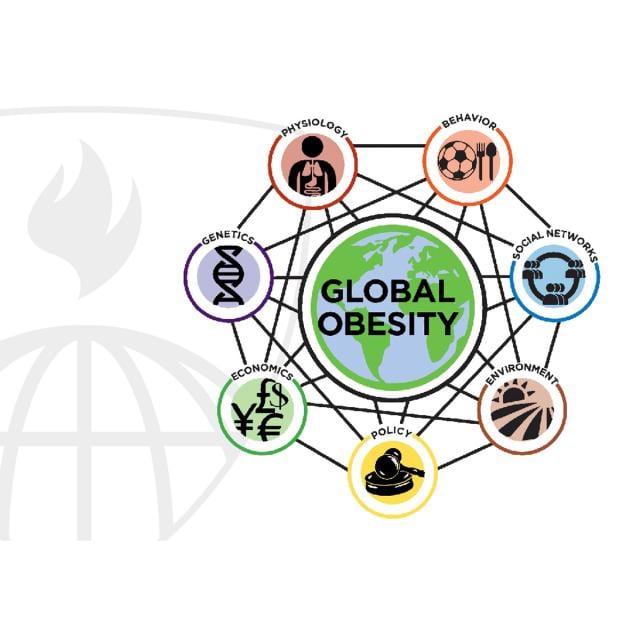
Systems science has been instrumental in breaking new scientific ground in diverse fields such as meteorology, engineering and decision analysis. However, it is just beginning to impact public health. This seminar is designed to introduce students to basic tools of theory building and data analysis in systems science and to apply those tools to better understand the obesity epidemic in human populations.

Jun 1st 2026
4 Weeks
Foundations of Public Health Practice: Behaviour & Behaviour Change (Coursera) Coursera
Imperial College London

Foundations of Public Health Practice: Behaviour & Behaviour Change (Coursera)

The Health Protection course is the third instalment of the wider Foundations of Public Health Practice specialisation from Imperial College London's Global Master of Public Health (MPH). The scope and content of this course has been developed from the ground up by a combined team of academics and practitioners drawing on decades of real-world public health experience as well as deep academic knowledge. Through short video lectures, practitioner interviews and a wide range of interactive activities, learners will be immersed in the world of public health practice.

Jun 1st 2026
4 Weeks
Foundations of Public Health Practice: The Public Health Toolkit (Coursera) Coursera
Imperial College London

Foundations of Public Health Practice: The Public Health Toolkit (Coursera)

The Foundations of Public Health Practice: The Public Health Toolkit builds on public health thinking (introduced in the previous course) and introduces a variety of core public health approaches (the toolkit) to conceptualising problems, conducting analysis and bringing forward recommendations. In this course we cover health needs assessment, evaluation and public health intelligence-approaches.

Jun 1st 2026
4 Weeks
Opioid Epidemic: From Evidence to Impact (Coursera) Coursera
Johns Hopkins University

Opioid Epidemic: From Evidence to Impact (Coursera)

While prescription opioids serve an invaluable role for the treatment of cancer pain and pain at the end of life, their overuse for acute and chronic non-cancer pain as well as the increasing availability of heroin and illicit fentanyl, have contributed to the highest rates of overdose and opioid addiction in U.S. history. Evidence-informed solutions are urgently needed to address these issues and to promote high-quality care for those with pain. This course and the report it is based on are a response to that need. They offer timely information and a path forward for all who are committed to addressing injuries and deaths associated with opioids in the United States.

Jun 1st 2026
4 Weeks
Measuring and Maximizing Impact of COVID-19 Contact Tracing (Coursera) Coursera
Johns Hopkins University

Measuring and Maximizing Impact of COVID-19 Contact Tracing (Coursera)

This course aims to provide managers and developers of contact tracing programs guidance on the most important indicators of performance of a contact tracing program, and a tool that can be used to project the likely impact of improvements in specific indicators. Students who complete the course will be proficient in using the Contact Tracing Evaluation and Strategic Support Application (ConTESSA) to estimate the impact of their contact tracing program on transmission and strategizing about how to increase their program’s impact.Free enrollment available until December 31, 2020. Valid for one enrollment per person.

Jun 1st 2026
1 Week
Building on the SIR Model (Coursera) Coursera
Imperial College London

Building on the SIR Model (Coursera)

The other two courses in this specialisation require you to perform deterministic modelling - in other words, the epidemic outcome is predictable as all parameters are fully known. However, this course delves into the many cases – especially in the early stages of an epidemic – where chance events can be influential in the future of an epidemic.

Jun 1st 2026
4 Weeks
Developing the SIR Model (Coursera) Coursera
Imperial College London

Developing the SIR Model (Coursera)

Compartmental modelling is a cornerstone of mathematical modelling of infectious diseases and this course will introduce some of the basic concepts in building compartmental models, including how to interpret and represent rates, durations and proportions. You'll learn to place the mathematics to one side and concentrate on gaining intuition into the behaviour of a simple epidemic, and be introduced to further basic concepts of infectious disease epidemiology, such as the basic reproduction number (R0) and its implications for infectious disease dynamics.

Jun 1st 2026
4 Weeks
Healthcare Organizations and the Health System (Coursera) Coursera
Rutgers University

Healthcare Organizations and the Health System (Coursera)

Have you ever been in a healthcare waiting room and thought about how the organization could be more efficient? For example, have you found yourself thinking about how to reduce the amount of time spent waiting? Or do you work in a healthcare organization and find yourself thinking about how to improve the organization? If you have, this course is for you. Course content includes an overview of healthcare organizations, their administration and management, and their governance.

Jun 1st 2026
4 Weeks