COVID Vaccine Ambassador Training: How to Talk to Parents (Coursera)

COVID Vaccine Ambassador Training: How to Talk to Parents (Coursera)

Vaccination is a key strategy for preventing serious illness and death from COVID-19. COVID-19 vaccines are available for children 5 and older, but many parents have questions about vaccinations. This training course prepares parents of school-age children, PTAs, community members, and school staff to be Vaccine Ambassadors and promote vaccine acceptance in their communities. Free enrollment available until December 31, 2022. Valid for one enrollment per person.

Class Deals by MOOC List - Click here and see Coursera's Active Discounts, Deals, and Promo Codes.

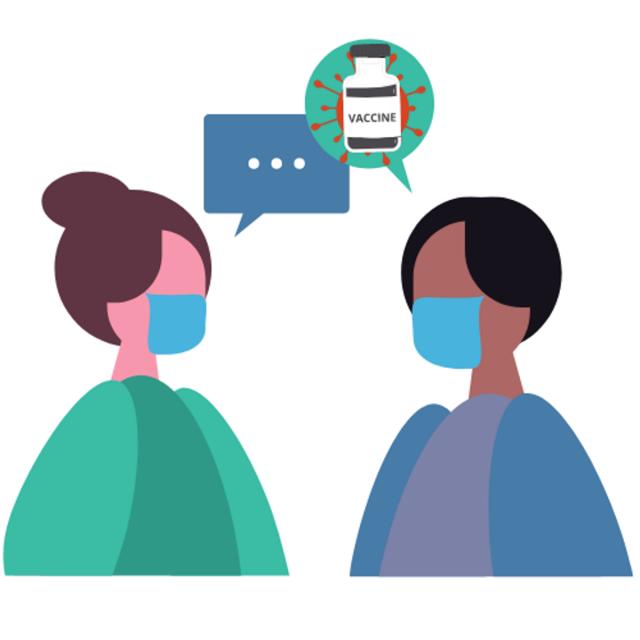
After completing the course, Vaccine Ambassadors will be able to share knowledge about COVID-19 and the COVID-19 vaccine, engage in conversations about vaccine hesitancy in a respectful and empathetic way, and direct people to credible sources for further information about COVID-19 vaccines.

What You Will Learn

  • Share knowledge about COVID-19 and the COVID-19 vaccine.
  • Engage in conversations about vaccine hesitancy in a respectful and empathetic way.
  • Direct people to credible sources for further information about the COVID-19 vaccine.
  • Recognize and respond to misinformation about the COVID-19 vaccine.

Syllabus

WEEK 1
Why are people hesitant about vaccines and how can we effectively communicate with people who are hesitant?
This module will review vaccine hesitancy including some of the most common reasons individuals are hesitant, and why scientific facts are not enough to reduce hesitancy. Next, we will focus on effective communication approaches when discussing vaccines with hesitant individuals. Finally, we will discuss the importance of building trust and using empathy in communication.
What is the immune system and what is the SARS CoV-2 virus?
In this module we will cover some of the basics of the human immune system. We will also will share a general overview of the SARS CoV-2 virus including transmission, impacts, and prevention.
What are vaccines, how are they developed, and which COVID-19 vaccines will be distributed in the US?
In this module we will cover some of the basics of vaccines including how vaccines work, common misconceptions, vaccine regulation and development, and the emergency use authorization (EUA) process. This section will also cover the safety and efficacy of COVID-19 vaccines.
How to spot and respond to misinformation online
In this module we will cover some of the basics of misinformation including different types of misinformation and why individuals create misleading news content. We will also focus on how to identify misinformation and common COVID-19 myths and misconceptions. Lastly, we will discuss effective ways to respond to misinformation about COVID-19 vaccines.
Vaccines for 5-11 year olds
This module will address concerns for vaccinating the 5-11 year old age group. We will discuss the importance of vaccinating this group for their health and the health of those around them.

Go to Class
MOOC List is learner-supported. When you buy through links on our site, we may earn an affiliate commission.

Related Courses

Lecture Series for Preventing and Controlling COVID-19 (Coursera) Coursera
Xi'an Jiaotong University

Lecture Series for Preventing and Controlling COVID-19 (Coursera)

In December 2019, a cluster of patients with pneumonia of unknown cause appeared in Wuhan, Hubei. Governments at all levels and Department of Health Administration highly valued and rapidly organized the centers for Disease Control and Prevention (CDC), medical institutions, and scientific research academies to conduct a survey, rescue, and collaborative research. This new antigen was quickly identified as a novel coronavirus, named as 2019-nCoV by World Health Organization (WHO).

Jun 8th 2026
3 Weeks
Public Involvement in Research (Coursera) Coursera
Imperial College London

Public Involvement in Research (Coursera)

This course focuses on participatory approaches in research, known as 'public involvement' in the UK. You'll specifically, consider why citizens and patients would be involved in research and explore participatory approaches across and within the research cycle in more detail, diving into questions such as: What kinds of participation can be undertaken at each of the 7 stages of the cycle? How can you utilise participation in research? What examples of using participatory approaches exist in research?

Jun 10th 2026
4 Weeks
Easing the burden of obesity, diabetes and cardiovascular disease (Coursera) Coursera
The University of Sydney

Easing the burden of obesity, diabetes and cardiovascular disease (Coursera)

This course is multidisciplinary in nature, and aims to equip the global audience of interested lay people, people with chronic disease, public health researchers, health clinicians, students, administrators, and researchers to reflect on the overall impact of the burden of chronic disease. It shows how all chronic diseases (obesity, diabetes, cardiovascular disease, chronic obstructive pulmonary disease, and cancer) are related by a set of common causes, and that such diseases should be tackled, not individually, but as part of a complex system, with interrelated contributing factors. These factors are genetic, environmental, psychological, economic, social, developmental, and media related.

Jun 8th 2026
5-12 Weeks
Global Disease Masterclass: Non-communicable Diseases (Coursera) Coursera
Imperial College London

Global Disease Masterclass: Non-communicable Diseases (Coursera)

Welcome to this course on the aetiology, epidemiology and interventions for non-communicable diseases of the Global Diseases Masterclass. We’ve selected four disease areas and will go through each in turn. The diseases we’ve chosen are: Colorectal Cancer, Cardiovascular Disease (CVD), Dementia, and Diabetes. We have selected these non-communicable diseases because they span a range of different types of disease process and because of the expertise and experience that our School of Public Health has in these areas.

Jun 8th 2026
4 Weeks
Introduction to Participatory Approaches in Public Health (Coursera) Coursera
Imperial College London

Introduction to Participatory Approaches in Public Health (Coursera)

This course will introduce you to participatory approaches to public health. You will learn about the history of participatory health research and why it is essential to solving contemporary public health challenges. The course will help you to understand the social and cultural context of public health, before introducing you to essential concepts for working with communities: knowledge and power. Finally, you will engage with critical analyses of participatory approaches, to help you to determine if and when such strategies are appropriate.

Jun 8th 2026
4 Weeks
Intro to AR/VR/MR/XR: Technologies, Applications & Issues (Coursera) Coursera
University of Michigan

Intro to AR/VR/MR/XR: Technologies, Applications & Issues (Coursera)

This first course in the XR for Everybody specialization creates a foundational understanding of the differences between AR, VR, MR, and XR. The course provides learners with a broad overview of the rapidly evolving XR space and the tools to characterize future XR developments and assess their potential and limitations. It establishes key concepts and dives into the XR device landscape, helping learners to differentiate current and future platforms and devices as well as critique the use of VR or AR in applications. The course pivots in the second half to look more at how to shape the future of XR, by analyzing trends and raising issues such as COVID-19, social and ethical concerns, accessibility and equity, as well as privacy and security.

Jun 8th 2026
4 Weeks
Application of Health Equity Research Methods for Practice and Policy (Coursera) Coursera
Johns Hopkins University

Application of Health Equity Research Methods for Practice and Policy (Coursera)

Intended for students who have completed the introduction to health equity research course and/or have previous experience working in this area. This course will cover innovative methods, practical tools, and skills required to conduct rigorous health equity research and translate evidence-based strategies into practice and policy.

Jun 8th 2026
5-12 Weeks
Water Supply and Sanitation Policy in Developing Countries Part 1: Understanding Complex Problems (Coursera) Coursera
University of Manchester

Water Supply and Sanitation Policy in Developing Countries Part 1: Understanding Complex Problems (Coursera)

Our course explores what can be done to solve the complex problem that half a billion people worldwide do not have improved water supplies and two billion do not have improved sanitation. We look forward to you joining us. We want to help you develop the skills you need to address this major global challenge of the 21st century.

Jun 8th 2026
5-12 Weeks
Global Disease Masterclass: Global Disease Distribution (Coursera) Coursera
Imperial College London

Global Disease Masterclass: Global Disease Distribution (Coursera)

The Global Diseases Masterclass is part of the full-degree Masters of Public Health that the School of Public Health. By the end of this specialisation, our aim is that students will be able to critically apply epidemiological concepts to major global diseases and be able to appraise and recommend policy options to combat them.

Jun 8th 2026
4 Weeks
Sustainable Tourism – promoting environmental public health (Coursera) Coursera
University of Copenhagen

Sustainable Tourism – promoting environmental public health (Coursera)

The MOOC introduces learners to key environmental health and natural resources management challenges associated with the rapid growth in international tourist arrivals into low-income countries. Since infrastructural and regulatory capacities in such countries are often limited they are more exposed to the negative implications of such development. The MOOC will present experiences and potential avenues to develop a more sustainable form of tourism.

Jun 8th 2026
3 Weeks
Value-Based Care: Population Health (Coursera) Coursera
University of Houston

Value-Based Care: Population Health (Coursera)

This course is designed to introduce you to the concept of population health and related key terms. Refine your understanding of population health and what influences health care costs. Gain an overview of population health management, beginning with a high-level review of four critical areas: addressing behavioral and social determinants of health, the prevalence of chronic disease, attributes of an aging population, and key barriers of access to health care. Use the Population Health Pyramid to organize a care delivery system to meet the needs of population groups—all with an eye towards achieving better outcomes through the fundamental premise of value-based care.

Jun 8th 2026
3 Weeks