FUN

La métabolomique : enjeux technologiques et scientifiques (FUN)

La métabolomique : enjeux technologiques et scientifiques (FUN)

Le mooc est produit par le Centre National de Recherche Scientifique, l'Institut Français de Bioinformatique ,l'Institut National de la Recherche Agronomique ,en partenariat avec l'Université de Rennes 1 . Il propose à la communauté francophone de découvrir la métabolomique, une nouvelle démarche scientifique et méthodologique.

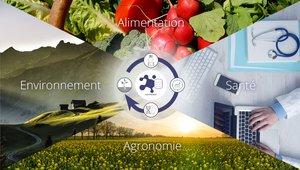
Tous les êtres vivants - cellules, animaux, végétaux, champignons - possèdent un métabolisme, c’est-à-dire l’ensemble des réactions biochimiques qui se déroulent en leur sein . La métabolomique s’attache à identifier et à quantifier de façon exhaustive - et non sélective - tous les métabolites d’un système biologique. Issue de l'ère post-génomique et en constante évolution, cette démarche se situe au croisement de la chimie analytique, la bioinformatique, les statistiques et la biologie. Elle s'applique à tous les domaines des Sciences de la Vie : Santé, Biotechnologies, Environnement, Alimentation, Agriculture.
S’appuyant sur des techniques sophistiquées comme la spectrométrie de masse ou la spectrométrie par résonance magnétique nucléaire, la métabolomique apporte des solutions technologiques et offre de nouvelles perspectives scientifiques : un essai clinique sur près de 1000 patients entre 2008 et 2010 a démontré par exemple son efficacité dans le diagnostic précoce et non évasif de certains types de cancer, un horizon très encourageant à moyen terme pour des millions de personnes. La métabolomique fait ainsi émerger de nouveaux horizons économiques et sociétaux majeurs.

  • Vous êtes étudiant de Sciences (Licence ou Master de Biologie, Chimie, Mathématiques, Physique, Informatique, etc.) et vous souhaitez en savoir plus sur la métabolomique ?
  • Vous êtes chercheur, enseignant-chercheur, ingénieur, ou technicien ? Et vous souhaitez vous familiariser avec la métabolomique pour l'intégrer dans votre projet de recherche ?
  • Vous êtes chef d'entreprise ou acteur de l'industrie ? La métabolomique vous interpelle et vous hésitez à faire le pas ?

La maîtrise des concepts, des outils et des méthodologies, et la capacité à intégrer cette démarche dans vos projets constituent un enjeu de formation capital.
20 contributeurs, enseignants et chercheurs, choisissent aujourd'hui de vous accompagner vers les enjeux scientifiques de demain !

Plan du cours

Semaine 1 : La Metabolomique : Definition, Methodes et Usages
Semaine 2 : Acquerir des donnees et utiliser les plateformes
Semaine 3 : Analyser et traiter l'information
Semaines 4 & 5 : Pratiquer la metabolomique

Go to Class
MOOC List is learner-supported. When you buy through links on our site, we may earn an affiliate commission.

Related Courses

Les techniques d'irrigation (FUN) FUN
Université de Liège

Les techniques d'irrigation (FUN)

Vous vous intéressez à l‘irrigation ? Vous souhaitez comprendre ses enjeux, ses techniques ? Dans ce cours, trois professeurs vous présentent les concepts de base de l’irrigation à travers des vidéos et des exercices. Régulièrement, des interviews d’acteurs de terrain permettront de remettre ces concepts dans un cadre pratique.

Feb 1st 2022
5-12 Weeks
NECTAR : Nématodes Cultures Taxonomie Arthropodes (FUN) FUN
Montpellier SupAgro

NECTAR : Nématodes Cultures Taxonomie Arthropodes (FUN)

La taxonomie est une Science biologique élémentaire et fondamentale. Les arthropodes et nématodes constituent la grande majorité des espèces de la planète. Leurs connaissances et identifications présentent donc des enjeux majeurs pour la préservation et la gestion de la biodiversité. / Taxonomy is a fundamental and elementary science. Arthropods and nematodes constitute the majority of species on earth. Being able identify them is thus critical for biodiversity conservation and management.

Oct 15th 2021
5-12 Weeks
Experimental Methods in Systems Biology (Coursera) Coursera
Icahn School of Medicine at Mount Sinai

Experimental Methods in Systems Biology (Coursera)

Learn about the technologies underlying experimentation used in systems biology, with particular focus on RNA sequencing, mass spec-based proteomics, flow/mass cytometry and live-cell imaging. A key driver of the systems biology field is the technology allowing us to delve deeper and wider into how cells respond to experimental perturbations. This in turns allows us to build more detailed quantitative models of cellular function, which can give important insight into applications ranging from biotechnology to human disease. This course gives a broad overview of a variety of current experimental techniques used in modern systems biology, with focus on obtaining the quantitative data needed for computational modeling purposes in downstream analyses.

Jun 1st 2026
5-12 Weeks
Identifying Food Fraud (FutureLearn) FutureLearn
University of East Anglia

Identifying Food Fraud (FutureLearn)

An introduction to modern analytical science techniques and how they can be used to uncover food fraud. The food industry is one of the most important commercial sectors in the world. Everyone uses it, but how many people abuse it? As we witness the increasing globalisation of the supply chain, a growing challenge is verifying the questionable identity of raw materials in the food we eat.

Oct 5th 2020
4 Weeks
Metabolomics: Understanding Metabolism in the 21st Century (FutureLearn) FutureLearn
University of Birmingham

Metabolomics: Understanding Metabolism in the 21st Century (FutureLearn)

Discover how metabolomics is revolutionising our understanding of metabolism with this free online course. Metabolomics is an emerging field that aims to measure the complement of metabolites (the metabolome) in living organisms. The metabolome represents the downstream effect of an organism’s genome and its interaction with the environment. Metabolomics has a wide application area across the medical and biological sciences.

No sessions available
4 Weeks
Comprendre l’économie collaborative (FUN) FUN
Institut Mines-Telecom

Comprendre l’économie collaborative (FUN)

L'objectif du MOOC "Comprendre l'économie collaborative" est de permettre d'appréhender les grands principes de la transition numérique de l'économie et d'en décoder les principaux mécanismes sociaux-économiques. Tout au long de ce cours, vous décrypterez l'économie collaborative à travers des clés de lecture.

Sep 23rd 2021
5-12 Weeks
ImageInLife - Imaging the Vertebrate embryo: from biological material to modelling (FUN) FUN
Université de Montpellier

ImageInLife - Imaging the Vertebrate embryo: from biological material to modelling (FUN)

Microscopy technologies have progressed to such a point that it is now possible to image a developing vertebrate at the single cell resolution. Two main model species are being used for such studies, the zebrafish and the mouse. The present MOOC introduces the trainees to these two animal models, to the most modern microscopy technologies, to the use of high volume of data (images) and to the modelling of the studied processes. Trainees will also be introduced to the intravital study of viral infections.

Aug 24th 2021
5-12 Weeks
Agir pour sa santé ! (FUN) FUN
Université de Liège

Agir pour sa santé ! (FUN)

Etre en bonne santé, ce n’est pas un secret, ça nous permet de profiter plus longtemps d’une vie de qualité. Mais pour rester en bonne santé, il faut agir et ce n’est pas qu’une question de motivation! Il existe des dizaines de comportements de santé : mettre de la crème solaire, manger sainement, porter un casque à vélo, boire régulièrement de l’eau, ou encore pratiquer une activité physique régulière. Mais qu’est-ce qui explique que nous réalisons certaines de ces actions et pas d’autres ? Pourquoi est-ce si difficile de changer ses comportements ? L’objectif de ce cours sera de vous aider à mieux comprendre les mécanismes qui influencent notre motivation et les outils qui peuvent faciliter le passage de l’intention au comportement de santé.

Oct 10th 2022
5-12 Weeks
Tuberculosis (FUN) FUN
Institut Pasteur

Tuberculosis (FUN)

To provide an up-to-date overview of the disease, the Institut Pasteur has created a MOOC dedicated to Tuberculosis. This course will provide a knowledge base that goes from the basics of TB to the current state of knowledge on various aspects of tuberculosis: the clinical picture, epidemiology, pediatric TB, factors affecting susceptibility to the disease, including HIV, diabetes and human genetics, immunology, vaccines, diagnosis, current and future ways to detect drug resistance, and how to treat drug sensitive and multi-drug resistant strains.

Sep 7th 2021
5-12 Weeks
Strong sustainability and Europe (FUN) FUN
Université Clermont Auvergne

Strong sustainability and Europe (FUN)

Sustainable development, popularized by the Brundtland Report, was defined at the end of the 1980s in three spheres (economic, environmental and social). It is this representation that continues today to be disseminated to the public and to large companies. The objective of this MOOC is to question the major challenges of development for Europe in a perspective of strong sustainability (energy, climate, biodiversity, food, mobility, agriculture, natural resources, education...) and to propose alternatives.

Sep 12th 2022
5-12 Weeks