EdX

Islamic Bioethics (edX)

Islamic Bioethics (edX)

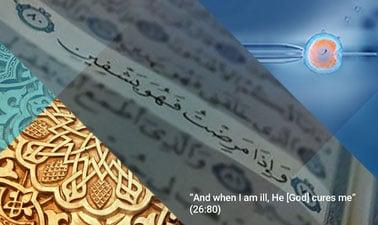
This course provides an introductory, accessible but also in-depth overview of the emerging and promising field of Islamic Bioethics. It is developed and taught by one of the world’s leading scholars in Islamic Ethics, Dr. Mohammed Ghaly (Professor of Islam and Biomedical Ethics). The course explores how the rich Islamic moral tradition engages with the complex questions triggered by the cutting-edge biomedical advancements.

Class Deals by MOOC List - Click here and see EdX's Active Discounts, Deals, and Promo Codes.

How does a world religion like Islam engage with the moral questions and challenges posed by modern biomedical advancements? Who contributes to the Islamic discourse on bioethical issues, like the beginning and end of human life, abortion, human milk banks, Assisted Reproductive Technology (ART), palliative care, brain death, euthanasia, pandemics like the recent COVID-19, etc.? How are diverse bioethical perspectives deliberated and how are mainstream positions developed? When do Islamic bioethical deliberations interact, agree or disagree with parallel discussions from outside the Islamic tradition and why?
Such questions are thoroughly addressed throughout this ten-week course. As outlined in the Introductory Video, the course will do justice to the complex character of these questions. Thus, rather than providing only simple answers, the focus will be on explaining well-argued insights, understanding the diversity within the Islamic discourse, and showing how disciplines from inside and outside the Islamic tradition contribute to, and shape, the field of Islamic Bioethics.

What you'll learn
This course is tailored for those working in the healthcare professions and for academic researchers with interest in a wide range of fields, including ethics, bioethics, religious studies, intercultural studies, Islamic studies, and social sciences.
The course will help both groups to learn the internal dynamics and methodological aspects of Islamic Bioethics and how they result in concrete moral positions. They will also learn how the proponents of each position try to defend the correctness of their standpoint and its compliance with the Quran, Sunna, the scholarly disciplines rooted in the Islamic tradition along with its compatibility with modern biomedical sciences.

Syllabus

Module 1: Classical Islamic Bioethics
Module 2: Contemporary Islamic Bioethics
Module 3: The Beginning of Human Life
Module 4: Beginning of Human Life - Assisted Reproductive Technologies (ART)
Module 5: Beginning of Human Life - Human Milk Banks
Module 6: End of Life and the Concept of Brain Death - When Does Human Life End?
Module 7: Organ Donation
Module 8: End-of-Life Care (EoLC): Life-Sustaining Treatments (LSTs) and Euthanasia
Module 9: Ethics of Pandemics and Covid-19
Go to Class
MOOC List is learner-supported. When you buy through links on our site, we may earn an affiliate commission.

Related Courses

Human-Computer Interaction III: Ethics, Needfinding & Prototyping (edX) EdX
Georgia Institute of Technology,GTx

Human-Computer Interaction III: Ethics, Needfinding & Prototyping (edX)

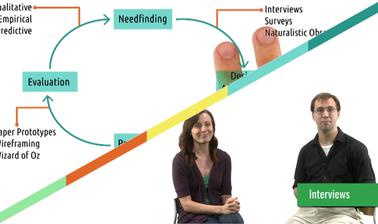
Build on your knowledge of HCI’s core principles by learning to design interfaces in the real world. Begin with the ethics of human subjects research, then learn critical methods for requirements gathering and brainstorming design alternatives. In this course, you’ll begin by learning the design life cycle. This is the process by which we investigate user needs, brainstorm potential designs, create prototypes, and evaluate those prototypes. This life cycle provides the structure for the third and fourth courses in this professional certificate.

Self Paced
Self-Paced
Google AI for Anyone (edX) EdX
Google

Google AI for Anyone (edX)

A course for anyone to learn what AI is and how it works. Google AI for Anyone teaches you about what Artificial Intelligence is. You’ll cut through the hype and learn about AI and Machine Learning. As its name suggests, this course is for anybody -- you don’t need a computer science, mathematics or AI background to understand it. No programming skills or prior knowledge are needed.

Self Paced
Self-Paced
Trasplante de órganos: desafíos éticos y jurídicos (edX) EdX
Universidad Autonoma de Madrid,UAMx

Trasplante de órganos: desafíos éticos y jurídicos (edX)

En este curso analizaremos algunos interrogantes éticos y jurídicos que suscita el trasplante de órganos. Desde que en 1954 se realizara el primer trasplante exitoso de un órgano, la cirugía de trasplantes se ha desarrollado espectacularmente brindando esperanza y calidad de vida a muchos enfermos.

Self Paced
Self-Paced
Ethics in Life Sciences and Healthcare: Exploring Bioethics through Manga (edX) EdX
Kyoto University,KyotoUx

Ethics in Life Sciences and Healthcare: Exploring Bioethics through Manga (edX)

Learn about the ethical decisions surrounding critical health and life science issues through Manga. Is it okay to take pills to help you ace exams? Should you be able to choose the sex of your child? Is abortion murder? These controversial questions will be explored through Manga in this bioethics course. Bioethics is an interdisciplinary field of study that looks into ethical, legal, and social implications of life sciences and health care.

This course is archived
5-12 Weeks
Behavioral Neuroscience: Foundations of Compulsive Behaviors (edX) EdX
University of Alaska Fairbanks,AlaskaX

Behavioral Neuroscience: Foundations of Compulsive Behaviors (edX)

The first MOOC to teach behavioral neuroscience research using laboratory mice. Learn responsible conduct of research and how to collect scientific data using two different tests that measure compulsions, and interpret and discuss the results in the context of obsessive-compulsive disorder in humans.

Self Paced
Self-Paced
Data Science Ethics (edX) EdX
University of Michigan,MichiganX

Data Science Ethics (edX)

Learn how to think through the ethics surrounding privacy, data sharing, and algorithmic decision-making. As patients, we care about the privacy of our medical record; but as patients, we also wish to benefit from the analysis of data in medical records. As citizens, we want a fair trial before being punished for a crime; but as citizens, we want to stop terrorists before they attack us. As decision-makers, we value the advice we get from data-driven algorithms; but as decision-makers, we also worry about unintended bias.

Self Paced
Self-Paced
Ethical Dilemmas in Professional Engineering (edX) EdX
Delft University of Technology,DelftX

Ethical Dilemmas in Professional Engineering (edX)

Learn how engineers worldwide can deal with ethical dilemmas. These can include conflicts of interests, bribery, whistleblowing and inadequate information about potential negative effects of products and technologies. All engineers will come to face ethical challenges in their professional practice. If these challenges are not dealt with wisely, their careers, their organizations, and most importantly, the wellbeing and safety of people and our environment may be exposed to risk.

Self Paced
Self-Paced
Historia de la ética (edX) EdX
Universidad Carlos III de Madrid - UC3M,UC3Mx

Historia de la ética (edX)

Una mirada hacia el pasado de la ética para poder afrontar mejor los problemas del futuro. Una visión crítica de la ética y la moral sin olvidar el sentido del humor. Cada día debemos afrontar diferentes problemas éticos a los que no tenemos claro qué respuesta dar como sociedad. Es importante conocer la definición de la ética y la moral para poder afrontar estos problemas. Este curso de filosofía y ética nos permitirá hacer un repaso por el origen de la ética, este es un ejercicio muy útil para poder replantear nuestros problemas éticos actuales y comprender mejor las implicaciones de nuestras decisiones basados en la ética y la moral.

Self Paced
Self-Paced
The Ethics of Memory (edX) EdX
Brown University

The Ethics of Memory (edX)

Learn how our personal and collective memories evolve over time, and why memory and memorializing matter. What is memory? What’s the utility in exploring it and risking the activation of painful memories? What remembrance do we owe people we have lost and how is that reflected in the monuments we create to memorialize them? Why do different groups of people interpret the same event differently—even when the facts are not disputed?

No sessions available
3 Weeks