Introduction to Virtual Reality (Coursera)

Introduction to Virtual Reality (Coursera)

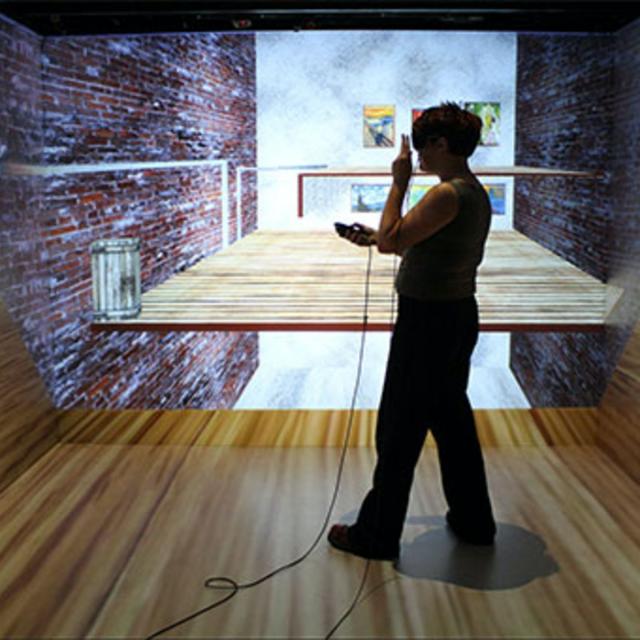
This course will introduce you to Virtual Reality (VR). The course will teach you everything from the basics of VR- the hardware and the history of VR- to different applications of VR, the psychology of Virtual Reality, and the challenges of the medium. The course is designed for people who are new to VR as a medium. You may have experienced some virtual reality before, and may have some hardware- but this course is suitable to individuals who have never experienced VR and those who do not have much hardware- we will explain Mobile VR as well as devices such as the Oculus Rift and HTC Vive.

Class Deals by MOOC List - Click here and see Coursera's Active Discounts, Deals, and Promo Codes.

Introduction to Virtual Reality is the first course in the Virtual Reality Specialisation. A learner with no previous experience in Virtual Reality and/or game programming will be able to evaluate existing VR applications, and design, test, and implement their own VR experiences/games using Unity by the end of the specialisation.
Course 1 of 5 in the Virtual Reality Specialization

Syllabus

WEEK 1
Virtual Reality- Hardware and History
In this week, we’ll cover the basics of VR. We’ll start by sharing a definition of Virtual Reality, and exploring VR hardware, and then you’ll see demonstrations of a range of VR Head Mounted Devices. In the latter part of the week, you will hear more about the history of Virtual Reality and finish the week by drafting your ideas for a VR application.

WEEK 2
VR Applications
This week, you’ll learn more about the different applications of VR- from news and documentaries, to sports, therapy, and games. You will also learn more about the VR Technical Framework, and will have the opportunity to share your thoughts on VR applications with your peers.

WEEK 3
The Psychology of VR: the Three Illusions
In this week, Professor Mel Slater will take us through the Three Illusions. We’ll discuss Place Illusion, Plausibility Illusion, and Embodiment Illusion, with some interesting tricks along the way!

WEEK 4
Challenges in Virtual Reality

Go to Class
MOOC List is learner-supported. When you buy through links on our site, we may earn an affiliate commission.

Related Courses

Foundations of Mindfulness (Coursera) Coursera
Rice University

Foundations of Mindfulness (Coursera)

This course provides a broad overview of the fundamental concepts, principles, and practices of mindfulness. With interactive exercises to help students explore their own attitudes, mental habits and behaviors, Foundations of Mindfulness offers a pathway for living with more freedom, authenticity and ease. Featured components of the course include experiential exercises, guided meditations, personal reflection and interactive discussions.

Jun 22nd 2026
4 Weeks
Psychology of Popularity (Coursera) Coursera
University of North Carolina

Psychology of Popularity (Coursera)

The level of popularity you experienced in childhood and adolescence is still affecting you today in ways that you may not even realize. Learn about how psychologists study popularity and how these same concepts can be used in adulthood to be more successful at work, become better parents, and have a happier life.

Jun 22nd 2026
5-12 Weeks
Schizophrenia (Coursera) Coursera
Wesleyan University

Schizophrenia (Coursera)

The main goal of this class are to gain an introductory exposure to the nature of the psychiatric disorder known as schizophrenia as revealed by the scientific method. We will discuss a broad range of findings from the scientific investigation of biological and psychological factors related to schizophrenia and its treatment.

Jun 22nd 2026
5-12 Weeks
Symptom Management in Palliative Care (Coursera) Coursera
Stanford University

Symptom Management in Palliative Care (Coursera)

This course should be taken after the Essentials of Palliative Care course and continues building your primary palliative care skills – communication, psychosocial support and goals of care. You will learn how to screen, assess, and manage both physical and psychological symptoms. You will explore common symptoms such as pain, nausea, fatigue, and distress and learn specific treatments.

Jun 22nd 2026
4 Weeks
Positive Psychology Specialization Project: Design Your Life for Well-hebeing (Coursera) Coursera
University of Pennsylvania

Positive Psychology Specialization Project: Design Your Life for Well-hebeing (Coursera)

You are encouraged to take the first four courses of the Foundations of Positive Psychology Specialization before starting this course and completing the Specialization Project. This course, taught by Dr. Martin E.P. Seligman brings all the key concepts from the first four courses to practice as you develop and test a new positive intervention for an audience of your choice.

Jun 22nd 2026
4 Weeks
Positive Psychology: Resilience Skills (Coursera) Coursera
University of Pennsylvania

Positive Psychology: Resilience Skills (Coursera)

Learn how to incorporate resilience interventions into your personal and professional life with Dr. Karen Reivich. In this course, you are exposed to the foundational research in resilience, including protective factors such as mental agility and optimism. Several types of resilience interventions are explored including cognitive strategies; strategies to manage anxiety and increase positive emotions such as gratitude; and a critical relationship enhancement skill.

Jun 22nd 2026
4 Weeks
Intellectual Humility: Science (Coursera) Coursera
University of Edinburgh

Intellectual Humility: Science (Coursera)

It’s clear that the world needs more intellectual humility. But how do we develop this virtue? And why do so many people still end up so arrogant? Do our own biases hold us back from becoming as intellectually humble as we could be—and are there some biases that actually make us more likely to be humble? Which cognitive dispositions and personality traits give people an edge at being more intellectually humble - and are they stable from birth, learned habits, or something in between? And what can contemporary research on the emotions tell us about encouraging intellectual humility in ourselves and others?

Jun 22nd 2026
4 Weeks
A Life of Happiness and Fulfillment (Coursera) Coursera
Indian School of Business - ISB

A Life of Happiness and Fulfillment (Coursera)

What are the determinants of a happy and fulfilling life? This is surely one of life’s biggest questions, and a question that has interested many of our ancestors. Buddha famously gave up his kingdom in search of happiness. Several Greek philosophers (from Aristotle to Epicurus and Plato to Socrates) had their own views on what it takes to be happy. And of course, we all have our own theories about happiness too.

Jun 22nd 2026
5-12 Weeks
Social Psychology (Coursera) Coursera
Wesleyan University

Social Psychology (Coursera)

This course offers a brief introduction to classic and contemporary social psychology, covering topics such as decision making, persuasion, group behavior, personal attraction, and factors that promote health and well-being. Ever wonder why people do what they do? This course—which includes more than $1,000 of video and reading materials—offers some answers based on the latest research from social psychology.

Jun 22nd 2026
5-12 Weeks
Psicología de la salud (Coursera) Coursera
Tecnológico de Monterrey

Psicología de la salud (Coursera)

En este curso aprenderás los fundamentos conceptuales de la Psicología de la Salud. Comenzaremos con los antecedentes históricos acerca del estudio de los componentes subjetivos y de comportamiento en el proceso salud-enfermedad y de la atención de la salud. Además, se conocerán los factores psicosociales relacionados en la calidad de vida y la promoción de la salud, la prevención de las enfermedades, la atención de los enfermos y personas con secuelas.

Jun 22nd 2026
4 Weeks