Introduction to the Internet of Things and Embedded Systems (Coursera)

Introduction to the Internet of Things and Embedded Systems (Coursera)

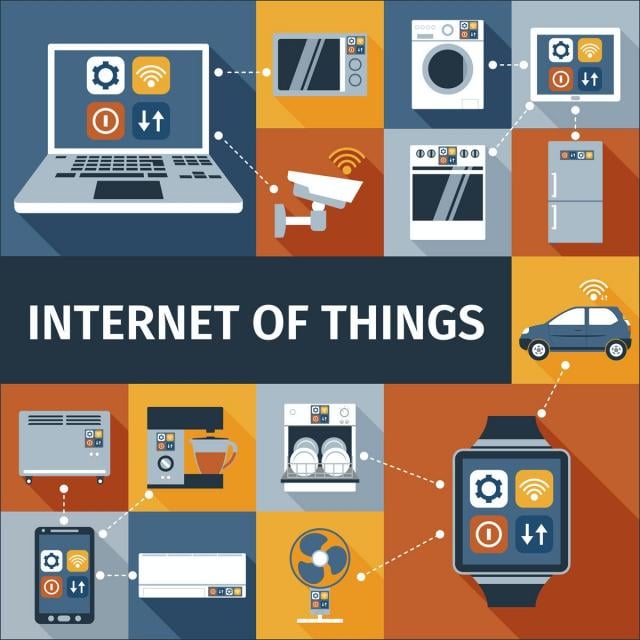
The explosive growth of the “Internet of Things” is changing our world and the rapid drop in price for typical IoT components is allowing people to innovate new designs and products at home. In this first class in the specialization you will learn the importance of IoT in society, the current components of typical IoT devices and trends for the future. IoT design considerations, constraints and interfacing between the physical world and your device will also be covered. You will also learn how to make design trade-offs between hardware and software. We'll also cover key components of networking to ensure that students understand how to connect their device to the Internet.

Class Deals by MOOC List - Click here and see Coursera's Active Discounts, Deals, and Promo Codes.

Upon completing this course, you will be able to:

  1. Define the term “Internet of Things”
  2. State the technological trends which have led to IoT
  3. Describe the impact of IoT on society
  4. Define what an embedded system is in terms of its interface
  5. Enumerate and describe the components of an embedded system
  6. Describe the interactions of embedded systems with the physical world
  7. Name the core hardware components most commonly used in IoT devices
  8. Describe the interaction between software and hardware in an IoT device
  9. Describe the role of an operating system to support software in an IoT device
  10. Explain the use of networking and basic networking hardware
  11. Describe the structure of the Internet
  12. Describe the meaning of a “network protocol”
  13. Explain MANETs and their relation to IoT

Course 1 of 6 in the An Introduction to Programming the Internet of Things (IOT) Specialization.

Syllabus

WEEK 1
What Is the Internet of Things (IoT)?
The Internet of Things (IoT) is a popular buzzword right now, but unlike many fads which have come and gone, the Internet of Things describes an important trend which is having lasting effects on society at large. The term itself, “Internet of Things”, is used to mean a variety of ideas, depending on the motivation and background of the speaker. This course will start by providing a definition of the term. We will talk about how various trends have enabled the Internet of Things, and how it changes the way design is performed. We will also discuss some of the ramifications that IoT is having on society today.

WEEK 2
Embedded Systems
In Module 1, we introduced the concept of the Internet of Things at a high level, defining the term and outlining its implications. In this module we explore some of the details involved in the design and implementation of IoT devices. Unlike traditional computer-based systems, IoT devices are “embedded” within other devices in order to provide enhanced functionality without exposing the user to the complexities of a computer. The users interact with the device in a natural way, similar to their interactions with any other objects in the world. In this way, an embedded system has an interface that conforms to the expectations and needs of the users. Establishing a natural interface requires that the embedded system interface with the physical world directly through sensors, which read the state of the world, and actuators, which change the state of the world. In this module we will discuss the structure of embedded systems and describe these interactions with the physical world.

WEEK 3
Hardware and Software
IoT devices are implemented using both hardware and software components. Dedicated hardware components are used to implement the interface with the physical world, and to perform tasks which are more computationally complex. Microcontrollers are used to execute software that interprets inputs and controls the system. This module discusses the roles of both the hardware and software components in the system. The functions of common hardware components are described and the interface between the software and hardware through the microcontroller is explained. IoT devices often use an operating system to support the interaction between the software and the microcontroller. We will define the role of an operating system in an IoT device and how an IoT operating system differs from a standard one.

WEEK 4
Networking and the Internet
An important aspect of the Internet of Things is that devices are networked in some way, and often connected to the Internet. Networking enables devices to communicate with other IoT devices and larger cloud-based servers. IoT devices can often be thought of as small parts of a much larger collective system which includes large servers based in the cloud. This module will introduce the basics of networking and the Internet protocol in particular. Eventually, most IoT devices are connected to the Internet, so understanding the protocols associated with the Internet is important to the design of IoT devices. We will also introduce the concept of a Mobile Ad Hoc Network, or MANET, which describes small, local networks of IoT devices.

Go to Class
MOOC List is learner-supported. When you buy through links on our site, we may earn an affiliate commission.

Related Courses

Internet of Things: Sensing and Actuation From Devices (Coursera) Coursera
University of California, San Diego

Internet of Things: Sensing and Actuation From Devices (Coursera)

Have you wondered how information from physical devices in the real world gets communicated to Smartphone processors? Do you want to make informed design decisions about sampling frequencies and bit-width requirements for various kinds of sensors? Do you want to gain expertise to affect the real world with actuators such as stepper motors, LEDs and generate notifications? In this course, you will learn to interface common sensors and actuators to the DragonBoard™ 410c hardware. You will then develop software to acquire sensory data, process the data and actuate stepper motors, LEDs, etc. for use in mobile-enabled products.

Jul 27th 2026
5-12 Weeks
Internet of Things: Setting Up Your DragonBoard™ Development Platform (Coursera) Coursera
University of California, San Diego

Internet of Things: Setting Up Your DragonBoard™ Development Platform (Coursera)

Do you want to develop skills to prototype mobile-enabled products using state-of-the-art technologies? In this course you will build a hardware and software development environment to guide your journey through the Internet of Things specialization courses. We will use the DragonBoard™ 410c single board computer (SBC).

Jul 27th 2026
5-12 Weeks
New Technologies for Business Leaders (Coursera) Coursera
Rutgers University

New Technologies for Business Leaders (Coursera)

This introductory course is developed for high-level business people (and those on their way) who want a broad understanding of new Information Technologies and understand their potential for business functions (e.g. marketing, supply change management, finance). This is not a course for people looking for guidance on how to become a deep technical expert or implement these technologies.

Aug 3rd 2026
5-12 Weeks
Embedded Hardware and Operating Systems (Coursera) Coursera
EIT Digital

Embedded Hardware and Operating Systems (Coursera)

This course is intended for the Bachelor and Master's students, who like practical programming and making IoTs applications! In this course we will talk about two components of a cyber physical system, namely hardware and operating systems. After completing this course, you will have the knowledge of both hardware components and operating systems. You are able to plan and use embedded operating systems in resource-constraint devices for Internet-of-Things (cyber physical system) applications.

Jul 27th 2026
4 Weeks
Operating System Virtualization - Bachelor's (Coursera) Coursera
Illinois Tech

Operating System Virtualization - Bachelor's (Coursera)

Each successful student in this course will become familiar with hypervisors, virtualization terms, infrastructure considerations, and appropriate use cases. While designed to give an overview of today’s Virtualization technologies and methods, students in the course will gain enough practical knowledge to begin deploying various hypervisors and virtual machine environments using current industry standard platforms.

Aug 3rd 2026
5-12 Weeks
Vozes da Mudança Social (Coursera) Coursera
Laureate Education

Vozes da Mudança Social (Coursera)

Em tempos de instabilidade política, desequilíbrio ambiental e desigualdade social, jovens agentes de mudanças sociais estão liderando o caminho para solucionar os desafios da atualidade. O que você está fazendo para gerar mudanças positivas e sustentáveis? O programa Vozes da Mudança Social é um curso on-line, gratuito e de curta duração, elaborado e ministrado por oito jovens empreendedores.

Aug 3rd 2026
5-12 Weeks
How to Network: Leading Yourself to Lead Others (Coursera) Coursera
University of Michigan

How to Network: Leading Yourself to Lead Others (Coursera)

Life is a relationship business, and the world is our work. Success in today’s complex, dynamic, and unpredictable world depends on our ability to cultivate, nurture, and activate relationships. This course – designed for students, professionals, and executives – will inspire learners to build a networking mindset and harness the power of networking to solve problems, create opportunities, and live out their respective purposes and goals.

Aug 3rd 2026
4 Weeks
Internet History, Technology, and Security (Coursera) Coursera
University of Michigan

Internet History, Technology, and Security (Coursera)

The impact of technology and networks on our lives, culture, and society continues to increase. The very fact that you can take this course from anywhere in the world requires a technological infrastructure that was designed, engineered, and built over the past sixty years. To function in an information-centric world, we need to understand the workings of network technology. This course will open up the Internet and show you how it was created, who created it and how it works. Along the way we will meet many of the innovators who developed the Internet and Web technologies that we use today.

Jul 27th 2026
5-12 Weeks
Relationship Management and Business Development (Coursera) Coursera
Starweaver

Relationship Management and Business Development (Coursera)

Welcome to the "Relationship Management and Business Development" course! Building and managing relationships is a crucial skill set for driving business growth and development. In this course, you will learn effective strategies to identify, cultivate, and nurture relationships with clients, stakeholders, and business partners.

Aug 3rd 2026
1 Week
Digital Footprint (Coursera) Coursera
University of Edinburgh

Digital Footprint (Coursera)

If I Googled you, what would I find? As we move around the online world we leave tracks and traces of our activity all the time: social media accounts, tagged images, professional presences, scraps of text, but also many artefacts we don't always realise we are leaving behind, or that others leave about us. In this course you will hear from a range of experts and you will have an opportunity to explore and reflect on your own online tracks and traces, to understand why your digital footprint is important. We will introduce you to some of the tools and approaches to effectively manage your online presence (or digital footprint).

Aug 10th 2026
3 Weeks
Internet Giants: The Law and Economics of Media Platforms (Coursera) Coursera
University of Chicago

Internet Giants: The Law and Economics of Media Platforms (Coursera)

Law

This seven-week course will explore the relationship between law and technology with a strong focus on the law of the United States with some comparisons to laws around the world, especially in Europe. Tech progress is an important source of economic growth and raises broader questions about the human condition, including how culture evolves and who controls that evolution. Technology also matters in countless other ways as it often establishes the framework in which governments interact with their citizens, both in allowing speech and blocking it and in establishing exactly what the boundaries are between private life and the government. And technology itself is powerfully shaped by the laws that apply in areas as diverse as copyright, antitrust, patents, privacy, speech law and the regulation of networks.

Aug 3rd 2026
5-12 Weeks