计算机组成 Computer Organization (Coursera)

Offered by Peking University,
计算机组成 Computer Organization (Coursera)

本课程重点讲述计算机的内部结构和工作原理,着眼于软件和硬件的衔接互动,注重基本概念和真实系统的对应。

Class Deals by MOOC List - Click here and see Coursera's Active Discounts, Deals, and Promo Codes.

本课程的重点在于计算机内部的主要部件以及各部件之间的联系,主要内容包括:冯·诺依曼计算机结构的要点,计算机执行指令的工作过程,当前流行的指令系统的分析对比,高级语言、汇编语言和机器语言之间的关系,计算机采用的主要算术和逻辑运算方法及其实现,微处理器、存储系统和输入输出系统的基本原理和关键技术等。本课程强调计算机软件和硬件的衔接互动,注重基于真实系统分析基本概念,是计算机及相关专业本科生了解和掌握计算机系统整体框架的基础性课程。

Syllabus

WEEK 1
课程介绍——欢迎选修计算机组成
本课程重点讲述计算机的内部结构和工作原理,着眼于软件和硬件的衔接互动,注重基本概念和真实系统的对应。

WEEK 2
第一讲 计算机基本结构
内容要点:冯·诺伊曼结构,计算机执行指令的过程

WEEK 3
第二讲 指令系统体系结构
内容要点:x86 ISA,MIPS ISA

WEEK 4
第三讲 算术逻辑单元
内容要点:逻辑运算,二进制加减法运算,ALU的实现

WEEK 5
第四讲 乘法器和除法器
内容要点:乘法运算,乘法器的实现,除法运算,除法器的实现

WEEK 6
第五讲 单周期处理器
内容要点:控制器,数据通路

WEEK 7
第六讲 流水线处理器
内容要点:流水线,相关和冒险

WEEK 8
第七讲 存储层次结构
内容要点:高速缓存,主存

WEEK 9
第八讲 中断和异常
内容要点:中断与异常的异同,中断处理的过程

WEEK 10
第九讲 输入输出设备
内容要点:基本的输入输出控制方式,常用的输入输出设备类型

WEEK 11
期末考试

Suggested Readings:
Computer Organization and Design, Fourth Edition: The Hardware/Software Interface (The Morgan Kaufmann Series in Computer Architecture and Design)
The Intel Microprocessors (8th Edition)

Go to Class
MOOC List is learner-supported. When you buy through links on our site, we may earn an affiliate commission.

Related Courses

Quantitative Model Checking (Coursera) Coursera
EIT Digital

Quantitative Model Checking (Coursera)

The integration of ICT (information and communications technology) in different applications is rapidly increasing in e.g. Embedded and Cyber physical systems, Communication protocols and Transportation systems. Hence, their reliability and dependability increasingly depends on software. Defects can be fatal and extremely costly (with regards to mass-production of products and safety-critical systems).

Sep 7th 2026
5-12 Weeks
Introduction to User Experience Design (Coursera) Coursera
Georgia Institute of Technology

Introduction to User Experience Design (Coursera)

The focus of this course is to introduce the learner to User Experience (UX) Design. User Experience design is design that is user centered. The goal is to design artifacts that allow the users to meet their needs in the most effective efficient and satisfying manner. The course introduces the novice to a cycle of discovery and evaluation and a set of techniques that meet the user's needs.

Sep 7th 2026
5-12 Weeks
Computer Science: Programming with a Purpose (Coursera) Coursera
Princeton University

Computer Science: Programming with a Purpose (Coursera)

The basis for education in the last millennium was “reading, writing, and arithmetic;” now it is reading, writing, and computing. Learning to program is an essential part of the education of every student, not just in the sciences and engineering, but in the arts, social sciences, and humanities, as well. Beyond direct applications, it is the first step in understanding the nature of computer science’s undeniable impact on the modern world.

Sep 7th 2026
5-12 Weeks
Computers, Waves, Simulations: A Practical Introduction to Numerical Methods using Python (Coursera) Coursera
Ludwig-Maximilians-Universität München

Computers, Waves, Simulations: A Practical Introduction to Numerical Methods using Python (Coursera)

Interested in learning how to solve partial differential equations with numerical methods and how to turn them into python codes? This course provides you with a basic introduction how to apply methods like the finite-difference method, the pseudospectral method, the linear and spectral element method to the 1D (or 2D) scalar wave equation.

Sep 7th 2026
5-12 Weeks
操作系统原理 (Operating Systems) (Coursera) Coursera
Peking University

操作系统原理 (Operating Systems) (Coursera)

操作系统原理》是针对计算机科学技术专业三年级本科生开设的一门专业基础课程。本课程着重学生系统观的培养,通过重点讲述操作系统的内部结构、工作原理及典型技术的实现,使学生建立起对操作系统的整体及各个功能模块的认识,从而系统掌握计算机的专业知识,进一步提升学生的软件开发能力乃至系统软件开发能力。

Aug 31st 2026
13-24 Weeks
FPGA computing systems: Background knowledge and introductory materials (Coursera) Coursera
Politecnico di Milano

FPGA computing systems: Background knowledge and introductory materials (Coursera)

This course is for anyone passionate in learning how a hardware component can be adapted at runtime to better respond to users/environment needs. This adaptation can be provided by the designers, or it can be an embedded characteristic of the system itself. These runtime adaptable systems will be implemented by using FPGA technologies.

Sep 7th 2026
4 Weeks
Principles of Computing (Part 2) (Coursera) Coursera
Rice University

Principles of Computing (Part 2) (Coursera)

This two-part course introduces the basic mathematical and programming principles that underlie much of Computer Science. Understanding these principles is crucial to the process of creating efficient and well-structured solutions for computational problems. To get hands-on experience working with these concepts, we will use the Python programming language. The main focus of the class will be weekly mini-projects that build upon the mathematical and programming principles that are taught in the class.

Sep 7th 2026
4 Weeks
Algorithmic Thinking (Part 1) (Coursera) Coursera
Rice University

Algorithmic Thinking (Part 1) (Coursera)

Experienced Computer Scientists analyze and solve computational problems at a level of abstraction that is beyond that of any particular programming language. This two-part class is designed to train students in the mathematical concepts and process of "Algorithmic Thinking", allowing them to build simpler, more efficient solutions to computational problems.

Sep 7th 2026
4 Weeks
Introduction to the Internet of Things and Embedded Systems (Coursera) Coursera
University of California, Irvine

Introduction to the Internet of Things and Embedded Systems (Coursera)

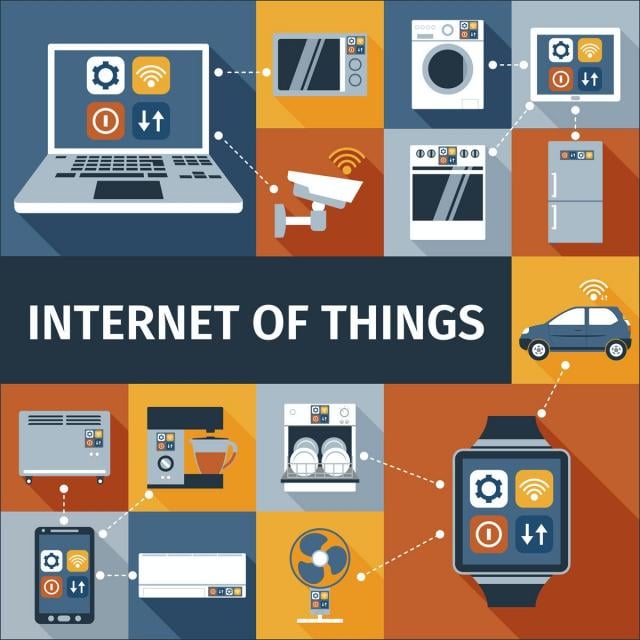
The explosive growth of the “Internet of Things” is changing our world and the rapid drop in price for typical IoT components is allowing people to innovate new designs and products at home. In this first class in the specialization you will learn the importance of IoT in society, the current components of typical IoT devices and trends for the future. IoT design considerations, constraints and interfacing between the physical world and your device will also be covered. You will also learn how to make design trade-offs between hardware and software. We'll also cover key components of networking to ensure that students understand how to connect their device to the Internet.

Aug 31st 2026
4 Weeks
Introduction to TCP/IP (Coursera) Coursera
Yonsei University

Introduction to TCP/IP (Coursera)

You use the Internet through your PC (Personal Computer), laptop, tablet, smartpad, and smartphone every day in everything you do. Through your own PC/laptop, you can easily learn everything about the Internet, and that is what this course is focused on. In this course ‘Introduction to TCP/IP,’ you will learn the operational functions of Internet technologies (which include IPv4, IPv6, TCP, UDP, addressing, routing, domain names, etc.) and your PC/laptop's security and gateway Internet setup and basic principles.

Sep 14th 2026
5-12 Weeks