Positive Psychology: Applications and Interventions (Coursera)

Positive Psychology: Applications and Interventions (Coursera)

Positive interventions are one of the building blocks for the application of positive psychology in our day-to-day lives. In this course taught by Dr. James Pawelski, we explore positive interventions through theory, research and practice. We provide learners the basic tools for using and measuring positive psychology in professional or personal contexts. Suggested prerequisite: Positive Psychology: Martin E. P. Seligman’s Visionary Science.

Class Deals by MOOC List - Click here and see Coursera's Active Discounts, Deals, and Promo Codes.

What You Will Learn

  • Understand the Broaden-and-Build Theory of Positive Interventions
  • Use strategies for classifying character strengths and virtues
  • Choose goals that support your personal well-being
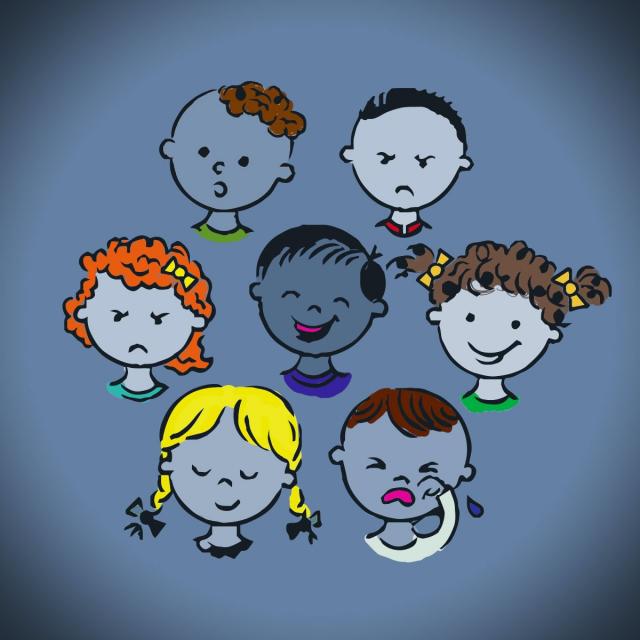
  • Describe why it's important to cultivate a healthy emotional life

Course 2 of 5 in the Foundations of Positive Psychology Specialization.

Syllabus

WEEK 1: Introducing the Course and Exploring Positive Emotions
WEEK 2: Understanding and Cultivating a Healthy Emotional Life
WEEK 3: Identifying and Using Character Strengths
WEEK 4: Setting and Achieving Goals

Go to Class
MOOC List is learner-supported. When you buy through links on our site, we may earn an affiliate commission.

Related Courses

The History of Medicine: Philosophy, Science, and Psychology (Coursera) Coursera
University of California, Santa Cruz

The History of Medicine: Philosophy, Science, and Psychology (Coursera)

"History of Medicine" provides an accessible historical and interdisciplinary perspective on medicine, focused primarily upon therapy and practice, to achieve better understanding of the scope, practice, and limits of medicine. Medicine is defined as the treatment of disease. Human attempts to understand and treat disease will be seen as evolving from the spiritual and mystical practices of the distant past, to the rational approach of the Classical World, and finally to the scientific thinking of the Renaissance and beyond.

Sep 28th 2026
5-12 Weeks
Leading Positive Change through Appreciative Inquiry (Coursera) Coursera
Case Western Reserve University

Leading Positive Change through Appreciative Inquiry (Coursera)

Appreciative Inquiry is a collaborative and constructive inquiry process that searches for everything that gives life to organizations, communities, and larger human systems when they are most alive, effective, creative and healthy in their interconnected ecology of relationships. To appreciate, quite simply, means to value and to recognize that which has value—it is a way of knowing and valuing the best in life. In the language of Positive Organizational Scholarship it means a research focus—a positive bias—seeking fresh understanding of dynamics described by words like excellence, thriving, abundance, resilience, or exceptional and life-giving.

Sep 21st 2026
5-12 Weeks
Reasoning Across the Disciplines (Coursera) Coursera
University of North Carolina

Reasoning Across the Disciplines (Coursera)

Critical reasoning skills are a key success factor for students entering their first year of college. They must be able to think logically and form arguments. This course, designed with incoming college freshmen in mind but open to anyone, provides an essential grounding in critical reasoning skills. Faculty from multiple disciplines at the University of North Carolina at Chapel Hill offer guidance on applying critical thinking skills in the context of specific disciplines. By developing these skills, students will learn more, enjoy their courses more, and experience greater academic success.

Oct 5th 2026
5-12 Weeks
Data Collection: Online, Telephone and Face-to-face (Coursera) Coursera
University of Michigan

Data Collection: Online, Telephone and Face-to-face (Coursera)

This course presents research conducted to increase our understanding of how data collection decisions affect survey errors. This is not a “how–to-do-it” course on data collection, but instead reviews the literature on survey design decisions and data quality in order to sensitize learners to how alternative survey designs might impact the data obtained from those surveys.

Sep 21st 2026
4 Weeks
Everyday Parenting: The ABCs of Child Rearing (Coursera) Coursera
Yale University

Everyday Parenting: The ABCs of Child Rearing (Coursera)

Everyday Parenting gives you access to a toolkit of behavior-change techniques that will make your typical day in the home easier as you develop the behaviors you would like to see in your child. The lessons provide step-by-step instructions and demonstrations to improve your course of action with both children and adolescents.

Oct 5th 2026
4 Weeks
Learning, Knowledge, and Human Development (Coursera) Coursera
University of Illinois at Urbana-Champaign

Learning, Knowledge, and Human Development (Coursera)

This course sets out to provide an understanding of theories of learning and development and how these theories relate to educational technology. It has two components. The first is theoretical, in which we attempt to develop an overall frame of reference, locating approaches to the psychology of learning in terms of large paradigm shifts, from ‘behaviorism’ to ‘brain developmentalism’ to ‘social cognitivism’. The second component is practical, in which we will use these theoretical concepts to ‘parse’ a technology-mediated learning environment for its underlying presuppositions.

Sep 21st 2026
4 Weeks
Introducción a la inteligencia emocional (Coursera) Coursera
UBITS

Introducción a la inteligencia emocional (Coursera)

Con el desarrollo de este curso, se proporcionan herramientas de gran impacto para que puedas aplicar a tu vida personal y laboral en la potencialización de tu inteligencia emocional, a través del autoconocimiento y control de tus propias emociones, comprendiendo las reacciones y emociones que los estímulos externos te generan y así mejorar tus habilidades comunicativas.

Sep 28th 2026
5-12 Weeks
Serious Gaming (Coursera) Coursera
Erasmus University Rotterdam

Serious Gaming (Coursera)

Have you ever wondered how playing games can help us to train people, deal with societal challenges or raise awareness of contemporary social issues? In this MOOC you will learn the ins and outs of games that are designed with exactly those purposes in mind: serious games. We will define serious games and discuss the different types that have been developed. We will explain why people like to play them and what impact they may have.

Oct 12th 2026
5-12 Weeks
Soul Beliefs: Causes and Consequences - Unit 3: How Does It All End? (Coursera) Coursera
Rutgers University

Soul Beliefs: Causes and Consequences - Unit 3: How Does It All End? (Coursera)

Throughout history, the vast majority of people around the globe have believed they have, however defined, a “soul.” While the question of whether the soul exists cannot be answered by science, what we can study are the causes and consequences of various beliefs about the soul and its prospects of surviving the death of the body. Why are soul and afterlife beliefs so common in human history? Are there adaptive advantages to assuming souls exist?

Sep 28th 2026
5-12 Weeks
Unethical Decision Making in Organizations (Coursera) Coursera
University of Lausanne

Unethical Decision Making in Organizations (Coursera)

This course 'Unethical decision making in organizations : A seminar on the dark side of the force' will teach you how strong organizational contexts push good people towards unethical decisions. You will also learn how to protect yourself and your organization against such forces lurking in the dark. This course teaches how narrow frames and strong contexts can push good people towards unethical decisions and how they can protect themselves and their organization against ethical blindness.

Oct 5th 2026
5-12 Weeks
Développement psychologique de l'enfant (Coursera) Coursera
University of Geneva

Développement psychologique de l'enfant (Coursera)

Comment se développent les enfants? Quelles sont leurs compétences perceptives, affectives et sociales ? Quels sont leurs besoins ? Telles sont les questions auxquelles répond ce MOOC. Nous vous apporterons des informations claires, validées scientifiquement et accessibles, que vous soyez parents, grands-parents, étudiants, professionnels de la petite enfance ou tout simplement désireux de mieux comprendre le développement des enfants.

Oct 5th 2026
5-12 Weeks