Children Acquiring Literacy Naturally (Coursera)

Children Acquiring Literacy Naturally (Coursera)

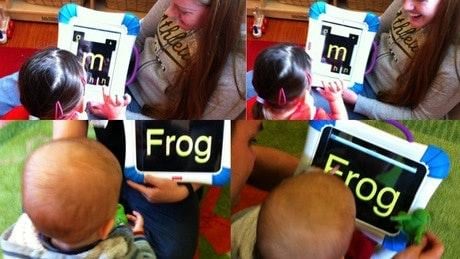
In this short course you will explore the possibility that children might acquire written language in a way that is similar to how they acquire spoken language—without instruction. You will encounter various aspects of behavioral science and technology that are relevant to this proposition. You will have the opportunity to learn the the perceptual, cognitive, and neurological capacities of children during their first years of life. You will advance your understanding of children and how they learn language. You will also be more attuned to current advances in the technology of human machine interactions, and what these phenomena imply for learning to read at an early age.

Class Deals by MOOC List - Click here and see Coursera's Active Discounts, Deals, and Promo Codes.

Syllabus

WEEK 1
Introduction, Challenges, and Language
Universal literacy, differences between spoken and written language, models of perception and processing, and implications of natural acquisition of reading.

WEEK 2
Acquiring Spoken and Written Language
Influences on language learning, iconicity, recognition skills of infants, visual processes in reading, and rapid serial visual processing.

WEEK 3
Reading, Early Reading, and Technological Innovations
The nature of reading, reading myths, current approaches to teaching reading, demographics of literacy and illiteracy, and technological innovations.
Go to Class
MOOC List is learner-supported. When you buy through links on our site, we may earn an affiliate commission.

Related Courses

Medical Neuroscience (Coursera) Coursera
Duke University

Medical Neuroscience (Coursera)

Medical Neuroscience explores the functional organization and neurophysiology of the human central nervous system, while providing a neurobiological framework for understanding human behavior. In this course, you will discover the organization of the neural systems in the brain and spinal cord that mediate sensation, motivate bodily action, and integrate sensorimotor signals with memory, emotion and related faculties of cognition. The overall goal of this course is to provide the foundation for understanding the impairments of sensation, action and cognition that accompany injury, disease or dysfunction in the central nervous system. The course will build upon knowledge acquired through prior studies of cell and molecular biology, general physiology and human anatomy, as we focus primarily on the central nervous system.

Jun 22nd 2026
13-24 Weeks
Symptom Management in Palliative Care (Coursera) Coursera
Stanford University

Symptom Management in Palliative Care (Coursera)

This course should be taken after the Essentials of Palliative Care course and continues building your primary palliative care skills – communication, psychosocial support and goals of care. You will learn how to screen, assess, and manage both physical and psychological symptoms. You will explore common symptoms such as pain, nausea, fatigue, and distress and learn specific treatments.

Jun 22nd 2026
4 Weeks
Emergency Care: Pregnancy, Infants, and Children (Coursera) Coursera
University of Colorado System

Emergency Care: Pregnancy, Infants, and Children (Coursera)

Welcome to the final course of lectures in your quest to master EMT basics. In this course, we will cover some of the highest-stress patient populations: pregnant patients and kids, also known as pediatrics. To wrap up your EMT knowledge we will end this course with information about hazmat situations, extricating patients from tight spots and finally how you write a note about your patient care. You will learn to ensure it communicates what your assessment of the patient was, what interventions you performed and why you did them.

Jun 22nd 2026
4 Weeks
Positive Psychology: Applications and Interventions (Coursera) Coursera
University of Pennsylvania

Positive Psychology: Applications and Interventions (Coursera)

Positive interventions are one of the building blocks for the application of positive psychology in our day-to-day lives. In this course taught by Dr. James Pawelski, we explore positive interventions through theory, research and practice. We provide learners the basic tools for using and measuring positive psychology in professional or personal contexts. Suggested prerequisite: Positive Psychology: Martin E. P. Seligman’s Visionary Science.

Jun 22nd 2026
4 Weeks
Just Reading and Writing English 2 (Coursera) Coursera
Tsinghua University

Just Reading and Writing English 2 (Coursera)

Do you want to read and write better in English? Welcome to our course. The course consists of 6 units with different topics: education, manners, personal communication, purpose of living, cultural studies, life science. From this course, you will have a good knowledge of intermediate English reading and writing skills. We invite you to learn with our teachers and friends from different countries in the videos.

Jun 22nd 2026
5-12 Weeks
Mindfulness and Well-being: Living with Balance and Ease (Coursera) Coursera
Rice University

Mindfulness and Well-being: Living with Balance and Ease (Coursera)

This is the sequel course to Foundations of Mindfulness that will continue to provide a broad overview of the fundamental concepts, principles, and practices of mindfulness. With interactive exercises to help students explore their own attitudes, mental habits and behaviors, Foundations of Mindfulness series offers a pathway for living with more freedom, authenticity and ease. Featured components of the course include experiential exercises, guided meditations, personal reflection and interactive discussions.

Jun 22nd 2026
4 Weeks
The Brain and Space (Coursera) Coursera
Duke University

The Brain and Space (Coursera)

This course is about how the brain creates our sense of spatial location from a variety of sensory and motor sources, and how this spatial sense in turn shapes our cognitive abilities. Knowing where things are is effortless. But “under the hood,” your brain must figure out even the simplest of details about the world around you and your position in it.

Jun 22nd 2026
5-12 Weeks
Social Psychology (Coursera) Coursera
Wesleyan University

Social Psychology (Coursera)

This course offers a brief introduction to classic and contemporary social psychology, covering topics such as decision making, persuasion, group behavior, personal attraction, and factors that promote health and well-being. Ever wonder why people do what they do? This course—which includes more than $1,000 of video and reading materials—offers some answers based on the latest research from social psychology.

Jun 22nd 2026
5-12 Weeks
Motivating Gen Z Learners: What Parents and Teachers Need to Know (Coursera) Coursera
Nanyang Technological University

Motivating Gen Z Learners: What Parents and Teachers Need to Know (Coursera)

The purpose of this course is to equip parents and educators with the knowledge of motivational theories and their application in real-life contexts. Following the storyline of two children, Bob and Sarah, course participants are presented with a variety of problem scenarios. These depict common motivational issues that the participants can resolve using the motivational principles described in the course.

Jun 26th 2026
4 Weeks
Questions, Present Progressive and Future Tenses (Coursera) Coursera
University of California, Irvine

Questions, Present Progressive and Future Tenses (Coursera)

In this course, “Questions, Present Progressive and Future Tenses,” you will learn about question words in English and how to form questions in the simple present. Then you will learn how to form the present progressive to express ideas about things that are happening right now. You will look at the differences between the simple present and present progressive. Finally, you will learn how to use “to be going to” and the present progressive to talk about the future and how to use “can” to talk about ability.

Jun 22nd 2026
4 Weeks
Specialty Topics: Biology Across Disciplines (Coursera) Coursera
University of Colorado Boulder

Specialty Topics: Biology Across Disciplines (Coursera)

In this course, we will explore the applicability and relationship of biology to the arts, business, and psychology. First, we’ll discuss art as a foundational practice to biology and how biology as a science can explain how we interact with the arts, in particular, our experiences making and listening to music. Next, we will discuss the business of biology and how research is funded and the process of clinical trials and human subjects research.

Jun 22nd 2026
5-12 Weeks