Introduction to Psychology (Coursera)

Offered by University of Toronto,
Introduction to Psychology (Coursera)

This course highlights the most interesting experiments within the field of psychology, discussing the implications of those studies for our understanding of the human mind and human behavior. We will explore the brain and some of the cognitive abilities it supports like memory, learning, attention, perception and consciousness. We will examine human development - both in terms of growing up and growing old - and will discuss the manner in which the behavior of others affect our own thoughts and behavior.

Class Deals by MOOC List - Click here and see Coursera's Active Discounts, Deals, and Promo Codes.

Finally we will discuss various forms of mental illness and the treatments that are used to help those who suffer from them.
The fact of the matter is that humans routinely do amazing things without appreciating how interesting they are. However, we are also routinely influenced by people and events without always being aware of those influences. By the end of this course you will have gained a much better understanding and appreciation of who you are and how you work. And I can guarantee you that you'll learn things that you'll be telling your friends and family about, things that will fundamentally change the way you think of yourself and others. How can you resist that?!

Syllabus

WEEK 1
Welcome and Orientation to the Course
This section is about your orientation to the Coursera interface and the logistics of the course.

WEEK 2
History & the Scientific Method
This section is about exploring the introduction to the Science of Psychology. At the end of this first section you'll be able to identify and discuss some of the major movements in the Science of Psychology.

WEEK 3
The Matter of the Mind
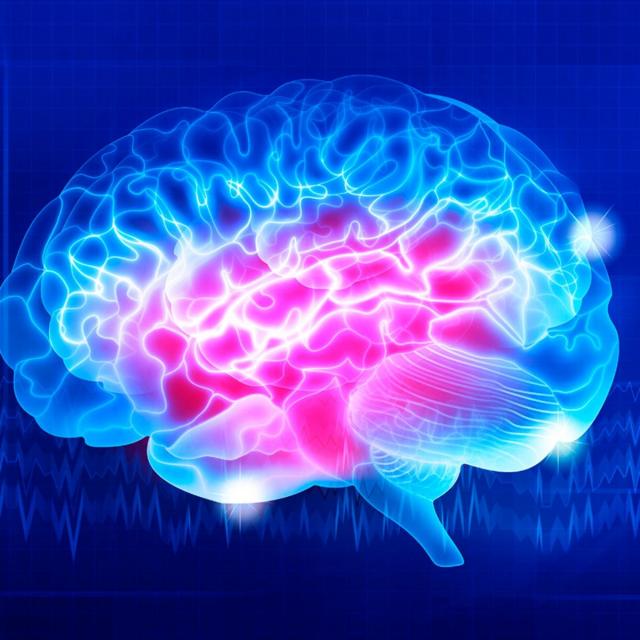
There was a time when one could study Psychology without linking phenomena back to the brain itself, but those days are slowly disappearing. Now every Psychology student, yourself included, is expected to have at least a general knowledge of brain organization and structure. At the end of this section you will be able to locate structures of the brain and discuss its organization.

WEEK 4
Sensation, Perception, Attention and Awareness
This section is all about the systems our brain uses to get input from the world ... you will be able to recognize what those things around us are and where they are ... and be able to interpret who we are and how we fit.

WEEK 5
Learning
This section is all about learning and behaviourism. When you're done the videos you'll be able to name and describe the topic of learning and behaviour in contexts such as flirting and gambling!

WEEK 6
Memory
This topic is Memory, and it's a big topic, and one I know a fair amount about. It was hard to figure out what to present and what to leave out. I tried to include some of the most interesting stuff. I hope you agree. After this section you'll be able to define and summarize topics such as False Memory and Amnesia.

WEEK 7
The Social Mind
This topic is Social Psychology and it features some of the most controversial experiments in psychology. Some of these will having you thinking very deeply for a long time after you see them. You'll have time to analyze and interpret our experience with conformity and authority.

WEEK 8
Mental Illness
This topic is Clinical Psychology and you'll learn both about various clinical disorders, and about the therapies commonly used to treat them.You'll be able to extend this knowledge to different disorders. Be careful to not start diagnosing all your friends or family (or yourself!)

WEEK 9
Final Assignment
Final Peer Assessment Assignment

WEEK 10
Links to Outside Resources
This reading item has links to resources referenced in the course

WEEK 11
Optional Videos - Previous Course by Request
This module is all about you and is about extending our foundational knowledge in the field of psychology so you can discover and describe to others more of what's interesting to you. These curated videos are based on past course requests. We will add new ones as well from time to time as new cohorts make requests.

WEEK 12
Super Optional Videos
These are extras and side videos that you are not tested on. Feel free to watch if you're interested.


Go to Class
MOOC List is learner-supported. When you buy through links on our site, we may earn an affiliate commission.

Related Courses

Machine Learning and Human Learning (Coursera) Coursera
University of Illinois at Urbana-Champaign

Machine Learning and Human Learning (Coursera)

This course examines the differences between machine and human learning and the ways in which machines can complement human learning. It examines technical definitions of supervised and unsupervised machine learning, as well as broader views of mechanical intelligence able to replicate or exceed human intelligence.

Oct 26th 2026
4 Weeks
Leading Diverse Teams (Coursera) Coursera
University of California, Irvine

Leading Diverse Teams (Coursera)

This course addresses the leadership skills and competencies that are requisite for leading across cultures in a global business environment. Participants will learn from frameworks, principles, and practices regarding how to leverage their cross-cultural business experiences for greater influence and effectiveness across cultural contexts (teams, organizations, regions, countries, etc.). Participants will develop working knowledge of the Cultural Intelligence (CQ) framework, including the four CQ capabilities (CQ Drive, CQ Knowledge, CQ Strategy, & CQ Action) and their practical applications for the workplace and for global leaders.

Oct 26th 2026
4 Weeks
University Teaching (Coursera) Coursera
University of Hong Kong

University Teaching (Coursera)

University Teaching is an introductory course in teaching and learning in tertiary education, designed by staff at the Centre for the Enhancement of Teaching and Learning at the University of Hong Kong. With input from instructors, guests and interviewees, including teaching award winners, students, and experts in the fields, you will be exposed to research evidence in relation to effective university teaching and practical instructional design strategies. You will also be exposed to multiple examples of effective teaching, and hear the views of teachers whose teaching has been judged to be excellent.

Oct 26th 2026
5-12 Weeks
Severe to Profound Intellectual Disability: Circles of Care and Education (Coursera) Coursera
University of Cape Town

Severe to Profound Intellectual Disability: Circles of Care and Education (Coursera)

This course is about caring for and educating children (and youth) with severe to profound intellectual disability. We use the idea of 'circles' to position the child at the center of the many levels of support needed. Around the child are circles of care and education - such as the parents, family, friends, caregivers, educators, health care workers and others such as neighbors, business owners and community members.

Oct 26th 2026
4 Weeks
Soul Beliefs: Causes and Consequences - Unit 3: How Does It All End? (Coursera) Coursera
Rutgers University

Soul Beliefs: Causes and Consequences - Unit 3: How Does It All End? (Coursera)

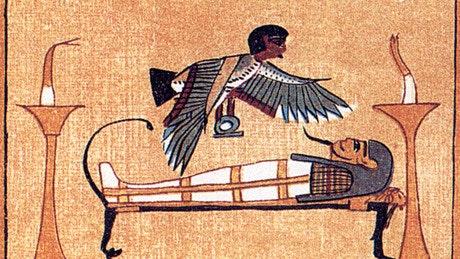
Throughout history, the vast majority of people around the globe have believed they have, however defined, a “soul.” While the question of whether the soul exists cannot be answered by science, what we can study are the causes and consequences of various beliefs about the soul and its prospects of surviving the death of the body. Why are soul and afterlife beliefs so common in human history? Are there adaptive advantages to assuming souls exist?

Oct 26th 2026
5-12 Weeks
Introducción a la Neurociencia (Coursera) Coursera
Universidad de Palermo

Introducción a la Neurociencia (Coursera)

¿Qué es la neurociencia? ¿Cuáles son sus objetivos? ¿Cómo está compuesto y cómo funciona tu cerebro? ¿De qué modo incide sobre tus conductas y comportamientos? ¿Cómo se interrelacionan el cerebro y la mente? ¿Qué son los neurotransmisores y qué tipos de neurotransmisores existen? ¿Qué son las neuronas?

Oct 26th 2026
3 Weeks
Tinkering Fundamentals: Circuits (Coursera) Coursera
Exploratorium

Tinkering Fundamentals: Circuits (Coursera)

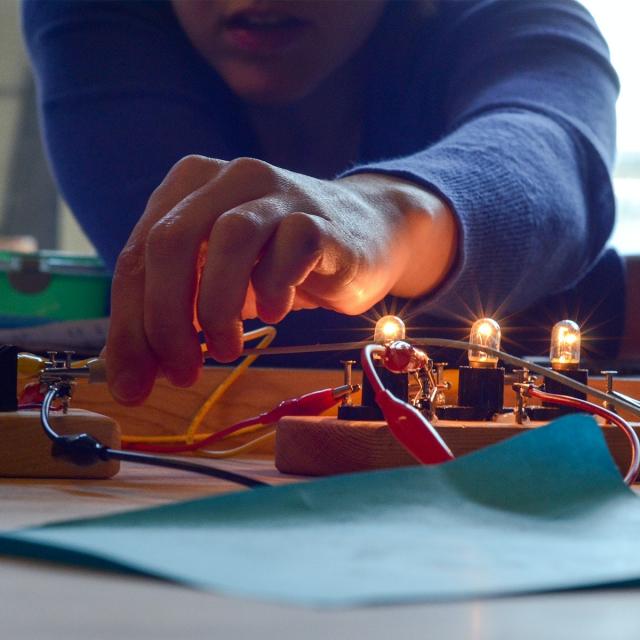
The Tinkering Fundamentals course will offer educators and enthusiasts an opportunity to develop a practice of tinkering and making. We see tinkering as a serious endeavor -- one that is generalizable across content and especially good at interweaving disciplines in a way that leads to complex projects and individualized learning opportunities.

Nov 2nd 2026
5-12 Weeks
Aprender (Coursera) Coursera
Universidad Nacional Autónoma de México

Aprender (Coursera)

¿Quieres conocer tus recursos y niveles de desempeño relacionadas con tu proceso de aprender? ¿Te interesa desarrollar habilidades para aprender más y mejor? En APRENDER conocerás y pondrás en práctica, de forma sencilla y práctica, resultados de investigación recientes sobre los procesos de lectura, almacenamiento de información, recuperación de recuerdos y velocidad de procesamiento. Así, podrás utilizar, de forma eficiente, estrategias y técnicas muy útiles en tu vida académica, profesional y cotidiana.

Oct 26th 2026
4 Weeks
Children Acquiring Literacy Naturally (Coursera) Coursera
University of California, Santa Cruz

Children Acquiring Literacy Naturally (Coursera)

In this short course you will explore the possibility that children might acquire written language in a way that is similar to how they acquire spoken language—without instruction. You will encounter various aspects of behavioral science and technology that are relevant to this proposition. You will have the opportunity to learn the the perceptual, cognitive, and neurological capacities of children during their first years of life. You will advance your understanding of children and how they learn language. You will also be more attuned to current advances in the technology of human machine interactions, and what these phenomena imply for learning to read at an early age.

Oct 26th 2026
3 Weeks
Social Norms, Social Change I (Coursera) Coursera
University of Pennsylvania

Social Norms, Social Change I (Coursera)

This is a course on social norms, the rules that glue societies together. It teaches how to diagnose social norms, and how to distinguish them from other social constructs, like customs or conventions. These distinctions are crucial for effective policy interventions aimed to create new, beneficial norms or eliminate harmful ones. The course teaches how to measure social norms and the expectations that support them, and how to decide whether they cause specific behaviors.

Oct 26th 2026
4 Weeks