Energy Management for IoT Devices (Coursera)

Offered by Starweaver,
Energy Management for IoT Devices (Coursera)

Energy Management for IoT Devices is a comprehensive course designed to introduce participants to the integration of energy management techniques within IoT systems. Through a blend of theoretical insights and practical applications, the course equips current and aspiring professionals with a deep understanding of the pivotal role energy management plays in the IoT landscape. Over 4.0 hours, participants will explore various thematic aspects of energy management in IoT, emphasizing real-world applications and skill-building exercises.

Class Deals by MOOC List - Click here and see Coursera's Active Discounts, Deals, and Promo Codes.

This course caters to professionals and enthusiasts keen on understanding IoT technology and its intersection with energy management practices. It is suitable for IoT developers/engineers seeking to optimize energy consumption in their devices, energy professionals interested in leveraging IoT for efficient energy management, as well as students and researchers exploring the convergence of IoT and energy efficiency. While prior knowledge of IoT concepts, including architecture and protocols, is beneficial, participants are expected to have a basic understanding of energy management principles, such as energy sources and consumption patterns.
The course comprises four modules, each focusing on different aspects of energy management in IoT. Module 1 introduces participants to energy management basics, covering principles, energy sources, and consumption patterns. Module 2 delves into technologies for IoT energy management, exploring hardware components, software solutions, and networking considerations. In Module 3, participants learn to design and implement IoT energy solutions, covering design principles, prototyping, and deployment strategies. Finally, Module 4 delves into advanced topics such as IoT in smart environments, industrial applications, and future trends in IoT energy management.
Upon completing this course, participants will be equipped with the necessary skills to identify and implement energy-efficient solutions for IoT devices. They will possess the ability to analyze and optimize energy consumption, design IoT systems with efficient energy management, and adapt to emerging trends in the dynamic field of IoT technology and energy management. This course sets the stage for a continuous learning journey, encouraging participants to stay abreast of developments and apply their knowledge innovatively in professional contexts.

What you'll learn

  • Understand the principles of energy management in IoT.
  • Explore energy-efficient technologies in IoT devices.
  • Analyze strategies for effective energy management in IoT applications.
  • Apply energy management techniques in real-world IoT scenarios.

Syllabus

Energy Management Basics in IoT
Module 1 serves as an introduction to the essential concepts of energy management within IoT devices. Participants will explore the fundamental principles at the intersection of IoT and energy, gaining insight into energy sources, consumption patterns, and management techniques. Through interactive sessions, learners will understand various energy sources and storage options, such as battery technologies and renewable energy solutions. Additionally, they will analyze energy consumption patterns in IoT devices and explore techniques for optimizing energy usage, including power management strategies and energy-efficient design principles.

Technologies for IoT Energy Management
Module 2 focuses on the technological aspects of managing energy within IoT ecosystems. Participants will delve into hardware components and software solutions tailored for enhancing energy efficiency in IoT devices. Through engaging sessions, learners will gain insight into energy-efficient sensors, actuators, and low-power communication technologies. They will also explore the role of software and analytics in optimizing energy consumption, including the integration of AI and data-driven approaches. Furthermore, participants will examine networking and connectivity considerations for enhancing energy efficiency in IoT systems.

Designing and Implementing IoT Energy Solutions
Module 3 focuses on the practical aspects of designing and implementing energy-efficient solutions within IoT environments. Participants will learn principles of efficient design, component selection, and integration of renewable energy sources. Through hands-on activities, learners will gain practical insight into building and testing energy-efficient IoT solutions, including prototyping, testing methodologies, and real-world case studies. Additionally, they will explore strategies for the deployment and ongoing monitoring of IoT energy solutions, considering scalability, performance optimization, and future trends.

Advanced Topics in IoT Energy Management
Module 4 delves into advanced topics and emerging trends in IoT energy management, providing participants with insights into innovative applications and future directions. Participants will explore the application of IoT in smart environments, including smart cities, smart grids, and sustainable development initiatives, with a focus on energy management perspectives. Additionally, they will examine IoT applications in industrial and commercial settings, such as energy management in manufacturing, building automation, and logistics. Furthermore, participants will gain insights into future trends and emerging challenges in IoT energy management, including ethical and environmental considerations, preparing them for the evolving landscape of IoT-driven energy solutions.
Go to Class
MOOC List is learner-supported. When you buy through links on our site, we may earn an affiliate commission.

Related Courses

Politics and Economics of International Energy (Coursera) Coursera
Sciences Po

Politics and Economics of International Energy (Coursera)

Energy issues have always been important in international relations, but in recent years may have become even more important than in the past due to the widespread awareness of existing limits to energy sources and negative climate impacts. The course discusses global trends in energy consumption and production, various available scenarios for potential developments in the coming decades, the availability of oil reserves and the evolution of the oil industry.

Jun 15th 2026
5-12 Weeks
Capstone: Autonomous Runway Detection for IoT (Coursera) Coursera
EIT Digital

Capstone: Autonomous Runway Detection for IoT (Coursera)

The students will develop a larger system using the learning outcomes from these courses, and the students will evaluate the developed system in a real-world programming environment. This course is a true engineering task in which the student must, not only implement the algorithm code, but also handle the interfaces between many different actors and hardware platforms.

Jun 15th 2026
3 Weeks
Enterprise and Infrastructure Security (Coursera) Coursera
New York University

Enterprise and Infrastructure Security (Coursera)

This course introduces a series of advanced and current topics in cyber security, many of which are especially relevant in modern enterprise and infrastructure settings. The basics of enterprise compliance frameworks are provided with introduction to NIST and PCI. Hybrid cloud architectures are shown to provide an opportunity to fix many of the security weaknesses in modern perimeter local area networks.

Jun 22nd 2026
4 Weeks
Interfacing with the Arduino (Coursera) Coursera
University of California, Irvine

Interfacing with the Arduino (Coursera)

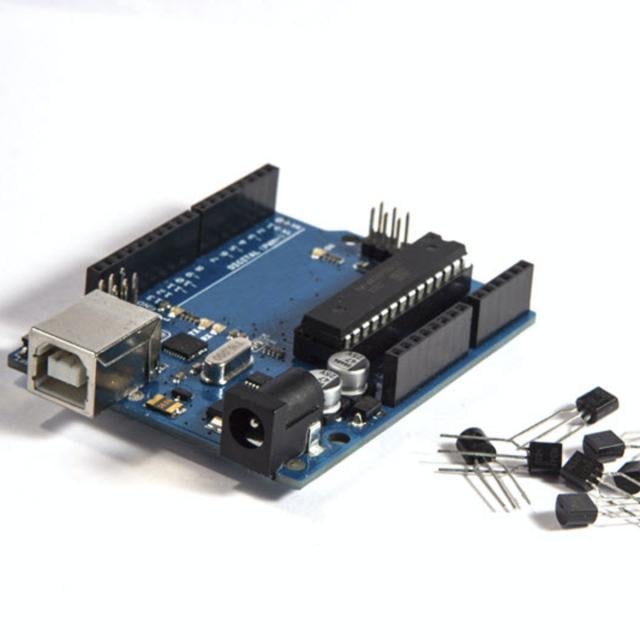
Arduino senses the environment by receiving inputs from add-on devices such as sensors, and can control the world around it by adjusting lights, motors, and other actuators. In this class you will learn how and when to use the different types of sensors and how to connect them to the Arduino. Since the external world uses continuous or analog signals and the hardware is digital you will learn how these signals are converted back-and-forth and how this must be considered as you program your device. You'll also learn about the use of Arduino-specific shields and the shields software libraries to interface with the real world.

Jun 22nd 2026
4 Weeks
Introduction to Architecting Smart IoT Devices (Coursera) Coursera
EIT Digital

Introduction to Architecting Smart IoT Devices (Coursera)

Embedded Systems are so ubiquitous that some of us take them for granted: we find them in smartphones, GPS systems, airplanes and so on. But have you ever wondered how these devices actually work? If so, you're in the right place! In this course, you'll learn about the characteristics of embedded systems: the possibilities, dangers, complications and recipes for success.

Jun 15th 2026
3 Weeks
IoT Devices (Coursera) Coursera
University of Illinois at Urbana-Champaign

IoT Devices (Coursera)

The Internet of Things (IoT) stands to be the next revolution in computing. Billions of data-spouting devices connected to the Internet are already fundamentally changing the way we live and work. This course teaches a deep understanding of IoT technologies from the ground up. Students will learn IoT device programming (Arduino and Raspberry Pi), sensing and actuating technologies, IoT protocol stacks (Zigbee, 5G, NFC, MQTT, etc), networking backhaul design and security enforcement, data science for IoT, and cloud-based IoT platforms such as AWS IoT.

Jun 15th 2026
4 Weeks
Industrial IoT Markets and Security (Coursera) Coursera
University of Colorado Boulder

Industrial IoT Markets and Security (Coursera)

This course can also be taken for academic credit as ECEA 5385, part of CU Boulder’s Master of Science in Electrical Engineering degree. Developing tomorrow's industrial infrastructure is a significant challenge. This course goes beyond the hype of consumer IoT to emphasize a much greater space for potential embedded system applications and growth: The Industrial Internet of Things (IIoT), also known as Industry 4.0. Cisco’s CEO stated: “IoT overall is a $19 Trillion market. IIoT is a significant subset including digital oilfield, advanced manufacturing, power grid automation, and smart cities”.

Jun 22nd 2026
5-12 Weeks
Internet of Things: Communication Technologies (Coursera) Coursera
University of California, San Diego

Internet of Things: Communication Technologies (Coursera)

Have you wondered how “Things” talk to each other and the cloud? Do you understand the alternatives for conveying latency-sensitive real time data versus reliable signaling data? Building on the skills from the Sensing and Actuation course, we will explore protocols to exchange information between processors.

Jun 15th 2026
4 Weeks
Internet of Things V2: Setting up and Using Cloud Services (Coursera) Coursera
University of California, San Diego

Internet of Things V2: Setting up and Using Cloud Services (Coursera)

Have you wondered what exactly AWS is and why is it important? Do you want to make informed design decisions about which services to use? Do you want to gain expertise to leverage the cloud for your own projects? In this course, you will learn to interface with the AWS cloud. You will then develop software to send data to and receive data from the cloud. Along the way, you’ll learn how to structure your project with a variety of these difference services.

Jun 15th 2026
3 Weeks