NAU

Introdução à Epigenética (NAU)

Introdução à Epigenética (NAU)

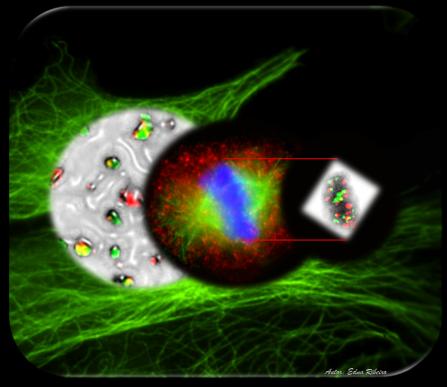
O curso “Introdução à Epigenética” tem como principal finalidade conhecer as principais marcas epigenéticas e sua associação á remodelação da cromatina e controlo da expressão génica".

Os mecanismos epigenéticos encontram-se intimamente relacionados com a problemática do cancro uma vez que, apesar de se reconhecer o papel fundamental da perda de genes supressores de tumores (mutações ou deleções), a metilação de DNA constitui também um mecanismo vital no silenciamento de genes críticos na carcinogénese. A identificação e avaliação das marcas epigenéticas fornecem informações importantes para o diagnóstico e prognóstico de patologias como o cancro.

O extraordinário potencial e aplicabilidade da epigenómica fomentam uma necessidade crescente de enquadrar esta área emergente da ciência no contexto do diagnóstico clínico, para a qual, atualmente, a oferta de ações formativas é ainda diminuta, sendo a presente MOOC uma oportunidade para se iniciar na epigenética: A MOOC terá como objetivos de formação:

  • Identificar as principais marcas epigenéticas;
  • Conhecer os principais mecanismos de regulação epigenética da expressão génica.

Informação sobre o curso
Formato: Curso de formação on-line, em formato MOOC (Massive Open Online Course)
Inscrição: Gratuita, sendo necessário o registo prévio na plataforma NAU
Âmbito: Ciências da Vida; Ciências da Saúde
Iniciativa: Instituto Politécnico de Lisboa
Apoio Institucional: Escola Superior de Tecnologia da Saúde de Lisboa
Organização: Módulos com vídeos e legendados em português e questões interativas

Programa

Introdução
Módulo I: Epigenética: da história à atualidade
Módulo II: Epigenética: níveis e organização da cromatina
Módulo III: Epigenética: marcas epigenéticas e regulação da cromatina

Go to Class
MOOC List is learner-supported. When you buy through links on our site, we may earn an affiliate commission.

Related Courses

Positive Psychology: Martin E. P. Seligman’s Visionary Science (Coursera) Coursera
University of Pennsylvania

Positive Psychology: Martin E. P. Seligman’s Visionary Science (Coursera)

Dr. Martin E.P. Seligman—renowned worldwide as the “father of Positive Psychology”—has led visionary leaps in the scientific research, empirical data and personal understandings of human flourishing. This course explores the past, present and future of positive psychology as a journey through the key scientific leaps led by Dr. Seligman and his colleagues at the University of Pennsylvania's Positive Psychology Center and Master of Applied Positive Psychology program.

Jun 15th 2026
4 Weeks
Patient Safety and Quality Improvement: Developing a Systems View (Patient Safety I) (Coursera) Coursera
Johns Hopkins University

Patient Safety and Quality Improvement: Developing a Systems View (Patient Safety I) (Coursera)

In this course, you will be able develop a systems view for patient safety and quality improvement in healthcare. By then end of this course, you will be able to: 1) Describe a minimum of four key events in the history of patient safety and quality improvement, 2) define the key characteristics of high reliability organizations, and 3) explain the benefits of having strategies for both proactive and reactive systems thinking.

Jun 15th 2026
4 Weeks
COVID-19 e Medidas de Isolamento no Domicílio (NAU) NAU
Direcção-Geral da Saúde - DGS

COVID-19 e Medidas de Isolamento no Domicílio (NAU)

O curso COVID-19 e Medidas de Isolamento no Domicílio vai ajudar a protegê-lo a si e à sua família. COVID-19 e Medidas de Isolamento no Domicílio é um curso onde será abordado as medidas de prevenção gerais para a população e dicas práticas para quem tem de estar em isolamento ou isolamento profilático no domicílio, assim como agir se for cuidador de alguém em isolamento.

Self Paced
Self-Paced
Higiene das Mãos na Prevenção de Infeções (NAU) NAU
Direção-Geral da Educação - DGE

Higiene das Mãos na Prevenção de Infeções (NAU)

Sabia que as nossas mãos constituem uma das principais vias de transmissão de infeções? Descubra como proteger a sua saúde e a de todos aqueles que o rodeiam. O curso “Higiene das Mãos na Prevenção de Infeções” tem como principal finalidade promover a capacitação e literacia na higiene das mãos e a adoção de comportamentos responsáveis na prevenção de infeções.

Self Paced
Self-Paced
Prevenir para não Cair: Guia de Exercícios (NAU) NAU
Instituto Politécnico de Lisboa

Prevenir para não Cair: Guia de Exercícios (NAU)

Fazer exercício faz bem! O curso Prevenir Para Não Cair vai ajudá-lo a manter a sua capacidade funcional e a prevenir quedas. Prevenir Para Não Cair é um curso onde vai encontrar muitos exercícios e conselhos, para que possa aprender a cuidar da sua saúde física e mental. As modificações relacionadas com o processo de envelhecimento incluem perda de força muscular, alterações de equilíbrio e mobilidade e declínio funcional, aumentando a probabilidade de ocorrência de quedas. Este curso fornece as orientações necessárias para que seja capaz de realizar os seus exercícios de prevenção de quedas de forma regular, e fornece, também, alguns conselhos médicos e de nutrição que o irão ajudar a manter-se ativo e mais saudável.

No sessions Available
Self-Paced
Planning a Patient Safety or Quality Improvement Project (Patient Safety III) (Coursera) Coursera
Johns Hopkins University

Planning a Patient Safety or Quality Improvement Project (Patient Safety III) (Coursera)

This course provides students with a set of tools and methodologies to plan and initiate a Problem Solving or Quality Improvement project. The first module presents methods for selecting, scoping and structuring a project before it is even initiated. It also introduces the project classifications of implementation and discovery. The second module describes the A3 problem solving methodology and the tool itself. Further in that same module, the student is shown tools to identify problems in flow, defects, and waste and to discover causes, brainstorm, and prioritize interventions. Module 3 shows a methodology within the implementation class. These methods are designed to overcome emotional and organizational barriers to translating evidence-based interventions into practice. The fourth and last module looks at one more way to approach improvement projects in the discovery class. These tools are specifically for new, out-of-the-box design thinking.

Jun 15th 2026
4 Weeks
Sustainable Food Production Through Livestock Health Management (Coursera) Coursera
University of Illinois at Urbana-Champaign

Sustainable Food Production Through Livestock Health Management (Coursera)

Learn about the impact of infectious disease on sustainable animal-based food production by understanding the science of growth, immunity, and infection and by learning the problem-solving skills needed to advance animal health and food production through optimal management practices. In this course we will explore the effect of infectious disease on sustainable animal-based food production. The content and learning outcomes of this new course will be designed to be relevant across different food production sectors (i.e., beef, dairy, poultry, and pigs).

Jun 15th 2026
5-12 Weeks
Essentials of Global Health (Coursera) Coursera
Yale University

Essentials of Global Health (Coursera)

Essentials of Global Health is a comprehensive introduction to global health. It is meant to introduce you to this topic in well-structured, clear and easy to understand ways. Much of the course will focus on five questions: What do people get sick, disabled and die from; Why do they suffer from these conditions? Which people are most affected? Why should we care about such concerns? What can be done to address key health issues, hopefully at least cost, as fast as possible, and in sustainable ways?

Jun 15th 2026
5-12 Weeks
Herbal Medicine (Coursera) Coursera
University of Minnesota

Herbal Medicine (Coursera)

There is strong demand for alternatives to pharmaceuticals for a variety of common illnesses due to concerns of safety, efficacy, and a desire for more “natural” products. Despite this growing interest, “conventional” healthcare providers may have little to no knowledge about herbal medicines, which is further compounded by the sometimes misleading information in the media and on the internet. This course provides the necessary background for providers to begin to incorporate herbal medicines into their practice, particularly in regards to their therapeutic properties, efficacy (or lack thereof), and safety concerns, including quality control and potential adverse effects.

Jun 17th 2026
5-12 Weeks
Health Coaching Conversations (Coursera) Coursera
Imperial College London

Health Coaching Conversations (Coursera)

Are you a healthcare practitioner or student in a healthcare field? Do you want to learn how to have more empowering conversations with your patients and support them to take control of their own health and wellbeing? Are you looking for a course to start learning these skills that also fits with your busy life? If so, this is the course for you!

Jun 17th 2026
4 Weeks
A Higiene da Pessoa Idosa (NAU) NAU
Prime Senior

A Higiene da Pessoa Idosa (NAU)

O curso A Higiene da Pessoa Idosa vai abordar boas práticas sobre a forma mais eficaz de realizar a higiene de uma pessoa, independentemente do seu grau de dependência. A Higiene da Pessoa Idosa é importante na saúde, conforto e qualidade de vida. Pretendemos dar-lhe boas práticas, conselhos e novas ferramentas a colocar em prática durante os cuidados. Prevê-se que num futuro muito próximo Portugal seja um país envelhecido. O envelhecimento não seria preocupação, se na maioria dos casos, o mesmo não fosse acompanhado por algum grau de dependência.

No sessions available
1 Week
Introduction to Systems Biology (Coursera) Coursera
Icahn School of Medicine at Mount Sinai

Introduction to Systems Biology (Coursera)

This course will introduce the student to contemporary Systems Biology focused on mammalian cells, their constituents and their functions. Biology is moving from molecular to modular. As our knowledge of our genome and gene expression deepens and we develop lists of molecules (proteins, lipids, ions) involved in cellular processes, we need to understand how these molecules interact with each other to form modules that act as discrete functional systems.

Jun 15th 2026
5-12 Weeks