Implant Dentistry is one of the most dynamic and rapidly developing areas within oral health care. In spite of increasing popularity of implantology, it is a relatively new discipline within dental education and remains limited to post-graduate courses offered by dental schools in many parts of the world today.
Class Deals by MOOC List - Click here and see Coursera's Active Discounts, Deals, and Promo Codes.
With the vision to help dental practitioners gain clinical understanding of implantology and an opportunity to provide implant treatments to their patients, the Faculty of Dentistry of HKU (ranked No. 1 dental school in the World in 2016) developed this MOOC to provide a world-class quality, unbiased, evidence-based and clinically-oriented course in this discipline.
Who are the faculties?
The course teachers include more than 20 implant experts from 10 countries. Among others, you will learn from Professor NP Lang (Switzerland / Hong Kong), Professor Christoph Hämmerle (Switzerland), Professor Rino Burkhardt (Switzerland), Professor Paul Weigl (Germany), Professor Saso Ivanovski (Australia), Professor Man Yi (China), Professor Vasilios Chronopoulos (USA/ Greece), Dr Richard Chan (Australia), Dr Martin Janda (Sweden), Dr Chatchai Kunavisarut (Thailand), Dr Ian HS Yip (Hong Kong) , Dr Michael Ho (Hong Kong), Dr Irina-Florentina Dragan (USA), Dr Adam Siu (Hong Kong), Dr Coral Yao (China), Dr Nikos Mattheos (Hong Kong) and more.
What are the contents covered in the course?
The MOOC includes 5 modules and runs over a period of 5 weeks. We will begin the journey of Implant Dentistry by exploring how discoveries in biology and technological developments lead to the current practice of dental implants. Then, we will examine clinical cases, diagnose our patients’ needs and expectations and learn the principles of treatment planning. We will learn step-by-step surgical procedures for placing implants and various restorative techniques, directed by current evidence and best practices. Finally, we will investigate major threats and complications of implant procedures and ways to ensure successful treatments and long serving implants.
What is the aim of the course?
This MOOC has a strong clinical focus and is especially designed to enhance professional learning among dental practitioners and dental students. The course aims to help the students LEARN the fundamentals of implant dentistry, UNDERSTAND the treatment procedures and protocols, and APPLY the competences gained through interactive peer and case based learning.
Who is the course for?
The course is specially designed to serve multiple groups of learners: From intermediate and experienced general dental practitioners who want to establish and deepen their knowledge in implant dentistry and advance towards implementing implant treatment and restorative procedures, to dental students and recent graduates who wish to gain understanding of implant dentistry and increase their competence in related practice.
The course makes good use of evidenced-based education, sound eLearning pedagogies and 21st century “live” resources to engage and create the best learning experience for our students.
Syllabus
WEEK 1
Implants, biology and technology
So what is implant dentistry all about? How did it all start and what were the major breakthroughs that paved the way to our current stage? How can dental implants benefit our patients? Is it about a new set of teeth or a complex rehabilitation with great potential but many limitations as well? This module will review the basic biological concepts behind tissue integration and the implications for our clinical decision making.
WEEK 2
Implants and the patient
Patient selection and treatment planning remains the cornerstone of success in implant dentistry. This module will discuss all patient related factors and will help you identify the right patient, identify their needs and prepare them physically and mentally for implant treatment. In this module we will further assess all systemic, anatomic and behavioral risks and help you design all steps in your comprehensive treatment plan, responding to the actual patient needs.
WEEK 3
Placing dental implants
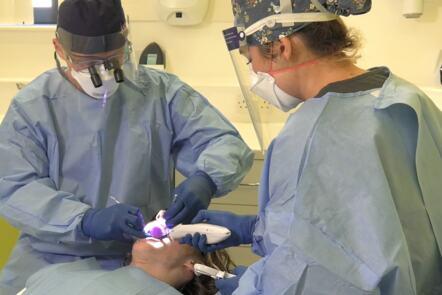
The featured lectures in Week 3 will prepare you for your first implant placement and beyond. Major implant placement protocols and important choices and decisions that a dental surgeon routinely face, such as the timing of implant placement will be discussed. We will also review what we anticipate in the post surgical healing period including complications and risks. The theoretical lectures in the Module are supplemented by a series of practical videos of clinical work to show in detail the set-up of your surgery, acquainting you with the main instruments of the surgeon and the assistant, surgical techniques and step-by-step guidelines for efficient implant placement and suturing techniques.
WEEK 4
Restoring implants
In Module 4, we will review the major pathways and choices we have for placing teeth on top of implants, whether with single crowns, fixed bridges or overdentures, and immediate or delayed placement and restoration. We will see how we can use implant abutments, screw retained or cement retained prostheses and how to choose among the many options. We will also look at the clinical applications and watch demonstrations of taking impressions on implants, cementation techniques, preparing temporary restorations and using them to achieve the optimal aesthetic results.
WEEK 5
Living with dental implants and the future
A prosthesis on implants is a commitment for life and there is no doubt that implant prostheses are "high maintenance" devices! In this module we will discuss how to design individualised, evidence-based strategies to maintain health and function of implant prostheses in the long term. We will also review the most common technical and biological complications and discuss prevention strategies, early diagnosis and management techniques. We will also present some cutting edge technologies and new trends that may shape the future of implant dentistry, including using digital technology in tissue engineering and regeneration, dynamic navigation and digital workflow in implant procedures.