Immunology (saylor.org)

Offered by Saylor.org,
Immunology (saylor.org)

Immunology is the study of our immune system, a highly sophisticated system that defends us against all disease-causing invaders by identifying and neutralizing such threats.

Immunology is the study of our immune system, a highly sophisticated system that defends us against all disease-causing invaders by identifying and neutralizing such threats. Even though we might get sick every now and then, the immune system does an incredible job of warding off infection given how many infectious agents (thousands!) we come into contact with every day. This becomes most apparent when a healthy individual compares himself or herself to an individual with little or no immune response who cannot survive in a normal environment and must rely on specialized rooms much cleaner than even a surgery room. Before the discovery of immunity, we used to associate sickness and disease with various superstitions and beliefs. Only with the discovery of bacteria, viruses, and our own cells did scientists slowly piece together the modern theory of our immune system. Our overall system can be broken down into two sub-systems, each with its own unique cells, molecules, and functions. Our cells are in turn capable of recognizing billions of different patterns of molecules, all of them alien to ourselves, which helps us identify foreign invaders. It is important to recognize that, as with any system in our body, when the immune system malfunctions, disease can result. In this course we will take a look at what happens when an inappropriate immune response takes place.
Go to Class
MOOC List is learner-supported. When you buy through links on our site, we may earn an affiliate commission.

Related Courses

Evolutionary Medicine: Microbes, Medicine, and Humanity's Quest for Survival (edX) EdX
Arizona State University,ASUx

Evolutionary Medicine: Microbes, Medicine, and Humanity's Quest for Survival (edX)

Explore the complex relationships between people, pathogens, and our evolutionary past in the first MOOC on evolutionary medicine. Have you ever wondered why we often develop a fever when we get sick? Or a cough? Why do we get cancer? Or the flu? Or allergies? Why do our bodies succumb to disease at all? In this class, we’ll answer these questions by taking a step back in time to consider how our evolutionary past has shaped our health in the present.

This course is archived
4 Weeks
Cell Biology (saylor.org) Saylor Academy
Saylor.org

Cell Biology (saylor.org)

The cell is the fundamental unit of life; in fact, the smallest living organisms are composed of a single cell. We have learned that, despite their small size, cells are far from simple, and we have only recently begun to understand just how complex they are. This course will present you with a detailed overview of a cell’s main components and functions.

Legacy Course
Self-Paced
International Law in Action: the Arbitration of International Disputes (Coursera) Coursera
Leiden University

International Law in Action: the Arbitration of International Disputes (Coursera)

‘The Arbitration of International Disputes’ is the third course of Leiden University’s series on International Law in Action. The first course covered generalities on the international courts and tribunals in The Hague, while the second course provided an insider's perspective into the work of international criminal courts and tribunals. This third course explores the major aspects of international arbitration as one of the most common method of international dispute settlement .

Apr 6th 2026
4 Weeks
Allergies: When the Immune System Backfires (FutureLearn) FutureLearn
University of Basel

Allergies: When the Immune System Backfires (FutureLearn)

What do allergies reveal about our immune system's capabilities? Learn more about allergy symptoms and treatments on this course. Discover how different allergies are understood, diagnosed, and treated today.The human immune system is designed to fight infection, but sometimes this defence mechanism provokes allergic disorders. On this course, you will explore the similarities and differences of infections and allergies, and understand the intricacies of the immune system.

Available now
3 Weeks
Innate Immunity (FUN) FUN
Institut Pasteur

Innate Immunity (FUN)

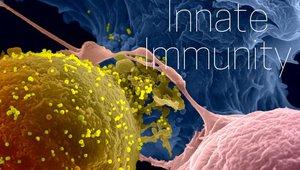
More than a century ago, Elie Metchnikoff established the bases of cellular innate immunity when he discovered the mechanism of phagocytosis. However, during most of the XXth century, adaptive immunity (also known as specific immunity) focused most of the interest of the researchers, until Charles Janeway and Polly Matzinger revisited the definition of immunology. What was called “non-specific immunity” was renamed “innate immunity”, and the understanding of the sensing of the exogenous or endogenous dangers signals, and their identification revolutionized our understanding of the early mechanism aimed to defend the integrity of the host against any type of attacks including pathogens.

Jan 14th 2022
5-12 Weeks
Liver Transplant: the Ins and Outs (FutureLearn) FutureLearn
University of Birmingham

Liver Transplant: the Ins and Outs (FutureLearn)

Learn about the science behind having a liver transplant with this free online course from the Centre for Liver Research. In this free, three-week course, we will teach you about the fascinating field of liver transplantation. We will cover the history of liver transplantation - from early experiments in the late 1960s to exciting new technological advances in organ preservation happening today.

Available now
3 Weeks
HIV Science (FUN) FUN
Institut Pasteur

HIV Science (FUN)

Since the start of the epidemic HIV has infected over 75 million people and provoked more than 35 million deaths. Today, although HIV replication can be controlled by antiretroviral treatment, HIV infection remains an outstanding global health issue, with 36.7 million infected people and 1 million HIV-related deaths in 2016, according to WHO. Half of the infected population does not have access to antiretroviral treatment and 2 million new infections are registered every year. In addition there is currently no cure for HIV and antiretroviral treatment needs to be maintained for life. In this MOOC we will review different aspects of HIV infection: from its biological origin and its identification as the causative agent of AIDS to the perspectives of eradication.

No sessions available
5-12 Weeks
Microbiology (edX) EdX
Southern New Hampshire University,SNHUx

Microbiology (edX)

Study the impact of pathogenic organisms and their role in immunology and disease. You’ll gain knowledge on the interaction between microbe and host, preventative measures and treatment of infectious diseases. Looking to move into a healthcare role? Microbiology is a critical subject for anyone looking to work in the healthcare field. In this course, you’ll focus on the impact of pathogenic organisms and their role in immunology and disease.

Self Paced
Self-Paced
Stories of Infection (Coursera) Coursera
Stanford University

Stories of Infection (Coursera)

This course introduces learners to a variety of infectious diseases using a patient-centered, story-based approach. Through illustrated, short videos, learners will follow the course of each patient’s illness, from initial presentation to resolution. Integrating the relevant microbiology, pathophysiology and immunology, this course aims to engage and entice the learner towards future studies in microbiology, immunology and infectious diseases.

Jun 22nd 2026
5-12 Weeks