EdX

Robot Mechanics and Control, Part I (edX)

Robot Mechanics and Control, Part I (edX)

A mathematical introduction to the mechanics and control of robots. This course provides a mathematical introduction to the mechanics and control of robots that can be modeled as kinematic chains. Topics covered include the concept of a robot’s configuration space and degrees of freedom, static grasp analysis, the description of rigid body motions, kinematics of open and closed chains, and the basics of robot control.

Class Deals by MOOC List - Click here and see EdX's Active Discounts, Deals, and Promo Codes.

The emphasis is not on the latest research trends and technological innovations in robotics, but on learning the fundamental concepts and core principles that underlie robotics as a scientific discipline. The intent is to help students acquire a unified set of analytical tools for the modeling and control of robots, together with a reliable physical intuition that recognizes the unique and interdisciplinary nature of robotics—in short, content that will serve as a reliable foundation for whatever trends may appear later, and remain relevant to both the practitioner and researcher. This course is the first of two parts of “Robot Mechanics and Control.” Part II will start shortly after completion of Part I.

What you'll learn

  • Robot configuration space and degrees of freedom
  • Static grasp analysis
  • Rigid body motions
  • Forward kinematics based on the Denavit-Hartenberg parameters
Go to Class
MOOC List is learner-supported. When you buy through links on our site, we may earn an affiliate commission.

Related Courses

Fundamentals of Non-Destructive Testing (edX) EdX
Purdue University,PurdueX

Fundamentals of Non-Destructive Testing (edX)

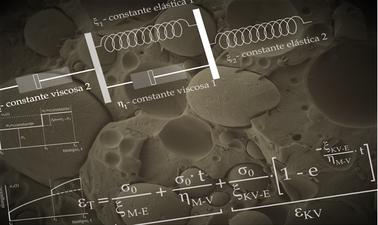
Learn the fundamentals of non-destructive testing (NDT), a technique used to evaluate material and structure properties and defects without causing damage. Non-destructive testing (NDT) is used across industries to ensure product integrity and reliability; it is used in the aerospace, defense, oil and gas, and automotive sectors. In civil engineering, NDT is commonly used to detect flaws and defects in concrete elements and structures.

Jan 10th 2022
5-12 Weeks
Quantum Mechanics for Scientists and Engineers 2 (edX) EdX
StanfordOnline

Quantum Mechanics for Scientists and Engineers 2 (edX)

This course covers key topics in the use of quantum mechanics in many modern applications in science and technology, introduces core advanced concepts such as spin, identical particles, the quantum mechanics of light, the basics of quantum information, and the interpretation of quantum mechanics, and covers the major ways in which quantum mechanics is written and used in modern practice.

Self Paced
Self-Paced
Dynamics and Control (edX) EdX
Universitat Politècnica de València,UPValenciaX

Dynamics and Control (edX)

This is an interactive course about the basic concepts of Systems, Control and their impact in all the human activities. First, the basic concepts of systems, dynamics, structure and control are introduced. Then, looking at many examples in Nature and human made devices, we will realize that the dynamic behavior of most systems can be modified by adding a control system. Later we will see how knowing how to evaluate the dynamic behavior of a system and measure its performance will provide the tools to design new controlled systems fulfilling some requirements.

Self Paced
Self-Paced
Management in Engineering: Strategy and Leadership (edX) EdX
MIT,MITx

Management in Engineering: Strategy and Leadership (edX)

Analyze challenging real-life business cases that engineering managers face on a variety of topics. Apply management tools and relevant skills to manage innovation. This course was formerly known as Management in Engineering II. As part of the Principles of Manufacturing MicroMasters program, this course aims to provide exposure to key principles and practices used in engineering management.

Jan 9th 2024
5-12 Weeks
Wave-Based NDT Methods (edX) EdX
Purdue University,PurdueX

Wave-Based NDT Methods (edX)

Learn how to use wave-based NDT techniques, ultrasonic testing, acoustic emission, etc, to inspect the structural integrity of civil engineering structures, including highways, bridges, dams, and buildings. Wave-based NDT methods allow for reliable and rapid evaluation of civil engineering infrastructure. These methods are particularly useful in long-range inspection; for example, in pipelines, where the wave-based NDT can provide data on hundreds of meters of piping in a matter of seconds.

Feb 14th 2022
5-12 Weeks
Quantum Detectors (edX) EdX
Purdue University,PurdueX

Quantum Detectors (edX)

Learn about quantum sensors and devices that extract maximal information from the world around us. Classical detectors and sensors are ubiquitous around us from heat sensors in cars to light detectors in a camera cell phone. Leveraging advances in the theory of noise and measurement, an important paradigm of quantum metrology has emerged. Here, ultra-precision measurement devices collect maximal information from the world around us at the quantum limit.

Feb 12th 2024
5-12 Weeks
Solar Energy: Photovoltaic (PV) Technologies (edX) EdX
Delft University of Technology,DelftX

Solar Energy: Photovoltaic (PV) Technologies (edX)

Explore the main PV technologies in the current market. Get in-depth knowledge on the design and processing methods of solar cells. The technologies used to produce solar cells and photovoltaic modules are advancing to deliver highly efficient and flexible solar panels. In this course you will explore the main PV technologies in the current market.

Aug 29th 2023
5-12 Weeks
Nanophotonic Modeling (edX) EdX
Purdue University,PurdueX

Nanophotonic Modeling (edX)

Learn a comprehensive set of simulation techniques to predict the performance of photonic nanostructures. This engineering course is an introduction to photonic materials and devices structured on the wavelength scale. Generally, these systems will be characterized as having critical dimensions at the nanometer scale. These can include nanophotonic, plasmonic, and metamaterial components and systems.

Feb 12th 2024
5-12 Weeks