Gabriel García Márquez: entre el poder, la historia y el amor (FutureLearn)

Gabriel García Márquez: entre el poder, la historia y el amor (FutureLearn)

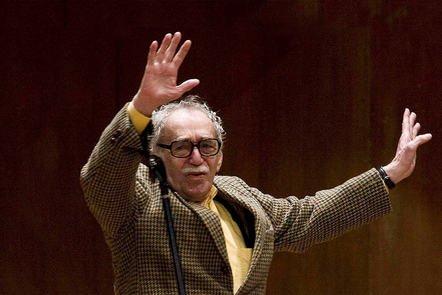
Identifique las contribuciones del autor a la literatura universal mediante el estudio de tres de sus grandes obsesiones. En este curso usted podrá identificar los aportes narrativos del escritor colombiano Gabriel García Márquez a la literatura universal a través del estudio de tres de las grandes obsesiones del autor: el poder, la historia y el amor.

Class Deals by MOOC List - Click here and see FutureLearn's Active Discounts, Deals, and Promo Codes.

Usted tendrá la oportunidad de gozar de la lectura de las siguientes obras: La increíble y triste historia de la cándida Eréndira y su abuela deslamada (1972), El Otoño del patriarca (1975), Crónica de una muerte anunciada (1981), El amor en los tiempos del cólera (1985), El general en su laberinto (1989) y Del amor y otros demonios (1994).

Al estudiar de forma cronológica estas obras publicadas después de Cien años de soledad (1963), usted reconocerá la evolución narrativa de García Márquez.
Adicionalmente, usted tendrá la oportunidad de profundizar en diferentes temas como: la novela del dictador, las particularidades de la nueva novela histórica, las influencias literarias del autor, el tema de la vejez, entre otras.

Profundizar en el universo de Gabriel García Márquez
Finalmente, al profundizar en el universo narrativo de García Márquez después de Macondo, usted se dejará seducir por la riqueza de su lenguaje y entenderá por qué este escritor es considerado uno de los grandes genios literarios de todos los tiempos.
A través del estudio de estas obras usted:

  1. Valorará la obra de Gabriel García Márquez
  2. Apreciará la forma en que evoluciona
  3. Desarrollará la capacidad de relacionar sus diferentes obras
  4. Identificará algunos de los elementos centrales de su obra

Este curso también estará disponible en Inglés. Para mayor información y para inscribirte por favor visita la página del curso.
Go to Class
MOOC List is learner-supported. When you buy through links on our site, we may earn an affiliate commission.

Related Courses

Humphry Davy: Laughing Gas, Literature, and the Lamp (FutureLearn) FutureLearn
Lancaster University,Royal Institution - RI

Humphry Davy: Laughing Gas, Literature, and the Lamp (FutureLearn)

Discover Humphry Davy and his contribution to science and the arts. Before culture was divided into the sciences and the arts there was a chemist who was also a poet. Sir Humphry Davy (1778-1829) is one of the best known men of science of the nineteenth century: he was the first person to inhale nitrous oxide; he isolated nine chemical elements; and he invented the miners’ safety lamp known as the Davy lamp. This course will consider Davy’s life and career using manuscript sources held at the Royal Institution of Great Britain.

Oct 9th 2023
4 Weeks
Transmedia Writing (Coursera) Coursera
Michigan State University

Transmedia Writing (Coursera)

Do you have a desire to write a novel, write a screenplay, design a video game? In this project-centered course you will develop your own, original, intellectual property (IP) into a transmedia project containing written versions of your IP on various platforms. You will begin your novel, adapt the first chapters of your novel into the opening scenes of a film or TV show and create a game design concept of your IP.

Aug 24th 2026
5-12 Weeks
The American Renaissance: Classic Literature of the 19th Century (edX) EdX
DartmouthX

The American Renaissance: Classic Literature of the 19th Century (edX)

Explore the writings of famous American authors from Ralph Waldo Emerson and Harriet Beecher Stowe to Mark Twain, and examine the historic role Dartmouth College played in their formation. What is the American Renaissance? How did Dartmouth help foster the formation of the American Renaissance and its reevaluation and reinvention in the twentieth? Why should we, as twenty-first century readers, concern ourselves with this literature?

Self Paced
4 Weeks
The Talmud: A Methodological Introduction (Coursera) Coursera
Northwestern University

The Talmud: A Methodological Introduction (Coursera)

The Talmud is one of the richest and most complicated works of literature the world has ever known. Since being composed around 1500 years ago it has inspired not only religious reverence but significant intellectual engagement. In this course learners will be introduced to the unique characteristics of this text and the challenges that inhere in studying it while studying a chapter of the Talmud.

Aug 24th 2026
5-12 Weeks
Reading Macondo: the Works of Gabriel García Márquez (FutureLearn) FutureLearn
Universidad de los Andes

Reading Macondo: the Works of Gabriel García Márquez (FutureLearn)

Explore why the author of One Hundred Years of Solitude is one of the 20th century’s leading writers in this free online course. Gabriel García Márquez is a Colombian writer, who won the Literature Nobel Prize in 1982. He has been recognised as one of the world’s leading writers in the second half of the 20th century. His works have been translated into many languages, been adapted for TV and film, and inspired many subsequent works of art.

No sessions available
5-12 Weeks
Shakespeare: Print and Performance (FutureLearn) FutureLearn
King's College London

Shakespeare: Print and Performance (FutureLearn)

As part of Shakespeare400, learn about Shakespeare in print and performance around the world, from early modern times to today. Why do we continue to read and perform Shakespeare’s works around the world today? How were his plays performed and printed 400 years ago, and how has our conception of Shakespeare changed over the centuries?

Self Paced
4 Weeks
Shakespeare's Language: Revealing Meanings and Exploring Myths (FutureLearn) FutureLearn
Lancaster University

Shakespeare's Language: Revealing Meanings and Exploring Myths (FutureLearn)

Demystify renowned Shakespeare myths and get introduced to corpus-based methods for analysing his use of language in context. Debunk and discover common myths surrounding the language of William Shakespeare. William Shakespeare is a global phenomenon, yet there is actually relatively little work specifically devoted to his language, and even less deploying the latest techniques from linguistics.

Jul 12th 2021
4 Weeks
Gabriel García Márquez: Power, History and Love (FutureLearn) FutureLearn
Universidad de los Andes

Gabriel García Márquez: Power, History and Love (FutureLearn)

Identify the author’s contributions to world literature through the study of three of his obsessions: power, history and love. In this course you will be able to identify Colombian writer Gabriel García Márquez’s narrative contributions to world literature through the study of three of the author’s obsessions: power, history and love.

No sessions available
5-12 Weeks
Old Norse Mythology in the Sources (Coursera) Coursera
University of Colorado Boulder

Old Norse Mythology in the Sources (Coursera)

This course is an introduction to the religion of the Vikings as it is recorded in Old Norse and Scandinavian literature from the medieval period. You will learn about the different written sources and what they can teach us about pre-Christian religion in northern Europe in the Viking Age. The course surveys the primary collection of Old Norse poetry about the pre-Christian Scandinavian gods, the Poetic Edda. We will also work with the main collections of stories about the Old Norse gods in prose: Snorri Sturluson's Edda and Saxo's History of the Danes.

Aug 24th 2026
4 Weeks