History of Medical Cannabis (Coursera)

History of Medical Cannabis (Coursera)

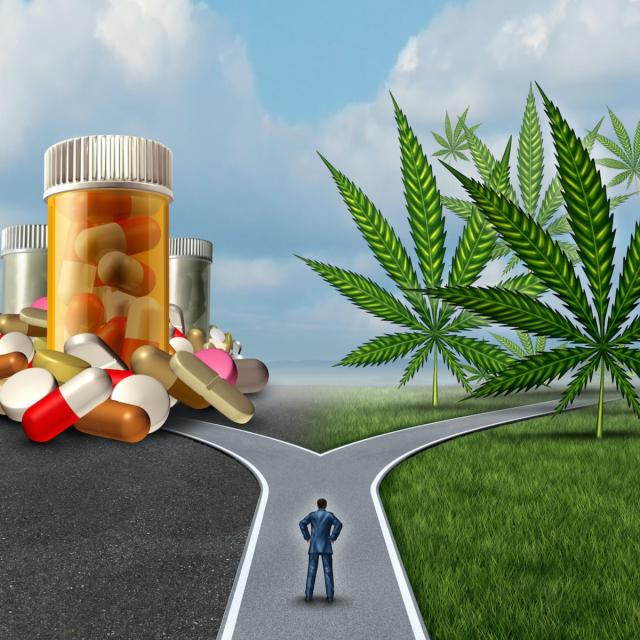
This History of Medical Cannabis course is designed to have you think critically about past, present, and future research on the health effects of cannabis by developing a more nuanced understanding of the barriers to research as well as different approaches to research. You will learn about the history of cannabis cultivation, the legal history of cannabis or "marijuana", and the obstacles that led to the lack of science on its medicinal use.

Class Deals by MOOC List - Click here and see Coursera's Active Discounts, Deals, and Promo Codes.

You will also learn how to critically evaluate research on the effects of cannabis cannabis, and discuss the associated risks of using cannabis in the context of public health and epidemiological research. Finally, you will learn about how to administer cannabis products in ways that minimize risk adn maximize any potential benefits. Obtaining this knowledge will be helpful in terms of informing public policy, public health, and personal decisions regarding the use of cannabis products.
What You Will Learn

  • Learn about the basic pharmacology of cannabis and how cannabinoids effect the body.
  • Learn about the history of cannabis cultivation and legality.
  • Learn about the barriers and approaches to cannabis research.
  • Learn about the epidemiological data on cannabis use in terms of cognition, education, and behavior.

Course 1 of 4 in the Medical Cannabis: The Health Effects of THC and CBD Specialization.

Syllabus

WEEK 1
Introduction to Course and to Cannabis
In this module, we will discuss the biological characteristics of cannabis and the effect cannabinoids have on the body. Will will cover the basic pharmacology of THC and CBD and the action these cannabinoids have in the brain. Lastly, we will evaluate the evidence for what is called the entourage effect.

WEEK 2
History of Cannabis
In this module, we will discuss the history of cannabis as an alternative medicine and the legal history of cannabis in both the US and abroad. We will discuss the variety of different product types post-legalization, how products are made, and implications for safety. We will also discuss the cannabis industry and how it compares to other mature industries like the pharmaceutical and alcohol industries.

WEEK 3
Barriers to Research and How to Evaluate Research
In this module, we will discuss the legal barriers to institutional research in the US and how this has impacted conducting much-needed cannabis research. You will learn the difference between high quality, rigorous research design compared to biased sources of information. Lastly, you will learn how the placebo effect works and evaluate how much of a role it plays with regards to the medical benefits of cannabis.

WEEK 4
Risks Associated with Cannabis Use
In this module, we will review the animal and human literature with regards to the effects of cannabis in the brain. We will discuss the epidemiology of cannabis use and review public health data. Lastly, we will discuss the best practices for using it medically, such as to minimize the risks and harms while maximizing the benefits.


Go to Class
MOOC List is learner-supported. When you buy through links on our site, we may earn an affiliate commission.

Related Courses

Positive Psychology: Resilience Skills (Coursera) Coursera
University of Pennsylvania

Positive Psychology: Resilience Skills (Coursera)

Learn how to incorporate resilience interventions into your personal and professional life with Dr. Karen Reivich. In this course, you are exposed to the foundational research in resilience, including protective factors such as mental agility and optimism. Several types of resilience interventions are explored including cognitive strategies; strategies to manage anxiety and increase positive emotions such as gratitude; and a critical relationship enhancement skill.

Jun 8th 2026
4 Weeks
Design and Interpretation of Clinical Trials (Coursera) Coursera
Johns Hopkins University

Design and Interpretation of Clinical Trials (Coursera)

Clinical trials are experiments designed to evaluate new interventions to prevent or treat disease in humans. The interventions evaluated can be drugs, devices (e.g., hearing aid), surgeries, behavioral interventions (e.g., smoking cessation program), community health programs (e.g. cancer screening programs) or health delivery systems (e.g., special care units for hospital admissions). We consider clinical trials experiments because the investigators rather the patients or their doctors select the treatment the patients receive.

Jun 8th 2026
5-12 Weeks
Introduction to Reproduction (Coursera) Coursera
Northwestern University

Introduction to Reproduction (Coursera)

Do you have questions about sex hormones or menstrual cycles? This is a crash-course in human reproductive health through fact and biology-based information on a variety of topics. "Sex 101" will cover reproductive anatomy, key biological changes during puberty, sexual biology and contraceptive methods, reproductive disorders, and a special introduction to the exciting field of Oncofertility. Specific lecture titles are as follows: 1) Reproductive Anatomy & Hormones, 2) Menstrual Cycle, Oocyte Maturation, & Sperm Activation, 3) Sexual Biology, Fertilization, & Contraception, and 4) Reproductive Health & Disorders.

Jun 8th 2026
4 Weeks
Introduction to Cannabis (Coursera) Coursera
University of Illinois at Urbana-Champaign

Introduction to Cannabis (Coursera)

In this Introduction to Cannabis, you will build a foundation of cannabis production skills from classification to physiology to production management. The Cannabis Modules are designed to provide students with an understanding of the cannabis classification system, including subspecies and varieties, and proper management practices for target compounds and products.

Jun 10th 2026
5-12 Weeks
Public Health in Humanitarian Crises 1 (Coursera) Coursera
Johns Hopkins University

Public Health in Humanitarian Crises 1 (Coursera)

This course, Public Health in Humanitarian Crises 1, introduces discussions about the public health approach to problems experienced by people affected by disasters, both natural and related to conflict. The course discusses the many changes which occur in people’s lives when they are uprooted by a disaster, ranging from changes in disease patterns, access to health care, livelihoods, shelter, sanitary conditions, nutritional status, etceteras. We will explore what humanitarian interventions could look like if we want to mitigate the effects of disasters. The course content is a mix of theoretical knowledge and many practical examples from recent disasters. We think this course is unique because it contains so many practical ‘real-life’ examples and is taught by instructors and guest lecturers who together have over 200 years of experience in this field.

Jun 8th 2026
5-12 Weeks
Service Transformed: Lessons in U.S. Veteran Centered Care (Coursera) Coursera
University of Michigan

Service Transformed: Lessons in U.S. Veteran Centered Care (Coursera)

Improving health care for veterans has become a matter of national attention and has gained increasing attention from the medical community. With the current surge of veterans reintegrating into civilian society it is critical to improve the training of the next cadre of providers who will provide care for our veterans. It is widely known that veterans receive care in all aspects of the health system, thus providers in veteran focused care facilities, military health serves and civilian locals must be aware of the unique needs of veterans. It is perhaps even more important to educate civilian providers who may be unfamiliar with the unique physical, mental and emotional needs related to military service.

Jun 8th 2026
5-12 Weeks
HI-FIVE: Health Informatics For Innovation, Value & Enrichment (Administrative/IT Perspective) (Coursera) Coursera
Columbia University

HI-FIVE: Health Informatics For Innovation, Value & Enrichment (Administrative/IT Perspective) (Coursera)

HI-FIVE (Health Informatics For Innovation, Value & Enrichment) Training is an approximately 10-hour online course designed by Columbia University in 2016, with sponsorship from the Office of the National Coordinator for Health Information Technology (ONC). The training is role-based and uses case scenarios. No additional hardware or software are required for this course. Our nation’s healthcare system is changing at a rapid pace.

Jun 8th 2026
4 Weeks
Introduction to the Biology of Cancer (Coursera) Coursera
Johns Hopkins University

Introduction to the Biology of Cancer (Coursera)

Over 500,000 people in the United States and over 8 million people worldwide are dying every year from cancer. As people live longer, the incidence of cancer is rising worldwide and the disease is expected to strike over 20 million people annually by 2030. This open course is designed for people who would like to develop an understanding of cancer and how it is prevented, diagnosed, and treated.

Jun 8th 2026
5-12 Weeks
Major Depression in the Population: A Public Health Approach (Coursera) Coursera
Johns Hopkins University

Major Depression in the Population: A Public Health Approach (Coursera)

Public Mental Health is the application of the principles of medicine and social science to prevent the occurrence of mental and behavioral disorders and to promote mental health of the population. This course illustrates the principles of public health applied to depressive disorder, including principles of epidemiology, transcultural psychiatry, health services research, and prevention. It is predicted that by 2020 depressive disorder will be the most important cause of disease burden in the entire world! Every human being suffers from feeling depressed at some point or other, but only about one fifth of the population will experience an episode of depressive disorder over the course of their lives.

Jun 8th 2026
5-12 Weeks
Overcoming Dyslexia (Coursera) Coursera
Yale University

Overcoming Dyslexia (Coursera)

Dyslexia is everywhere, touching so many children and adults, and while science has made extraordinary progress in understanding and clarifying the condition, this incredible powerful knowledge rarely reaches those who most need to know and would greatly benefit from it. Our goal is to change all this with the Coursera you are about to view, produced by Dr. Sally Shaywitz, the Audrey G. Ratner Professor in Learning Development, both the leading scientist studying dyslexia and the most devoted advocate for helping those who are dyslexic.

Jun 13th 2026
5-12 Weeks