The amazing world of the ethnic groups of Yunnan Province (Coursera)

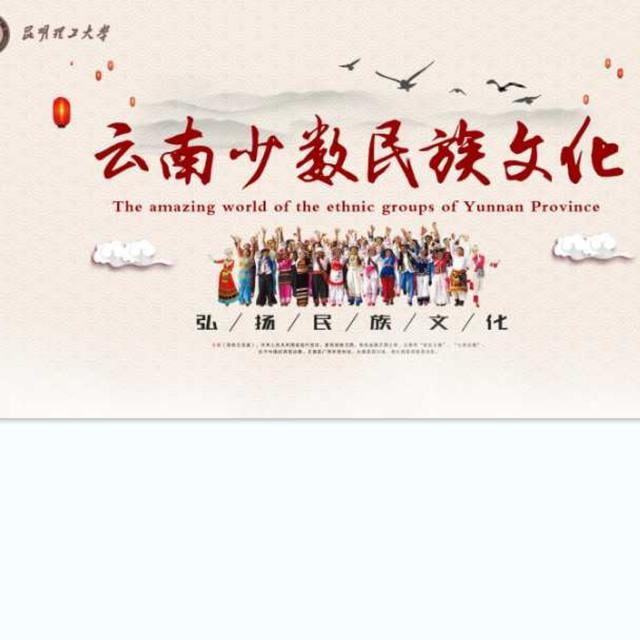
The amazing world of the ethnic groups of Yunnan Province (Coursera)

Yunnan, abbreviated as Yun and called Dian for short, is a multi-ethnic province which has historically been situated in the southwest frontier of China. Over time, the ethnic minorities evolved into splendid cultures, each with their own unique social life, religious beliefs and customs. The course is taught in English and provides an introduction to 25 ethnic minorities in Yunnan Province, namely the Yi, Bai, Hani, Dai, Zhuang, Miao, Hui, Lisu, Lahu, Wa, Naxi, Yao, Jingpo, Tibetan, Bulang, Buyi, Achang, Pumi, Mongolian, Nu, Jinuo, De'ang, Shui, Man and Dulong nationalities.

Class Deals by MOOC List - Click here and see Coursera's Active Discounts, Deals, and Promo Codes.

By participating in this course, you will gain fascinating insights into the culture of each ethnic group as we look in turn together at their geographical location, population distribution, language, costumes and diet, festivals and holidays, religious beliefs, literature and art, etc. This course aims to improve your English and bring these amazing people groups in Yunnan Province to life. we are sure you will thoroughly enjoy this course.

Syllabus

WEEK 1
unit 1 Ethnic groups in the upper reaches of Nujiang River
In Unit One, you are going to learn the cultural aspects such as the geographical location, population distribution, language, costumes and diet, festivals and holidays, religious beliefs, literature and art of three ethnic groups in the upper reaches of Nujiang River: Nu Nationality, Dulong Nationality and Lisu Nationality. At the end of the unit, there will be a test and two questions for discussion.

WEEK 2
Ethnic groups in the lower reaches of Nujiang River
In Unit Two, you are going to learn the cultural aspects such as the geographical location, population distribution, language, costumes and diet, festivals and holidays, religious beliefs, literature and art of three ethnic groups in the lower reaches of Nujiang River: Deang Nationality, Jingpo Nationality and Achang Nationality. At the end of the unit, there will be a test and two questions for discussion.

WEEK 3
Ethnic groups in the region of Three Parallel Rivers
In Unit Three, you are going to learn the cultural aspects such as the geographical location, population distribution, language, costumes and diet, festivals and holidays, religious beliefs, literature and art of three ethnic groups in the region of Three Parallel Rivers: Tibetan Nationality, Naxi Nationality and Pumi Nationality. At the end of the unit, there will be a test and two questions for discussion.

WEEK 4
Ethnic groups in Lancang River Basin (I)
In Unit Four, you are going to learn the cultural aspects such as the geographical location, population distribution, language, costumes and diet, festivals and holidays, religious beliefs, literature and art of three ethnic groups in Lancang River Basin: Dai Nationality, Hani Nationality and Lahu Nationality. At the end of the unit, there will be a test and two questions for discussion.

WEEK 5
Ethnic groups in Lancang River Basin (II)
In Unit Five, you are going to learn the cultural aspects such as the geographical location, population distribution, language, costumes and diet, festivals and holidays, religious beliefs, literature and art of another three ethnic groups in Lancang River Basin: Bulang Nationality, Jinuo Nationality and Wa Nationality. At the end of the unit, there will be a test and two questions for discussion.

WEEK 6
Ethnic groups in central and eastern Yunnan(I)
In Unit Six, you are going to learn the cultural aspects such as the geographical location, population distribution, language, costumes and diet, festivals and holidays, religious beliefs, literature and art of three ethnic groups in central and eastern Yunnan Province: Bai Nationality, Yi Nationality and Mongol Nationality. At the end of the unit, there will be a test and two questions for discussion.

WEEK 7
Ethnic groups in central and eastern Yunnan(II)
In Unit Seven, you are going to learn the cultural aspects such as the geographical location, population distribution, language, costumes and diet, festivals and holidays, religious beliefs, literature and art of another three ethnic groups in central and eastern Yunnan Province: Man Nationality, Hui Nationality and Zhuang Nationality. At the end of the unit, there will be a test and two questions for discussion.

WEEK 8
Ethnic groups in central and eastern Yunnan(III)
In Unit Eight, you are going to learn the cultural aspects such as the geographical location, population distribution, language, costumes and diet, festivals and holidays, religious beliefs, literature and art of the last four ethnic groups in central and eastern Yunnan Province: Miao Nationality, Yao Nationality, Buyi Nationality and Shui Nationality. At the end of the unit, there will be a test and two questions for discussion
Go to Class
MOOC List is learner-supported. When you buy through links on our site, we may earn an affiliate commission.

Related Courses

Religious Transformation in Early China: the Period of Division (Coursera) Coursera
The Chinese University of Hong Kong

Religious Transformation in Early China: the Period of Division (Coursera)

This sequence of four courses will propose a multi-disciplinary approach to the study of Chinese cultural history conceived of as a succession of modes of rationality (philosophical, bureaucratic, and economic). The focus will be on the moments of paradigm shift from one mode of rationality to another. For each of these moments, cultural facts and artifacts—thought, literature, ritual—will be examined in relationship to changing social, political, and economic systems.

Sep 7th 2026
5-12 Weeks
English for Doing Business in Asia - Speaking (edX) EdX
The Hong Kong University of Science and Technology - HKUST,HKUSTx

English for Doing Business in Asia - Speaking (edX)

Introducing strategies for developing your spoken English communication skills in the context of doing business in Asia. The use of English for doing business in multinational settings is a fact of life for many business people. As Asian economies expand and become more involved in the global economy, a lingua franca – a language used to communicate among groups of people who do not share a mother tongue – is needed to exchange information.

Self Paced
Self-Paced
Literati China: Examinations, Neo-Confucianism, and Later Imperial China (edX) EdX
HarvardX,Harvard University

Literati China: Examinations, Neo-Confucianism, and Later Imperial China (edX)

Explore China’s imperial period, with a focus on the Song dynasty and the role of the exam system in government. Fundamental changes in government, the economy, and broader society took place between the 8th and 11th centuries in China. The state aristocracy gave way to new literati elite: educated men who sought to enter government through competitive examinations. A new kind of Confucianism also took shape, which prized the moral autonomy of individuals. With this, the later imperial period of China’s history begins.

Self Paced
Self-Paced
Chinese Culture and Contemporary China (Coursera) Coursera
Nanjing University

Chinese Culture and Contemporary China (Coursera)

This course of Chinese Culture and Contemporary China will explore the foundations of Chinese civilization and the dimensions of Chinese culture. It will pay particular attention to the relationship between Chinese culture and the present-day life of the Chinese people and to the different elements of the culture which are under the present social structures, belief systems, literature, arts, customs, etc. The course aims at providing students with a deeper knowledge of Chinese culture, thus enabling them to better understand China.

Aug 24th 2026
5-12 Weeks
Chinese Politics Part 2 - China and the World (Coursera) Coursera
The Hong Kong University of Science and Technology - HKUST

Chinese Politics Part 2 - China and the World (Coursera)

One of the most significant changes in the world in the past 30 years is the opening of China to the outside world and its engagement with that world. In the initial years of the opening, external forces influenced China’s economy, regional balances, bureaucracy, as well as the political authority of local leaders in the coastal areas.

Sep 14th 2026
5-12 Weeks
Fundamentals of the Chinese character writing. Part 2 (Coursera) Coursera
Saint Petersburg State University

Fundamentals of the Chinese character writing. Part 2 (Coursera)

If you just finished the first course, you will definitely love the second one! The course gives a concise survey of the Chinese character-writing tradition. You’ll master the fundamentals of the Chinese writing aesthetics; maintain the main techniques, gain more knowledge about writing tools and materials.

Aug 1st 2022
5-12 Weeks
Selling to Chinese Consumers (Coursera) Coursera
The Chinese University of Hong Kong

Selling to Chinese Consumers (Coursera)

This course is designed to help learners sell their products, goods and services to Chinese consumers. To achieve this goal, the course will use evidence-based research in psychology, economics, legal studies and marketing to help learners understand the historical, economic and legal contexts of doing business in China and the behavioral characteristics of Chinese consumers. The course will cover topics in Chinese and global marketing, Chinese consumers, institutional and cultural influence on consumer motivation and behaviors in Chinese markets, and brand management in China.

Aug 31st 2026
4 Weeks
Social Science Approaches to the Study of Chinese Society Part 2 (Coursera) Coursera
The Hong Kong University of Science and Technology - HKUST

Social Science Approaches to the Study of Chinese Society Part 2 (Coursera)

This course is intended as a first step for learners who seek to become producers of social science research. It is organized as an introduction to the design and execution of a research study. It introduces the key elements of a proposal for a research study, and explains the role of each. It reviews the major types of qualitative and quantitative data used in social science research, and then introduces some of the most important sources of existing data available freely or by application, worldwide and for China.

Aug 24th 2026
5-12 Weeks
Cosmopolitan Tang: Aristocratic Culture in China (edX) EdX
HarvardX,Harvard University

Cosmopolitan Tang: Aristocratic Culture in China (edX)

Explore the reunification of China under the Tang with a focus on aristocratic culture — from poetry to calligraphy to literature. By the Tang period, China was divided into northern and southern dynasties with different rulers and political systems. The north was conquered by relatively unsophisticated barbarians, but in the south, the aristocratic families established a refined appreciation of writing and literature.

Self Paced
Self-Paced
Invasions, Rebellions, and the Fall of Imperial China (edX) EdX
HarvardX,Harvard University

Invasions, Rebellions, and the Fall of Imperial China (edX)

An overview of modern Chinese history, including the fall of the Qing and the end of imperial China. In the 18th century, the Qing Dynasty is at its height; it is the wealthiest, most powerful, most civilized state on earth. And yet the 19th century brought enormous challenges for the Qing and for the place we call China. By the 20th century, a 2,000-year imperial tradition is gone. What happened?

Self Paced
Self-Paced
China Strategy (Coursera) Coursera
The Chinese University of Hong Kong

China Strategy (Coursera)

This course is designed to help you, as a strategist of a foreign company, better understand how to develop your China strategy. Specifically, after studying China’s changing strategic landscape, you will focus on mastering three strategic issues: who – the major players in China, how – the entry modes, and where – the location strategy for your China business. This course is aimed to deliver updated knowledge and real experiences of developing China strategy.

Aug 31st 2026
4 Weeks