Historia del Arte: Del Barroco al Arte Posmoderno (Coursera)

Historia del Arte: Del Barroco al Arte Posmoderno (Coursera)

El arte deriva de un deseo de la persona para comunicarse con otros” (Edvard Munch). Y es desde la prehistoria que el humano ha dejado impresas sus huellas a través del arte. ¿Qué características tienen esas huellas artísticas? ¿Qué nos comunican sobre el periodo de tiempo al que pertenecen?
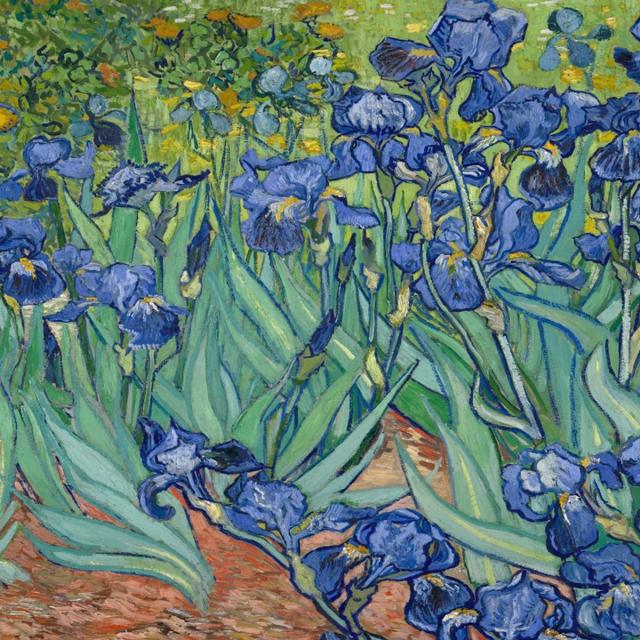
Sumergite en la historia del arte recorriendo este curso, partiendo desde la construcción del Arte Moderno y realizando un camino por los diferentes sistemas de representación dominantes de distintos períodos hasta llegar a la Muerte del Arte.

Class Deals by MOOC List - Click here and see Coursera's Active Discounts, Deals, and Promo Codes.

Al culminar el curso conocerás más sobre cómo fue la evolución y el devenir del arte a través del tiempo. ¡Te invitamos a emprender este viaje!
Los objetivos generales de este curso son:
· Conocer y analizar el desarrollo de las artes visuales desde el Barroco hasta el Arte Moderno.
· Desentrañar los sistemas de representación predominantes en los períodos abordados.
· Identificar las relaciones entre los procesos artísticos y su contexto histórico, social y económico.
· Adquirir herramientas conceptuales específicas para analizar la historia del arte.

Syllabus

WEEK 1
Barroco y Rococó
En esta semana de inicio del curso te dedicarás al estudio del arte del siglo XVII y mediados del siglo XVIII. Comenzarás explorando la producción artística del periodo Barroco, que presenta una riqueza maravillosa con grandes exponentes como Velazquez, Rubens y Rembrandt. Luego, abordarás el periodo Rococó francés y la pintura galante.

WEEK 2
Neoclasicismo y Romanticismo
En esta semana te aproximarás a la producción artística desde mediados del siglo XVIII hasta comienzos del siglo XIX. Comenzarás estudiando el Neoclasicismo y te ocuparás de su relación con el pasado clásico y su papel en la construcción de poder en el contexto de la Revolución francesa. Luego, te sumergirás en el Romanticismo, horizonte cultural propio del norte de Europa que se expandió hacia el mundo.

WEEK 3
Realismo e Impresionismo
En esta semana ingresarás al estudio del arte del siglo XIX. El Realismo, con Courbet y Millet como representantes, introdujo a la historia del arte nuevos temas hasta entonces olvidados. También aprenderás sobre el paisaje como género autónomo, para finalmente dedicarte al análisis de la propuesta estética de los impresionistas, neoimpresionistas y posimpresionistas.

WEEK 4
El arte en el siglo XX
En esta última semana del curso, te dedicarás al análisis del arte de la primera mitad del siglo XX. Las vanguardias históricas de comienzos de siglo XX marcan un quiebre en la definición de obra de arte, que es rechazado por los artistas de las décadas del 20 y 30 que buscan una reconstrucción posterior a la Primera Guerra Mundial. Luego analizarás las producciones que sucedieron al fin de la Segunda Guerra Mundial hasta el Pop Art.

Go to Class
MOOC List is learner-supported. When you buy through links on our site, we may earn an affiliate commission.

Related Courses

Visualizing Women's Work: Using Art Media for Social Justice (Coursera) Coursera
University of Michigan

Visualizing Women's Work: Using Art Media for Social Justice (Coursera)

Discover the historical erasure of women’s work through social justice art. Public art has often ignored the work and legacy of minorities and women, but recently there has been a welcome reappraisal of publicly displayed visual monuments and art media. This course dives into the artistic process, exploring how art has the power to address issues of social justice and gender equality and answer historic injustices.

Sep 7th 2026
4 Weeks
What Is Contemporary Art? (Coursera) Coursera
The Museum of Modern Art

What Is Contemporary Art? (Coursera)

What is contemporary art? In this course, you’ll consider this question through more than 70 works of art made between 1980 and the present, with a focus on art from the past decade. You’ll hear directly from artists, architects, and designers from around the globe about their creative processes, materials, and inspiration.

Sep 14th 2026
5-12 Weeks
English Romantic Poetry (saylor.org) Saylor Academy
Saylor.org

English Romantic Poetry (saylor.org)

The Romantic Period in England took place during the “age of revolutions,” a span of time that saw not only the rapid industrialization of Europe but two significant national revolutions—one in France, and one in America. This revolutionary spirit in many ways fed and sustained the Romantic movement in English literature; its chief practitioners believed that poetry could literally transform the world and the way in which we understand it.

Legacy Course
Self-Paced
Teaching Migration Through Data and Storytelling (FutureLearn) FutureLearn
SOAS University of London,PositiveNegatives,MIDEQ

Teaching Migration Through Data and Storytelling (FutureLearn)

Explore how migration can be taught using both visual storytelling and big data sets. Help learners understand where, why, and how migration happens. There have been urgent recent calls for curricula to address issues of migration. Yet 78% of British teachers asked by the Runnymede Trust said they needed more support “to equip them to teach migration more sensitively and effectively.” On this course, teachers can develop their skills to explain where and why migration happens.

Dec 5th 2022
3 Weeks
À la découverte du théâtre classique français -Tome 2 (edX) EdX
Sorbonne University,SorbonneX

À la découverte du théâtre classique français -Tome 2 (edX)

Tout ce qu’on doit savoir sur le théâtre français du 17e siècle pour pleinement apprécier les chefs-d’œuvre de Molière, de Corneille et de Racine. Le théâtre classique du 17e siècle passe pour le sommet de l’art du théâtre en France. Ses trois représentants les plus connus, Corneille et Racine pour la tragédie et Molière pour la comédie comptent parmi les plus grands dramaturges européens de tous les temps, et Molière reste l’un des auteurs les plus joués dans le monde.

No sessions available
5-12 Weeks
Western and Chinese Art: Masters and Classics (edX) EdX
Tsinghua University,TsinghuaX

Western and Chinese Art: Masters and Classics (edX)

From da Vinci to Zhang Xu, Wu Daozi and Warhol, explore immortal works of Western and Chinese art and gain an appreciation of culture, history and civilization. Throughout human history, art has served as a window into current events, traditions, societies and culture. And, Chinese and Western civilizations have produced some of the most famous artworks by world-renowned artists.

Self Paced
Self-Paced
Women in Arts: From 1900 until today (FutureLearn) FutureLearn
Centre Pompidou

Women in Arts: From 1900 until today (FutureLearn)

Discover the women creators who shaped modern and contemporary art and those who continue to make huge impacts today. Delve into art history through the extraordinary works of women artists. On this seven-week course, you’ll journey through an alternative history of modern and contemporary art – one that is centred on the brilliant women creators in the movement.

Nov 15th 2021
5-12 Weeks
Indigenous Canada (Coursera) Coursera
University of Alberta

Indigenous Canada (Coursera)

Indigenous Canada is a 12-lesson Massive Open Online Course (MOOC) that explores Indigenous histories and contemporary issues in Canada. From an Indigenous perspective, this course explores key issues facing Indigenous peoples today from a historical and critical perspective highlighting national and local Indigenous-settler relations.

Aug 24th 2026
5-12 Weeks
Greek and Roman Mythology (Coursera) Coursera
University of Pennsylvania

Greek and Roman Mythology (Coursera)

Myths are traditional stories that have endured over a long time. Some of them have to do with events of great importance, such as the founding of a nation. Others tell the stories of great heroes and heroines and their exploits and courage in the face of adversity. Still others are simple tales about otherwise unremarkable people who get into trouble or do some great deed. What are we to make of all these tales, and why do people seem to like to hear them? This course will focus on the myths of ancient Greece and Rome, as a way of exploring the nature of myth and the function it plays for individuals, societies, and nations. We will also pay some attention to the way the Greeks and Romans themselves understood their own myths.

Aug 24th 2026
5-12 Weeks