Managing the Arts: Marketing for Cultural Organizations (Leuphana)

Managing the Arts: Marketing for Cultural Organizations (Leuphana)

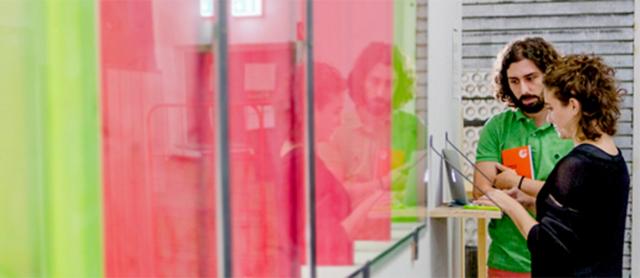
In this MOOC, participants learn about challenges for cultural managers, acquire marketing and management skills and gain direct insights into four contemporary arts organizations, while sharing their ideas with an international learning community.

This Mentored Open Online Course offered by the Goethe-Institut in cooperation with Leuphana Digital School aims at addressing contemporary challenges facing cultural managers around the world; tasked with running complex organizations, having to strategically build audiences and communicate effectively against digital competitors – all are means to a single end: Enabling high quality art experiences with a meaningful impact. Participants in this MOOC learn about these contemporary challenges and acquire hands-on marketing and management skills.
While receiving continuous input from scholars and practitioners from institutions such as the Erasmus University Rotterdam, the University of Vienna, the Dutch Art Institute, the University of Hildesheim and the Budapest Observatory, participants will gain direct insights into four real-life arts organizations: The Centre for Contemporary Art in Lagos, Tráfo House of Contemporary Arts Budapest, the Bangkok Art & Culture Centre, and HAU Hebbel am Ufer in Berlin.
The course is structured as follows:
Intro Stage | Dynamics of Innovation: Define the potential of the subject, its challenges and benefits.
Phase 1 | The cultural economy: Markets and marketing for cultural organizations
Phase 2 | Mapping the terrain: Art organizations and cultural institutions in context
Phase 3 | Enabling creativity: Marketing cultural projects and managing artistic processes
Phase 4 | Reaching across the fourth wall: Building audience relationships
Phase 5 | Emerging Identities: Co-creating and shaping digital brands
Phase 6 | Curating strategies: Artistic practices and sustainability
Developed by the Goethe-Institut in cooperation with Leuphana Digital School, the Mentored Open Online Course (MOOC) is available for interdisciplinary further training of (aspiring) cultural managers worldwide. There are no prerequisites.
After successful completion of the course, participants may obtain a university certificate worth 5 Credit Points (ECTS), which they may transfer towards their own degree program. For the certificate, a nominal handling fee of EUR 20,- is charged via PayPal.

Go to Class
MOOC List is learner-supported. When you buy through links on our site, we may earn an affiliate commission.

Related Courses

Sustainability of Social-Ecological Systems: the Nexus between Water, Energy and Food (Coursera) Coursera
Universitat Autònoma de Barcelona

Sustainability of Social-Ecological Systems: the Nexus between Water, Energy and Food (Coursera)

In this course you will become familiar with the ideas of the water-energy-food nexus and transdisciplinary thinking. You will learn to see your community or country as a complex social-ecological system and to describe its water, energy and food metabolism in the form of a pattern, as well as to map the categories of social actors.

Nov 9th 2026
5-12 Weeks
Dairy Production and Management (Coursera) Coursera
Pennsylvania State University

Dairy Production and Management (Coursera)

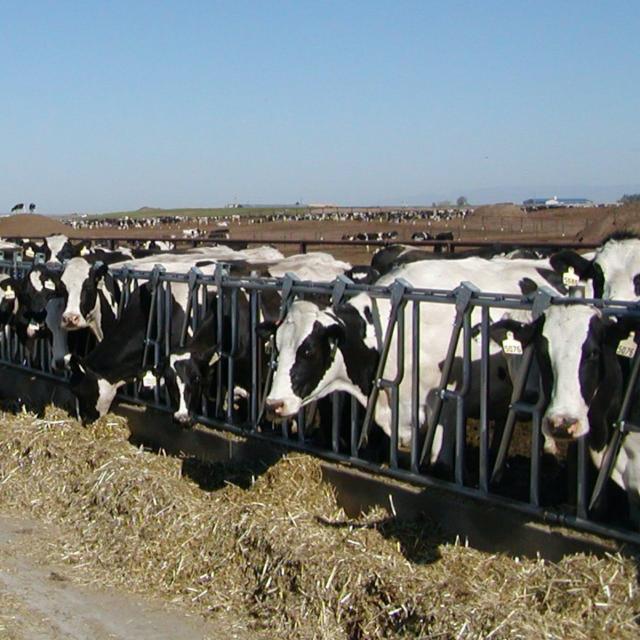
With the world's first MOOOOO-C, you will gain a broad and comprehensive understanding of all aspects of dairy management such as genetics, nutrition, reproduction, animal health, farm economics, and sustainability of dairy production systems. There's something here for everyone whether you are just looking for the basics or have years of experience in the dairy industry.

Nov 16th 2026
5-12 Weeks
Introduction to Faecal Sludge Management (Coursera) Coursera
École Polytechnique Fédérale de Lausanne

Introduction to Faecal Sludge Management (Coursera)

Do you want learn how to apply concepts of sustainable faecal sludge management (FSM) on a city-wide scale? This course starts with an overview of what faecal sludge is and an introduces you to the engineering fundamentals and required information for the design and selection of technologies. Sanitation solutions are prone to failure if an integrated planning approach that includes stakeholder involvement and the development of appropriate institutional, management and financial arrangements is not implemented.

Nov 2nd 2026
5-12 Weeks
Sustainable Fashion (Coursera) Coursera
Copenhagen Business School

Sustainable Fashion (Coursera)

Sometimes when we say we work with sustainable fashion people look at us like... "Mmmm, is it really possible for something like fashion to be sustainable?" And let's face it, people are right being suspicious. If anything the fashion industry has become increasingly unsustainable over the last decades, using more and more natural resources and creating more and more waste.

Nov 9th 2026
5-12 Weeks
Circular Economy - Sustainable Materials Management (Coursera) Coursera
Lund University,Delft University of Technology,EIT RawMaterials,VITO,Geological Survey of Denmark and Greenland - GEUS,National Technical University of Athens - NTUA,Ghent University

Circular Economy - Sustainable Materials Management (Coursera)

This course looks at where important materials in products we use every day come from and how these materials can be used more efficiently, longer, and in closed loops. This is the aim of the Circular Economy, but it doesn’t happen on its own. It is the result of choices and strategies by suppliers, designers, businesses, policymakers and all of us as consumers.

Nov 2nd 2026
5-12 Weeks
A Business Approach to Sustainable Landscape Restoration (Coursera) Coursera
Erasmus University Rotterdam

A Business Approach to Sustainable Landscape Restoration (Coursera)

Integrated landscape management and large-scale landscape restoration should be in every company’s business strategy because in order to reach the Sustainable Development Goal on Land Degradation Neutrality (SDG Number 15.3) scaling up and acceleration of business-driven landscape restoration is urgently needed.

Nov 2nd 2026
5-12 Weeks
Planning for Climate Change in African Cities (Coursera) Coursera
Erasmus University Rotterdam,United Cities and Local Governments of Africa,African Local Government Academy,Institute for Housing and Urban Development

Planning for Climate Change in African Cities (Coursera)

Climate change poses a threat to economic growth and long-term prosperity of many countries around the world. Africa is not an exception, considering the actual and potential impacts of climate change and climate variability that will threaten its vulnerable sectors and human populations. African countries are projected to experience changing rainfall patterns, rising sea levels, and higher temperatures that will affect food security, agricultural production, water availability, and public health, among others. These climate change impacts and climate variability can further produce social and political problems, such as rural-urban migration and water resource disputes.

Nov 9th 2026
5-12 Weeks
Sustainable Agricultural Land Management (Coursera) Coursera
University of Florida

Sustainable Agricultural Land Management (Coursera)

This course will cover the agricultural and urban water quality issues in Florida, their bases, land and nutrient management strategies, and the science and policy behind the best management practices (BMPs). Students will learn to evaluate BMP research and analyze its role in determining practices and policies that protect water quality.

Nov 2nd 2026
5-12 Weeks
Sustainable Food Production Through Livestock Health Management (Coursera) Coursera
University of Illinois at Urbana-Champaign

Sustainable Food Production Through Livestock Health Management (Coursera)

Learn about the impact of infectious disease on sustainable animal-based food production by understanding the science of growth, immunity, and infection and by learning the problem-solving skills needed to advance animal health and food production through optimal management practices. In this course we will explore the effect of infectious disease on sustainable animal-based food production. The content and learning outcomes of this new course will be designed to be relevant across different food production sectors (i.e., beef, dairy, poultry, and pigs).

Nov 2nd 2026
5-12 Weeks
Becoming a changemaker: Introduction to Social Innovation (Coursera) Coursera
University of Cape Town

Becoming a changemaker: Introduction to Social Innovation (Coursera)

This free 6 week course is for anyone who wants to make a difference. Whether you are already familiar with the field of social innovation or social entrepreneurship, working for an organization that wants to increase its social impact, or just starting out, this course will take you on a journey of exploring the complex problems that surround us and how to start thinking about solutions.

Nov 2nd 2026
5-12 Weeks