English Romantic Poetry (saylor.org)

Offered by Saylor.org,
English Romantic Poetry (saylor.org)

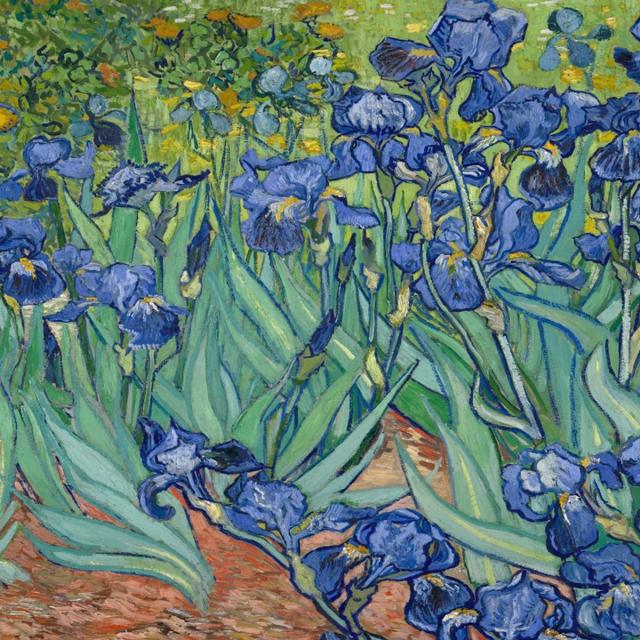
The Romantic Period in England took place during the “age of revolutions,” a span of time that saw not only the rapid industrialization of Europe but two significant national revolutions—one in France, and one in America. This revolutionary spirit in many ways fed and sustained the Romantic movement in English literature; its chief practitioners believed that poetry could literally transform the world and the way in which we understand it.

In this course, we will examine this revolutionary energy alongside a number of other English Romantic characteristics, including a fascination with nature and the natural world, a desire to create popular art forms for the masses, and an inward-facing focus on the individual spirit. The course has been arranged to first acquaint you with the broader socio-historical and literary context in which English Romantic poetry thrived, and then divided into three units we might roughly categorize as the Romantic poet and the outer world, the Romantic poet and the inner world, and the poetry that bridges the gap between the two. In each unit, we will perform close readings of a number of the period’s prominent poems, identifying what makes each a “Romantic” poem.

Go to Class
MOOC List is learner-supported. When you buy through links on our site, we may earn an affiliate commission.

Related Courses

Modern Poetry and Poetics (saylor.org) Saylor Academy
Saylor.org

Modern Poetry and Poetics (saylor.org)

The decades between roughly 1890 and 1950 witnessed unprecedented efforts to create new art, new values, and a new culture in Europe and the United States. During this time Western writers, artists, and intellectuals questioned accepted aesthetic norms and produced radically experimental works of art and new understandings of what it means to live in modern times.

Legacy Course
Self-Paced
Medieval Women Writers (saylor.org) Saylor Academy
Saylor.org

Medieval Women Writers (saylor.org)

Scholarship on medieval women writers is a somewhat recent phenomenon, in part because we know relatively little about men of the Middle Ages—and what we know about women from the period is even more limited. In this course, we will engage this new frontier in literary studies by examining the writings of a diverse group of medieval women—from reclusive anchoresses to aristocratic women of the court—and analyzing the perceptions of reality, both secular and religious, that they present.

Legacy Course
Self-Paced
Spanish Vocabulary: Meeting People (Coursera) Coursera
University of California, Davis

Spanish Vocabulary: Meeting People (Coursera)

¡Hola! ¿Como Estas? In this entry level course, you will take the first step toward exploring the foundations of Spanish grammar and pronunciation, and will begin to build a working vocabulary of common Spanish words and expressions. You will be able to talk about yourself, your family and friends in the present tense, and begin to explore the cultural context of the Spanish-speaking world through a series of videos and interactive activities, including speaking, reading and writing exercises.

Nov 9th 2026
3 Weeks
Europe and the World, ca. 1500 to 1914 (Coursera) Coursera
Higher School of Economics - HSE University

Europe and the World, ca. 1500 to 1914 (Coursera)

The course aims to introduce the audience to global history from the European discovery of the Americas to the coming of the First World War. These transformative four centuries of the human experience traditionally called Modern history saw the growing economic, military, and political ascendancy of the European states which. thus, lie at the heart of this course.

Jul 18th 2022
5-12 Weeks
The Gothic Novel (saylor.org) Saylor Academy
Saylor.org

The Gothic Novel (saylor.org)

What makes a novel “Gothic”? Scholars have debated this question for decades: some consider “the Gothic” a literary time period, spanning from the 1760s to 1820; others view it as a set of thematic concerns; still others understand it as a literary mode, in which contemporary authors like Stephen King continue to write. In this course, you will explore these and other definitions as you read a number of novels (and have the option to screen a film), attempting to define for yourself the term “Gothic.”

Legacy Course
Self-Paced
Introduction to Literary Studies (saylor.org) Saylor Academy
Saylor.org

Introduction to Literary Studies (saylor.org)

This course will introduce you to the history and practice of English as a scholarly discipline with the goal of preparing you for your future endeavors as an English major. It has been designed to familiarize you with the various tools that scholars have devised in order to facilitate the study of literary expression in English, from critical frameworks to close reading techniques.

Legacy Course
Self-Paced
The American Renaissance (saylor.org) Saylor Academy
Saylor.org

The American Renaissance (saylor.org)

As most famously defined by F. O. Matthiessen in his groundbreaking book, The American Renaissance: Art and Expression in the Age of Emerson and Whitman (1941), the “American Renaissance” demarcates a period of tremendous literary activity between the 1830s and 1860s that marked the cultivation, for the first time, of a distinctively American literature.

Self Paced
Self-Paced
Spanish Vocabulary: Careers and Social Events (Coursera) Coursera
University of California, Davis

Spanish Vocabulary: Careers and Social Events (Coursera)

¡Hola! This fourth course will introduce new vocabularies in the areas of dining, fashion, professions and careers and will bring you ever closer to the 500 word threshold for beginning Spanish. The course will also introduce the subjunctive and the future tense so that you can begin to speak about future events, things they desire and pursuing professional goals.

Nov 3rd 2026
3 Weeks
Historia del Arte: Del Barroco al Arte Posmoderno (Coursera) Coursera
Universidad de Palermo

Historia del Arte: Del Barroco al Arte Posmoderno (Coursera)

El arte deriva de un deseo de la persona para comunicarse con otros” (Edvard Munch). Y es desde la prehistoria que el humano ha dejado impresas sus huellas a través del arte. ¿Qué características tienen esas huellas artísticas? ¿Qué nos comunican sobre el periodo de tiempo al que pertenecen? Sumergite en la historia del arte recorriendo este curso, partiendo desde la construcción del Arte Moderno y realizando un camino por los diferentes sistemas de representación dominantes de distintos períodos hasta llegar a la Muerte del Arte.

Nov 2nd 2026
4 Weeks