FUN

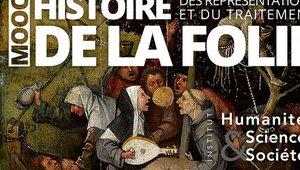
Histoire des représentations et du traitement de la folie (FUN)

Histoire des représentations et du traitement de la folie (FUN)

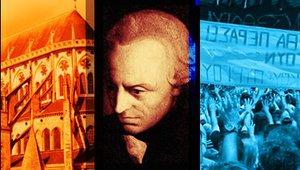
Vous vous demandez ce qu’est la folie? Une maladie que l’on peut diagnostiquer et soigner? Le résultat d’une possession maléfique? Le produit d’un contexte social et politique? Le “fou” est-il responsable de ses actes? La folie révèle-t-elle une vérité présente dans la société et en chacun de nous? A travers l’histoire, les grands penseurs, qu’ils soient philosophes, théologiens, médecins, psychologues, anthropologues, sociologues, historiens ou artistes se sont posé ces mêmes questions et ont développé des théories et des outils pour leur apporter des réponses. Avec le Mooc “Histoire des représentations et du traitement de la folie”, nous vous invitons à les découvrir.

En 6 séances documentaires, des spécialistes du monde universitaire, médical, et de la culture vous présenteront 6 thématiques essentielles pour répondre à vos interrogations sur les représentations et le traitement de la folie.
Si vous souhaitez acquérir et valider des connaissances sur les différentes approches de la folie à travers l’histoire et comprendre les grands débats contemporains autour de la santé mentale, ce MOOC pourrait bien être pour vous !

Plan du cours

Séance 1 : Folie et possession
Séance 2 : Les lieux de la folie
Séance 3 : Classifications
Séance 4 : La responsabilité en question
Séance 5 : Soins
Séance 6 : Folie et effets de vérité
Go to Class
MOOC List is learner-supported. When you buy through links on our site, we may earn an affiliate commission.

Related Courses

Organising an Empire: The Assyrian Way (Coursera) Coursera
Ludwig-Maximilians-Universität München

Organising an Empire: The Assyrian Way (Coursera)

Discover the mighty kingdom of Assyria, which came to be the world’s first great empire three thousand years ago. From the 9th to the 7th centuries BC, during the imperial phase of Assyria’s long history, modern day northern Iraq was the central region of a state reaching from the Mediterranean Sea to the Persian Gulf, and incorporating what is now Iraq, Syria, and Lebanon, as well as half of Israel, and wide parts of south-eastern Turkey, and Western Iran.

Jun 15th 2026
5-12 Weeks
The Mediterranean, a Space of Exchange (from the Renaissance to Enlightenment) (Coursera) Coursera
University of Barcelona

The Mediterranean, a Space of Exchange (from the Renaissance to Enlightenment) (Coursera)

The course The Mediterranean, a Space of Exchange (from Renaissance to Enlightenment) aims to explain the Mediterranean, using history and the analysis of the past, as a space generated by routes and circulation. We consider it crucial to disclose mobility as a historical factor: a mobility comprised of four major elements, namely people, objects, ideas and practices.

Jun 19th 2026
5-12 Weeks
Découper le temps : les périodes de l'histoire (FUN) FUN
Université Paris 1 Panthéon-Sorbonne

Découper le temps : les périodes de l'histoire (FUN)

L’objet du cours est de comprendre les raisons qui poussent l’historien à découper le temps. L’enseignement de l’histoire en France est traditionnellement découpé en quatre périodes canoniques : histoire ancienne, médiévale, moderne et contemporaine. Que signifient ces époques qui sont le produit d’une histoire avant tout européenne et méditerranéenne ? Ce qui pose la question de la pertinence de cette périodisation pour d’autres aires géographiques.

No sessions available
5-12 Weeks
The Modern and the Postmodern (Part 2) (Coursera) Coursera
Wesleyan University

The Modern and the Postmodern (Part 2) (Coursera)

This course examines how the idea of "the modern" develops at the end of the 18th century in European philosophy and literature, and how being modern (or progressive, or hip) became one of the crucial criteria for understanding and evaluating cultural change. Are we still in modernity, or have we moved beyond the modern to the postmodern?

Jun 15th 2026
5-12 Weeks
Words Spun Out of Images: Visual and Literary Culture in Nineteenth Century Japan (Coursera) Coursera
The University of Tokyo

Words Spun Out of Images: Visual and Literary Culture in Nineteenth Century Japan (Coursera)

In their ambition to capture “real life,” Japanese painters, poets, novelists and photographers of the nineteenth century collaborated in ways seldom explored by their European contemporaries. This course offers learners the chance to encounter and appreciate behavior, moral standards and some of the material conditions surrounding Japanese artists in the nineteenth century, in order to renew our assumptions about what artistic “realism” is and what it meant.

Jun 15th 2026
4 Weeks
Reimagining Blackness and Architecture (Coursera) Coursera
The Museum of Modern Art

Reimagining Blackness and Architecture (Coursera)

Architecture structures our daily lives. It shapes our homes, streets, neighborhoods, cities and more. But who gets to create and occupy these spaces? In the United States, a long history of anti-Black racism has created spatial inequalities that are built into the physical environment and erased the stories of Black architects and communities. Reimagining Blackness and Architecture explores the relationship between architecture and Blackness as an identity and a lived experience.

Jun 15th 2026
5-12 Weeks
A Journey through Western Christianity: from Persecuted Faith to Global Religion (200 - 1650) (Coursera) Coursera
Yale University

A Journey through Western Christianity: from Persecuted Faith to Global Religion (200 - 1650) (Coursera)

This course follows the extraordinary development of Western Christianity from its early persecution under the Roman Empire in the third century to its global expansion with the Jesuits of the early modern world. We explore the dynamic and diverse character of a religion with an enormous cast characters. We will meet men and women who tell stories of faith as well as of violence, suppression, and division.

Jun 15th 2026
5-12 Weeks
The Emergence of the Modern Middle East - Part II (Coursera) Coursera
Tel Aviv University

The Emergence of the Modern Middle East - Part II (Coursera)

This course will discuss the developments in the Middle East from the early 20th century to the present. It will discuss the rise and retreat of Arab nationalism, the problems of internal cohesion of the Arab states, issues of religion and state, and the evolution of Islamist politics. It will also focus on the evolution of the Arab-Israeli conflict and its impact on the region and will conclude with an in depth analysis of the “Arab Spring” by placing these contemporary revolutionary events in their historical context.

Jun 15th 2026
5-12 Weeks