FUN

Découper le temps : les périodes de l'histoire (FUN)

Découper le temps : les périodes de l'histoire (FUN)

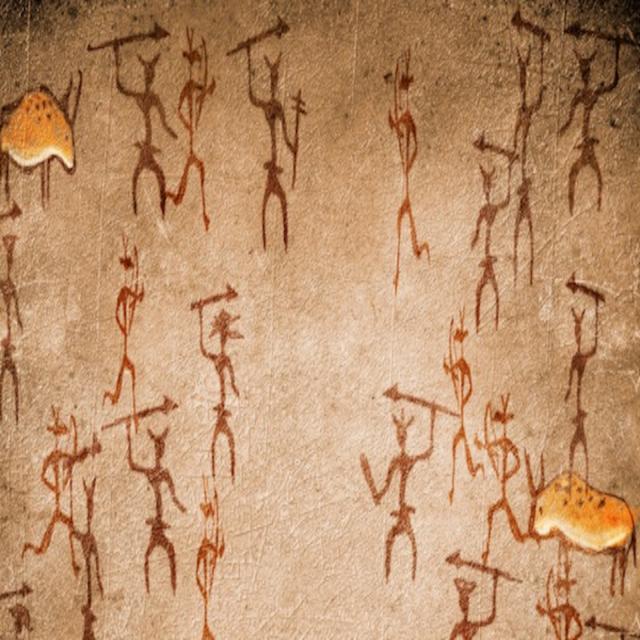
L’objet du cours est de comprendre les raisons qui poussent l’historien à découper le temps. L’enseignement de l’histoire en France est traditionnellement découpé en quatre périodes canoniques : histoire ancienne, médiévale, moderne et contemporaine. Que signifient ces époques qui sont le produit d’une histoire avant tout européenne et méditerranéenne ? Ce qui pose la question de la pertinence de cette périodisation pour d’autres aires géographiques.

Même en Europe, les délimitations des périodes ne recouvrent pas les mêmes bornes chronologiques selon les pays. En outre, ces inflexions dépendent des objets d’étude retenus puisque les structures économiques, les manières de manger, d’habiter, de croire, de faire la guerre, et plus généralement d’être présent au monde ne répondent pas forcément aux ruptures politiques qui ont souvent déterminé la périodisation.

L’objectif du cours est de comprendre les raisons qui poussent l’historien à découper le temps. Fondamentalement, la périodisation vise à rendre intelligible le passé pour dégager des lignes de forces qui caractérisent une époque.
Les ressources du cours sont composées :

  • de courtes séquences vidéos (environ une heure par semaine) ;
  • de documents d’accompagnement (bibliographies, textes de référence, graphiques et illustrations).

Le cours se déroule sur une durée de 5 semaines, pendant lesquelles :

  • les participants sont encouragés à échanger sur des forums de discussions animés par l’équipe pédagogique ;
  • chaque semaine, dans un entretien vidéo, un enseignant revient sur la période historique abordée et répond aux questions et réactions qu’elle a suscitées.

Go to Class
MOOC List is learner-supported. When you buy through links on our site, we may earn an affiliate commission.

Related Courses

The Holocaust - An Introduction (II): The Final Solution (Coursera) Coursera
Tel Aviv University,Yad Vashem

The Holocaust - An Introduction (II): The Final Solution (Coursera)

The Holocaust was an inconceivable historical event, which forever robbed Western culture of its innocence. As civilized human beings, we fail to understand how events of such horror could have taken place, and how an idea so inhumanly warped could have spread like wildfire through an entire continent, instigating the systematic annihilation of millions of Jews.

Jun 15th 2026
3 Weeks
La sculpture grecque d'Alexandre à Cléopâtre (Partie I) (FUN) FUN
École Pratique des Hautes Études

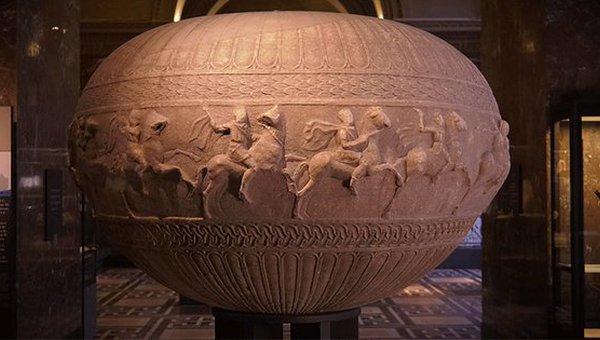
La sculpture grecque d'Alexandre à Cléopâtre (Partie I) (FUN)

« La sculpture grecque d’Alexandre à Cléopâtre » est un MOOC, diffusé en deux parties, qui permet d’acquérir les connaissances indispensables à toute personne intéressée par l'histoire de l’art antique et l'archéologie classique. Le cours est tourné vers la maîtrise des outils de la recherche avec une référence constante aux documents sculptés.

May 9th 2022
5-12 Weeks
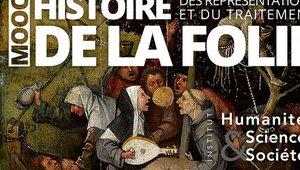
Histoire des représentations et du traitement de la folie (FUN) FUN
Université Paris Diderot

Histoire des représentations et du traitement de la folie (FUN)

Vous vous demandez ce qu’est la folie? Une maladie que l’on peut diagnostiquer et soigner? Le résultat d’une possession maléfique? Le produit d’un contexte social et politique? Le “fou” est-il responsable de ses actes? La folie révèle-t-elle une vérité présente dans la société et en chacun de nous? A travers l’histoire, les grands penseurs, qu’ils soient philosophes, théologiens, médecins, psychologues, anthropologues, sociologues, historiens ou artistes se sont posé ces mêmes questions et ont développé des théories et des outils pour leur apporter des réponses. Avec le Mooc “Histoire des représentations et du traitement de la folie”, nous vous invitons à les découvrir.

Oct 5th 2021
5-12 Weeks
The Modern World, Part One: Global History from 1760 to 1910 (Coursera) Coursera
University of Virginia

The Modern World, Part One: Global History from 1760 to 1910 (Coursera)

This is a survey of modern history from a global perspective. Part One begins with the political and economic revolutions of the late 1700s and tracks the transformation of the world during the 1800s. Part One concludes as these bewildering changes seem to be running beyond the capacity of older institutions to handle them. Throughout the course we try to grasp what is happening and ask: Why? And the answers often turn on very human choices.

Jun 22nd 2026
5-12 Weeks
Introduction to Archaeology: Knowing The Past (Coursera) Coursera
Rice University

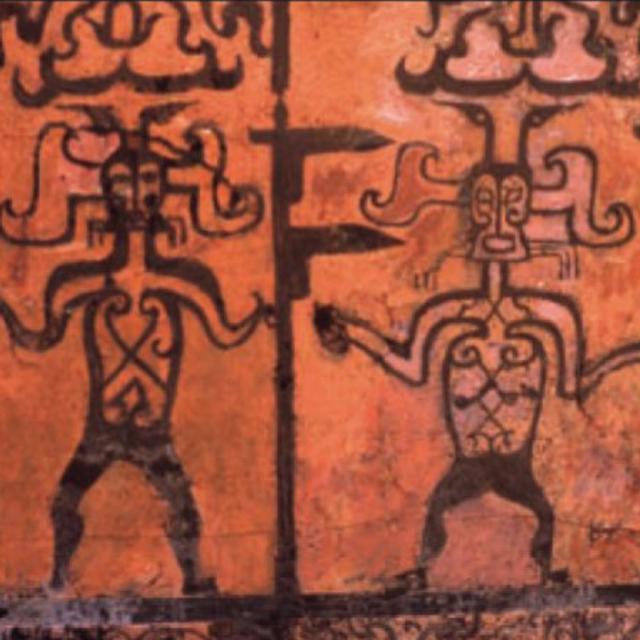
Introduction to Archaeology: Knowing The Past (Coursera)

This course is an introduction to a series on the discipline of Archaeology. It is intended for learners at all stages, including advanced high school, college students, or life-long learners. Basic information about Archaeology and its history are presented in this course, while the following three courses cover scientific methods, forms of interpretation, and contemporary social issues that archaeologists engage with.

Jun 22nd 2026
4 Weeks
The Final Solution to the Jewish Question (Coursera) Coursera
Yad Vashem

The Final Solution to the Jewish Question (Coursera)

The "Final Solution to the Jewish Question" was the official code name used by Nazi German authorities for the planned annihilation of Jews during World War II. This course focuses on the origins, evolution, and implementation of this deadly operation which led to the murder of six million Jews by the Nazis and their collaborators.

Jun 22nd 2026
5-12 Weeks
Global Diplomacy – Diplomacy in the Modern World (Coursera) Coursera
University of London,SOAS University of London

Global Diplomacy – Diplomacy in the Modern World (Coursera)

The Global Diplomacy course is a unique offering to the MOOC environment. Bringing together cutting edge research in the broad fields of Diplomatic and International Studies, award winning distance learning delivery and the instructors previous experience of delivering a successful MOOC. Please see the volume Global Diplomacy: Theories, Types and Models authored with Dr Alison Holmes, (Westview, 2016), and the Understanding Research Methods MOOC from Coursera.

Jun 15th 2026
5-12 Weeks
Arctic Economy (Coursera) Coursera
University of Alberta,UiT The Arctic University of Norway

Arctic Economy (Coursera)

Arctic communities have diverse histories and roles in local, regional and global economies. However, the scope and scale of globalization has increased so quickly that vulnerable Arctic communities are facing new kinds of challenges to their survival. In this 3-week MOOC, a unique collaboration between the University of Alberta and UiT The Arctic University of Norway, you will investigate the challenges faced by Indigenous, North American, Russian and Nordic Arctic communities in a modern world. So join us as we venture above the 60th parallel North, and explore how these fascinating communities adjust to change while maintaining their ways of life, socio-economic histories, and cultural traditions.

Jun 22nd 2026
4 Weeks
Miracles of Human Language: An Introduction to Linguistics (Coursera) Coursera
Leiden University,Meertens Instituut - KNAW

Miracles of Human Language: An Introduction to Linguistics (Coursera)

Everywhere, every day, everybody uses language. There is no human society, no matter how small or how isolated, which does not employ a language that is rich and diverse. This course introduces you to linguistics, featuring interviews with well-known linguists and with speakers of many different languages. Join us to explore the miracles of human language!

Jun 22nd 2026
5-12 Weeks
Søren Kierkegaard - Subjectivity, Irony and the Crisis of Modernity (Coursera) Coursera
University of Copenhagen

Søren Kierkegaard - Subjectivity, Irony and the Crisis of Modernity (Coursera)

In this course created by former associate professor at the Søren Kierkegaard Research Centre, Jon Stewart, we will explore how Kierkegaard deals with the problems associated with relativism, the lack of meaning and the undermining of religious faith that are typical of modern life. His penetrating analyses are still highly relevant today and have been seen as insightful for the leading figures of Existentialism, Post-Structuralism and Post-Modernism.

Jun 22nd 2026
5-12 Weeks