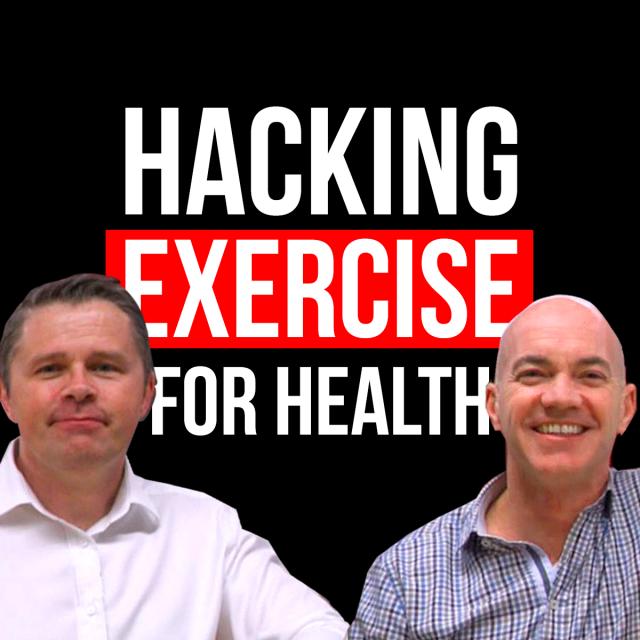
Hacking Exercise For Health. The surprising new science of fitness. (Coursera)

Offered by McMaster University,
Hacking Exercise For Health. The surprising new science of fitness. (Coursera)

Renowned exercise physiologists Martin Gibala and Stuart Phillips of McMaster University teach the surprising new science of cardio fitness and strength-building—and then provide you with hacks to get fit and strong (and healthy!) in less time than you ever thought possible. What’s the right mix of exercise between cardio and strength? How do you know if you’re working out hard enough? What’s better, heavy or light weights? These questions and more are addressed through a course designed to provide even the most inexperienced of exercisers the tools you need to design time-efficient workouts that can be done virtually anywhere, from your own home to a city park or even at your workplace.

Class Deals by MOOC List - Click here and see Coursera's Active Discounts, Deals, and Promo Codes.

Marty and Stu are good friends and colleagues who just happen to be two of the world’s most passionate scholars in the science of fitness. They aim to entertain you while they’re describing the relationship between exercise and health. Marty is a pioneer in the field of interval training, the technique of varying your workout intensity to get fit faster than anyone ever thought possible. Stu’s studies proved that lifting lighter weights can be a highly effective strength-building technique—plus he’s a leading expert in dietary protein and muscle.
In Hacking Exercise for Health, you’ll follow Marty and Stu as they teach you the basics about the way your body boosts its fitness and strength. Next, they’ll apply that theory, providing you with a series of do-anywhere workouts and, most importantly, teaching you what you need to know to design your own sessions. Filled with inspirational practical tips, fun quizzes, interactive community participation and assignments designed to help you remember your lessons, Hacking Exercise for Health will give you the tools and techniques to incorporate exercise into your life, no matter how busy you are.
What You Will Learn

  • How to evaluate the role that physical activity plays in your health
  • How your cardiorespiratory fitness can be improved with aerobic training
  • How strength training results in strength gains and improve your health
  • How to formulate you own cardiorespiratory and musculoskeletal exercise routine to improve your health

Syllabus

WEEK 1
The Basics of Fitness
The human body is rare in that it actually improves with use. In fact, the changes that various kinds of exercise trigger in the body are downright miraculous. This week, Marty and Stu explain the mechanics behind that process. They start by breaking down the two types of fitness: “Cardiorespiratory” and “musculoskeletal.” Next, they’ll tell you why each one is important to living a long and healthy life. With a can-do attitude designed to inspire, they’ll inform you how much of each activity you’re supposed to get, then wrap up the week by posing a question that exercise scientists have been debating for years: Which type of exercise is better for you?

WEEK 2
Cardiorespiratory Fitness
This week Marty tells you all about cardiorespiratory fitness, and the latest research in terms of time-efficient ways to get fitter faster. Why do some scientists think that cardiorespiratory fitness should be the fifth vital sign? What is VO2max? What’s an easy way to determine your own VO2max? And how does aerobic exercise boost it? The week wraps up with Marty teaching a series of techniques to build cardiorespiratory fitness in less time than you ever thought possible.

WEEK 3
Musculoskeletal Fitness
Many people believe strength training isn’t for them. They might feel intimidated by lifting weights because they think it’s only for big hulking bodybuilders. Besides, what are the health benefits of lifting weights? During week 3, Stu argues that everyone should engage in some form of strength training—and the practice becomes more important, not less, as you age. Once you’re convinced, Stu teaches techniques that will help everyone to be stronger, to stave off the decline in muscle strength that otherwise happens as we age. Finally, Stu provides hacks to get you comfortable performing strengthening exercises—and teaches you to design your own resistance-training workouts.

WEEK 4
Combining Cardio and Strength Fitness
Remember the question Marty and Stu posed in the first week? What’s more important, cardiorespiratory or musculoskeletal health? In the last week they’ll finally answer it for you. They’ll talk about some of the surprising benefits of exercise—like the fact that it can help you mentally retain information (sweat so you don’t forget!). They’ll discuss the debate over the exercise pill. They’ll teach you hacks that help you boost muscle strength and cardiorespiratory fitness, together—and finish the course by teaching you techniques to design your own fun, combined workouts designed to keep you exercising for the rest of your life!


Go to Class
MOOC List is learner-supported. When you buy through links on our site, we may earn an affiliate commission.

Related Courses

How Music Can Change Your Life (Coursera) Coursera
University of Melbourne

How Music Can Change Your Life (Coursera)

Did you ever wonder how music works? This course provides free video, audio and journal resources that explain six basic principles about how music can influence individual and community health and wellbeing. From biology and neuroscience, to psychotherapy and politics, the ways we engage with music can make all the difference. Music has always played an integral role in the lives of individuals and communities all around the globe.

Sep 14th 2026
5-12 Weeks
Training and Learning Programs for Volunteer Community Health Workers (Coursera) Coursera
Johns Hopkins University

Training and Learning Programs for Volunteer Community Health Workers (Coursera)

Volunteer community health workers (CHWs) are a major strategy for increasing access to and coverage of basic health interventions. Our village health worker training course reviews the process of training and continuing education of CHWs as an important component of involving communities in their own health service delivery. Participants will be guided through the steps of planning training and continuing education activities for village volunteers. The course draws on real-life examples from community-directed onchocerciasis control, village health worker programs, community case management efforts, peer educators programs and patent medicine vendor training programs, to name a few.

Sep 14th 2026
5-12 Weeks
Traditional herbal medicine in supportive cancer care: From alternative to integrative (Coursera) Coursera
Technion - Israel Institute of Technology

Traditional herbal medicine in supportive cancer care: From alternative to integrative (Coursera)

Please join us for an exciting and innovative journey, examining one of the most important and often overlooked aspects of the oncology setting: Traditional Herbal Medicine in Supportive Cancer Care. This course is presented with short lectures offering a wide range of issues related to the principles and practice of herbal medicine in cancer care.

Sep 14th 2026
13-24 Weeks
HPV-Associated Oral and Throat Cancer: What You Need to Know (Coursera) Coursera
Icahn School of Medicine at Mount Sinai

HPV-Associated Oral and Throat Cancer: What You Need to Know (Coursera)

This course, offered by the Department of Otolaryngology – Head and Neck Surgery at the Icahn School of Medicine at Mount Sinai, is designed to inform primary care physicians and otolaryngologists (general and head and neck surgeons), as well as medical students, residents, nurses, physician assistants, medical assistants, about HPV-associated oral and throat cancers. It is also applicable to individuals who wish to broaden their knowledge and vernacular about this disease process, especially those who may have been diagnosed with HPV and/or HPV-associated oropharyngeal cancers.

Sep 14th 2026
5-12 Weeks
Child Nutrition and Cooking (Coursera) Coursera
Stanford University

Child Nutrition and Cooking (Coursera)

Eating patterns that begin in childhood affect health and well-being across the lifespan. The culture of eating has changed significantly in recent decades, especially in parts of the world where processed foods dominate our dietary intake. This course examines contemporary child nutrition and the impact of the individual decisions made by each family.

Sep 14th 2026
5-12 Weeks
Epidemics (Coursera) Coursera
University of Hong Kong

Epidemics (Coursera)

“If history is our guide, we can assume that the battle between the intellect and will of the human species and the extraordinary adaptability of microbes will be never-ending.” Despite all the remarkable technological breakthroughs that we have made over the past few decades, the threat from infectious diseases has significantly accelerated. In this course, we will learn why this is the case by looking at the fundamental scientific principles underlying epidemics and the public health actions behind their prevention and control in the 21st century.

Sep 14th 2026
5-12 Weeks
Diabetes - a Global Challenge (Coursera) Coursera
University of Copenhagen

Diabetes - a Global Challenge (Coursera)

Diabetes and obesity are growing health problems in rich and poor countries alike. With this course you will get updated on cutting-edge diabetes and obesity research including biological, genetic and clinical aspects as well as prevention and epidemiology of diabetes and obesity. All lectures are provided by high-profile scientists from one the world's leading universities in diabetes research.

Sep 14th 2026
5-12 Weeks
Evidence-based Toxicology (Coursera) Coursera
Johns Hopkins University

Evidence-based Toxicology (Coursera)

Welcome to the Evidence-based Toxicology (EBT) course. In medicine and healthcare, evidence-based medicine has revolutionized the way that information is evaluated transparently and objectively. Over the past ten years, a movement in North America and Europe has attempted to translate this revolution to the field of toxicology.

Sep 14th 2026
5-12 Weeks
Psychology of Popularity (Coursera) Coursera
University of North Carolina

Psychology of Popularity (Coursera)

The level of popularity you experienced in childhood and adolescence is still affecting you today in ways that you may not even realize. Learn about how psychologists study popularity and how these same concepts can be used in adulthood to be more successful at work, become better parents, and have a happier life.

Sep 14th 2026
5-12 Weeks
Feeding the World (Coursera) Coursera
University of Pennsylvania

Feeding the World (Coursera)

This course will explore the concepts driving current food production science (population growth, urbanization, emerging affluence, resource constraints, and underlying biological limits) with the main focus on livestock production. Each of the major food animal species (dairy, swine, beef, and poultry) will be covered in terms of their universal life cycles, constraints to production and emerging societal issues.

Sep 14th 2026
5-12 Weeks
Case Studies in Personalized Medicine (Coursera) Coursera
Vanderbilt University

Case Studies in Personalized Medicine (Coursera)

Learn how advances in biomedicine hold the potential to revolutionize drug development, drug treatments, and disease prevention: where are we now, and what does the future hold? This course will present short primers in genetics and mechanisms underlying variability in drug responses. A series of case studies will be used to illustrate principles of how genetics are being brought to bear on refining diagnoses and on personalizing treatment in rare and common diseases. The ethical and operational issues around how to implement large scale genomic sequencing in clinical practice will be addressed.

Sep 14th 2026
5-12 Weeks
Weight Management: Beyond Balancing Calories (Coursera) Coursera
Emory University

Weight Management: Beyond Balancing Calories (Coursera)

Across the globe, more people are suffering from obesity than at any other time in our history. Why has obesity become so common and so challenging? In this course, we will look at the root cause of obesity, as explained by the latest science. We will see how our food environment has evolved over the last half-century, and how it is altering our biology to over-consume calories and resist sustained weight loss.

Sep 14th 2026
5-12 Weeks