Climate Change in Water and Sanitation Utilities (Coursera)

Climate Change in Water and Sanitation Utilities (Coursera)

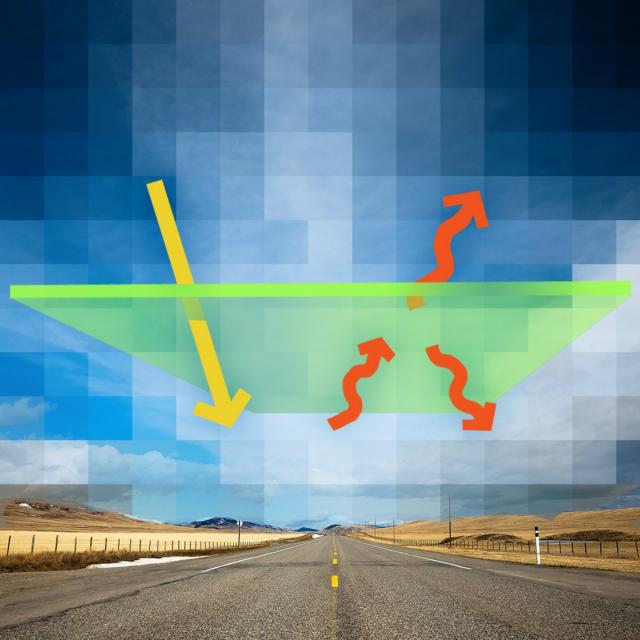
The objective of this course is to support urban water and sanitation utilities in transitioning to climate-resilient management by reducing their carbon emissions. This course, consisting of 4 modules, addresses the concept of climate change, its impacts, risks, and actions that can be employed for its mitigation, specifically within water and sanitation utilities. In this context, an introduction to climate financing is provided, explaining how companies can secure funding for projects that yield climate-related benefits.

Class Deals by MOOC List - Click here and see Coursera's Active Discounts, Deals, and Promo Codes.

Furthermore, a roadmap is developed, focusing on actions that water and sanitation companies can undertake to reduce their greenhouse gas emissions. To assess the carbon footprint, measure energy efficiency, and identify opportunities for performance improvement in the urban water sector, the course introduces the first holistic tool in the sector called ECAM, which stands for Energy Performance and Carbon Emissions Assessment and Monitoring Tool.
Part of] the material was produced by the Water and Wastewater Companies for Climate Mitigation (WaCCliM) project (2013-2022), a joint initiative between GIZ and the International Water Association (IWA). This project was part of the International Climate Initiative (IKI), financed by the Federal Government of Germany.

What you'll learn

  • Recognize the challenges that urban water and sanitation utilities face regarding climate change and sustainability.
  • Identify strategies to assess climate risks, greenhouse gas emissions, and energy consumption using tools like ECAM.
  • Identify strategies to reduce greenhouse gas emissions for water and sanitation utilities to transition to low-carbon operations.

Syllabus

Start Here
This course addresses the process of supporting urban water and sanitation utilities in transitioning to reducing their carbon emissions to contribute to climate change mitigation and to benefit from the impacts of this process. We will explore the five steps of the roadmap to carry out this process, as well as the use of the Energy and Carbon Performance Assessment and Monitoring (ECAM) tool, which serves, among other things, to assess the carbon footprint and measure energy efficiency. Finally, we will conclude by addressing climate risks in urban water and sanitation companies, as well as methodologies for their evaluation.

Module 1: Climate Change in the Urban Water Sector
In this introductory module of the course, we will delve into fundamental concepts such as climate change. Additionally, we will examine the ways in which water and sanitation companies both influence and are affected by this phenomenon. Finally, we will explore actionable strategies for mitigating and adapting to climate change.

Module 2: Roadmap to a Low-Carbon Urban Water Utility
In this module, we will focus on actions that water and sanitation companies can take to reduce their carbon emissions, following a five-step roadmap.

Module 3: Greenhouse Gas Emissions and Fundamentals of Calculating
In this module, we will explore the various greenhouse gas (GHG) emissions originating from water and wastewater utilities in the urban water sector. We will also learn how to utilize the ECAM tool to analyze GHG emissions within these companies, with the aim of identifying opportunities for performance improvement and emissions reduction.

Module 4: Climate Risks in the Water and Sanitation Sector
In this final module of the course, we will study what some of the climate risks are for water and wastewater management through available methodologies to assess them, as well as how they can be reduced.
Go to Class
MOOC List is learner-supported. When you buy through links on our site, we may earn an affiliate commission.

Related Courses

How Do We Manage Climate Change? (Coursera) Coursera
University of Colorado Boulder

How Do We Manage Climate Change? (Coursera)

In this course, learners will identify the types of actions that we can pursue to address climate change. These actions fall into two broad categories: 1) mitigation, which refers to efforts to reduce greenhouse gas emissions or enhance carbon sinks, and 2) adaptation, which refers to our preparations for climate impacts. We will explore the technologies, programs, and policies related to both mitigation and adaptation. Learners should leave the course with an improved ability to identify and evaluate climate actions undertaken by communities, governments, and businesses.

Aug 10th 2026
3 Weeks
Cybersecurity Policy for Water and Electricity Infrastructures (Coursera) Coursera
University of Colorado System

Cybersecurity Policy for Water and Electricity Infrastructures (Coursera)

This course will examine the drinking water and electricity infrastructures, and various policies that have been developed to help guide and strengthen their cybersecurity programs. The drinking water and electricity infrastructures are two of fourteen subsectors comprising what are known as "lifeline infrastructure". The 2013 National Infrastructure Protection Plan identifies four lifeline infrastructure sectors: 1) water, 2) energy, 3) transportation, and 4) communications. These sectors are designated "lifeline" because many other infrastructures depend upon them.

Aug 10th 2026
4 Weeks
Global Warming II: Create Your Own Models in Python (Coursera) Coursera
University of Chicago

Global Warming II: Create Your Own Models in Python (Coursera)

This class provides a series of Python programming exercises intended to explore the use of numerical modeling in the Earth system and climate sciences. The scientific background for these models is presented in a companion class, Global Warming I: The Science and Modeling of Climate Change. This class assumes that you are new to Python programming (and this is indeed a great way to learn Python!), but that you will be able to pick up an elementary knowledge of Python syntax from another class or from on-line tutorials.

Aug 10th 2026
5-12 Weeks
Our Energy Future (Coursera) Coursera
University of California, San Diego

Our Energy Future (Coursera)

This course is designed to introduce students to the issues of energy in the 21st century – including food and fuels – which are inseparably linked – and will discuss energy production and utilization from the biology, engineering, economics, climate science, and social science perspectives. This course will cover the current production and utilization of energy, as well as the consequences of this use, examining finite fossil energy reserves, how food and energy are linked, impacts on the environment and climate, and the social and economic impacts of our present energy and food production and use.

Aug 24th 2026
5-12 Weeks
Global Energy and Climate Policy (Coursera) Coursera
University of London,SOAS University of London

Global Energy and Climate Policy (Coursera)

The Global Energy and Climate Policy course offers an introduction to the theoretical and practical understanding of how energy and climate change policies are designed, shaped, advocated and implemented. As energy markets go truly global, domestic energy policies are becoming more and more entangled with wider issues of international governance. Concurrently, the urgent need to mitigate and adapt to climate change and transition to a low-carbon future is adding a further layer of complexity.

Aug 24th 2026
5-12 Weeks
Climate Aware Investing (Coursera) Coursera
EDHEC Business School

Climate Aware Investing (Coursera)

Finance may have a central role to play against climate change on the condition that risks are properly measured and managed. In this course you will be introduced to the latest academic research findings and the most commonly used methods in industry to cope with climate change financial risks. How do we assess these kinds of risks? Can our portfolios perform well and at the same time contribute to the transition towards a low-carbon economy? How do climate change risks affect financial markets?

Aug 10th 2026
5-12 Weeks
Introduction to the Arctic: Climate (Coursera) Coursera
University of Alberta

Introduction to the Arctic: Climate (Coursera)

The University of Alberta, the University of Tromso and the University of the Arctic invite you to explore this four week course that examines the environment and climate of the circumpolar North. This course is the result of an international collaboration and provides you with an insight into our planet's North. Following an overview of regional geography, we will focus on the cryosphere (ice), as well as the atmosphere and ocean of the region.

Aug 24th 2026
4 Weeks
Public Health Perspectives on Sustainable Diets (Coursera) Coursera
Johns Hopkins University

Public Health Perspectives on Sustainable Diets (Coursera)

What we eat and how we produce that food have significant effects on human health and the sustainability of our planet. But what is a ‘sustainable’ diet? A sustainable diet, as defined by the FAO, promotes health and well-being and provides food security for the present population while sustaining human and natural resources for future generations. This short course looks at the urgent need to address the sustainability of our food systems, including better understanding the complex relationship between diet and climate change. We’ll explore current research on dietary shifts needed in high, middle, and low-income countries to achieve both sustainability and food security goals and discuss evidence-based strategies to promote sustainable diets.

Aug 10th 2026
3 Weeks
Our Earth's Future (Coursera) Coursera
American Museum of Natural History

Our Earth's Future (Coursera)

Our Earth’s Future is about the science of climate change and how to talk about it. You will learn from scientists in the fields of climatology, oceanography, Earth science, and anthropology who study how climate change is affecting people, populations, and ways of life. Explore the multiple lines of evidence for the human-induced climate change that is happening today, and consider what that means for the future of our planet. At the end of this course you will be able to understand key scientific principles, identify and address misconceptions, and contribute confidently to conversations about climate change.

Aug 10th 2026
5-12 Weeks
Planning with Climate Change in Mind (Coursera) Coursera
University of Colorado Boulder

Planning with Climate Change in Mind (Coursera)

This course focuses on the climate impacts occurring and expected to occur across the United States. Our approach will be regional and sectoral, with consideration of impacts on water resources, transportation, energy, agriculture, forests, health, and coastal/marine resources. We will also look at how you can apply information about climate risks to motivate climate action in your household, in your community, or in your workplace.

Aug 10th 2026
3 Weeks