
Getting Started with Data Visualization in R (Coursera)

Getting Started with Data Visualization in R (Coursera)

Data visualization is a critical skill for anyone that routinely using quantitative data in his or her work - which is to say that data visualization is a tool that almost every worker needs today. One of the critical tools for data visualization today is the R statistical programming language. Especially in conjunction with the tidyverse software packages, R has become an extremely powerful and flexible platform for making figures, tables, and reproducible reports. However, R can be intimidating for first time users, and there are so many resources online that it can be difficult to sort through without guidance.

Class Deals by MOOC List - Click here and see Coursera's Active Discounts, Deals, and Promo Codes.

To fill that need, this course is intended for learners who have little or no experience with R but who are looking for an introduction to this tool. By the end of this course, students will be able to import data into R, manipulate that data using tools from the popular tidyverse package, and make simple reports using R Markdown. The course is designed for students with good basic computing skills, but limited if any experience with programming.

Course 1 of 5 in the Data Visualization & Dashboarding with R Specialization

Syllabus

WEEK 1
Getting Started with Data Management and Visualization with R
In this module, we will get set up with R to process data for visualizations. You should begin by watching the introductory videos in each lesson. Then, carefully review the readings and reference materials provided. Once you have done that, I recommend watching the videos again to check your understanding. You will take a few quizzes as you progress through the material to make sure you are keeping up.

WEEK 2
Using the Tidyverse packages
In this module, we will use functions from the tidyverse to manipulate data. You should begin by watching the introductory videos in each lesson. Then, carefully review the readings and reference materials provided. Once you have done that, I recommend watching the videos again to check your understanding. You will take a few quizzes as you progress through the material to make sure you are keeping up.

WEEK 3
Using R Markdown to Make Reports
In this module, we learn to make reproducible reports using R Markdown. You should begin by watching the introductory videos in each lesson. Then, carefully review the readings and reference materials provided. Once you have done that, I recommend watching the videos again to check your understanding. You will take a few quizzes as you progress through the material to make sure you are keeping up. Then, at the end of the module, you will submit an assignment for peer review that covers all of the material in this course.

Go to Class
MOOC List is learner-supported. When you buy through links on our site, we may earn an affiliate commission.

Related Courses

Fundamentals of Visualization with Tableau (Coursera) Coursera
University of California, Davis

Fundamentals of Visualization with Tableau (Coursera)

In this first course of the specialization, you will discover just what data visualization is, and how we can use it to better see and understand data. Using Tableau, we’ll examine the fundamental concepts of data visualization and explore the Tableau interface, identifying and applying the various tools Tableau has to offer.

Jun 15th 2026
4 Weeks
Algorithmic Toolbox (Coursera) Coursera
University of California, San Diego,Higher School of Economics - HSE University

Algorithmic Toolbox (Coursera)

The course covers basic algorithmic techniques and ideas for computational problems arising frequently in practical applications: sorting and searching, divide and conquer, greedy algorithms, dynamic programming. We will learn a lot of theory: how to sort data and how it helps for searching; how to break a large problem into pieces and solve them recursively; when it makes sense to proceed greedily; how dynamic programming is used in genomic studies. You will practice solving computational problems, designing new algorithms, and implementing solutions efficiently (so that they run in less than a second).

Jun 15th 2026
5-12 Weeks
Programming Languages, Part B (Coursera) Coursera
University of Washington

Programming Languages, Part B (Coursera)

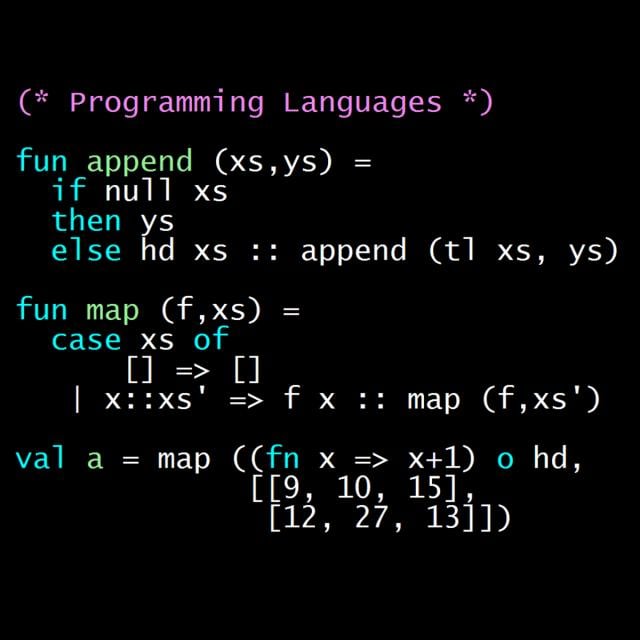
This course is an introduction to the basic concepts of programming languages, with a strong emphasis on functional programming. The course uses the languages ML, Racket, and Ruby as vehicles for teaching the concepts, but the real intent is to teach enough about how any language “fits together” to make you more effective programming in any language -- and in learning new ones. This course is neither particularly theoretical nor just about programming specifics -- it will give you a framework for understanding how to use language constructs effectively and how to design correct and elegant programs.

Jun 15th 2026
3 Weeks
Operations Analytics (Coursera) Coursera
University of Pennsylvania

Operations Analytics (Coursera)

This course is designed to impact the way you think about transforming data into better decisions. Recent extraordinary improvements in data-collecting technologies have changed the way firms make informed and effective business decisions. The course on operations analytics, taught by three of Wharton’s leading experts, focuses on how the data can be used to profitably match supply with demand in various business settings. In this course, you will learn how to model future demand uncertainties, how to predict the outcomes of competing policy choices and how to choose the best course of action in the face of risk.

Jun 15th 2026
4 Weeks
Data Visualization and Communication with Tableau (Coursera) Coursera
Duke University

Data Visualization and Communication with Tableau (Coursera)

One of the skills that characterizes great business data analysts is the ability to communicate practical implications of quantitative analyses to any kind of audience member. Even the most sophisticated statistical analyses are not useful to a business if they do not lead to actionable advice, or if the answers to those business questions are not conveyed in a way that non-technical people can understand. In this course you will learn how to become a master at communicating business-relevant implications of data analyses.

Jun 15th 2026
5-12 Weeks
Share Data Through the Art of Visualization (Coursera) Coursera
Google

Share Data Through the Art of Visualization (Coursera)

This is the sixth course in the Google Data Analytics Certificate. These courses will equip you with the skills needed to apply to introductory-level data analyst jobs. You’ll learn how to visualize and present your data findings as you complete the data analysis process. This course will show you how data visualizations, such as visual dashboards, can help bring your data to life. You’ll also explore Tableau, a data visualization platform that will help you create effective visualizations for your presentations.

Jun 16th 2026
4 Weeks
Analyze Data to Answer Questions (Coursera) Coursera
Google

Analyze Data to Answer Questions (Coursera)

This is the fifth course in the Google Data Analytics Certificate. These courses will equip you with the skills needed to apply to introductory-level data analyst jobs. In this course, you’ll explore the “analyze” phase of the data analysis process. You’ll take what you’ve learned to this point and apply it to your analysis to make sense of the data you’ve collected. You’ll learn how to organize and format your data using spreadsheets and SQL to help you look at and think about your data in different ways. You’ll also find out how to perform complex calculations on your data to complete business objectives.

Jun 16th 2026
4 Weeks
Introduction to User Experience Design (Coursera) Coursera
Georgia Institute of Technology

Introduction to User Experience Design (Coursera)

The focus of this course is to introduce the learner to User Experience (UX) Design. User Experience design is design that is user centered. The goal is to design artifacts that allow the users to meet their needs in the most effective efficient and satisfying manner. The course introduces the novice to a cycle of discovery and evaluation and a set of techniques that meet the user's needs.

Jun 15th 2026
5-12 Weeks