Mathematics for Computer Science (Coursera)

Mathematics for Computer Science (Coursera)

Welcome to Introduction to Numerical Mathematics. This is designed to give you part of the mathematical foundations needed to work in computer science in any of its strands, from business to visual digital arts, music, games.

Class Deals by MOOC List - Click here and see Coursera's Active Discounts, Deals, and Promo Codes.

At any stage of the problem solving and modelling stage you will require numerical and computational tools. We get you started in binary and other number bases, some tools to make sense of sequences of numbers, how to represent space numerical using coordinates, how to study variations of quantities via functions and their graphs. For this we prepared computing and everyday life problems for you to solve using these tools, from sending secret messages to designing computer graphics.
If you wish to take it further you can join the BSc Computer Science degree and complete the full module ‘Numerical Mathematics’. Enjoy!
Course 3 of 3 in the Introduction to Computer Science and Programming Specialization.

Syllabus

WEEK 1
Number bases - binary
In this week, we will cover the key concepts: Place value and Number systems. You will learn about the notion of number bases, how to do operate in binary.

WEEK 2
Number bases - other bases
In this week, we will extend the place value and number systems to Octal, Hexadecimal and any other bases. You will also be introduced to the usefulness of hexadecimal in computer science.

WEEK 3
Modular arithmetic
In this week, we will cover the key concept of congruence modulo an integer. You will also be introduced to the usefulness of congruence and modular arithmetic operations in computer science.

WEEK 4
Sequences
In this week, we will cover the key concept of number sequences. You will look into more detail at a special family of sequences, called progressions, and study arithmetic and geometric progressions.

WEEK 5
Series
In this week, we will cover the key concept of number series, building on number sequences. You will look into more detail at a special family of series arising from arithmetic and geometric progressions. You will look at expression summations of sequences using a compact form with a summation symbol.

WEEK 6
Introduction to Graph Sketching and Kinematics
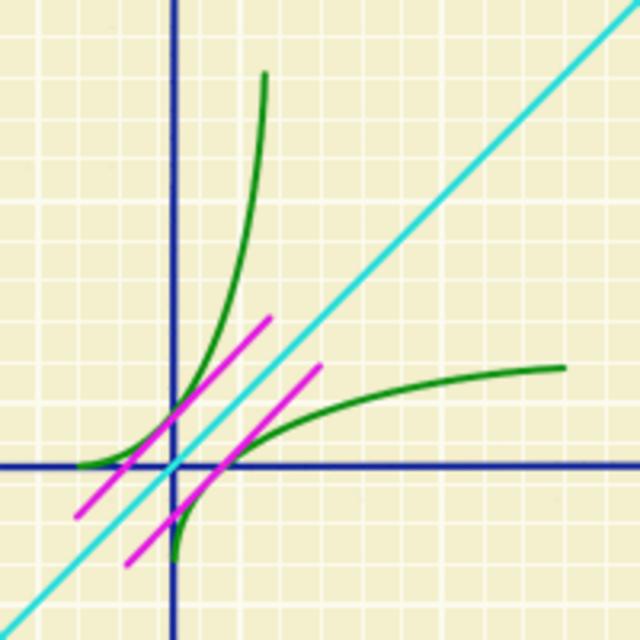
In this week, we will cover the key concept of coordinate system, functions and graphical representation of functions, and kinematics. You will look at the example of modelling motion.
Go to Class
MOOC List is learner-supported. When you buy through links on our site, we may earn an affiliate commission.

Related Courses

Kinematics: Describing the Motions of Spacecraft (Coursera) Coursera
University of Colorado Boulder

Kinematics: Describing the Motions of Spacecraft (Coursera)

The movement of bodies in space (like spacecraft, satellites, and space stations) must be predicted and controlled with precision in order to ensure safety and efficacy. Kinematics is a field that develops descriptions and predictions of the motion of these bodies in 3D space. This course in Kinematics covers four major topic areas: an introduction to particle kinematics, a deep dive into rigid body kinematics in two parts (starting with classic descriptions of motion using the directional cosine matrix and Euler angles, and concluding with a review of modern descriptors like quaternions and Classical and Modified Rodrigues parameters).

Sep 7th 2026
4 Weeks
Computer Science: Programming with a Purpose (Coursera) Coursera
Princeton University

Computer Science: Programming with a Purpose (Coursera)

The basis for education in the last millennium was “reading, writing, and arithmetic;” now it is reading, writing, and computing. Learning to program is an essential part of the education of every student, not just in the sciences and engineering, but in the arts, social sciences, and humanities, as well. Beyond direct applications, it is the first step in understanding the nature of computer science’s undeniable impact on the modern world.

Sep 7th 2026
5-12 Weeks
Information Theory (Coursera) Coursera
The Chinese University of Hong Kong

Information Theory (Coursera)

At the completion of this course, the student should be able to: demonstrate knowledge and understanding of the fundamentals of information theory; appreciate the notion of fundamental limits in communication systems and more generally all systems; develop deeper understanding of communication systems; apply the concepts of information theory to various disciplines in information science.

Sep 7th 2026
13-24 Weeks
Contenido de las matemáticas de primaria (Coursera) Coursera
Universidad de los Andes

Contenido de las matemáticas de primaria (Coursera)

En este curso de acceso gratuito*, conocerás algunos temas de las matemáticas escolares con la profundidad necesaria para que puedas ayudar a tus estudiantes a aprenderlas. En este curso, podrás conocer las matemáticas desde cuatro perspectivas: su historia, los conceptos y procedimientos que las caracterizan, las distintas formas en que se hacen presentes (p. ej., tablas, gráficas o expresiones simbólicas), y los fenómenos y situaciones que les dan sentido.

Sep 14th 2026
5-12 Weeks
Algorithms, Part II (Coursera) Coursera
Princeton University

Algorithms, Part II (Coursera)

This course covers the essential information that every serious programmer needs to know about algorithms and data structures, with emphasis on applications and scientific performance analysis of Java implementations. Part I covers elementary data structures, sorting, and searching algorithms. Part II focuses on graph- and string-processing algorithms.

Sep 14th 2026
5-12 Weeks
Build a Modern Computer from First Principles: Nand to Tetris Part II (project-centered course) (Coursera) Coursera
Hebrew University of Jerusalem

Build a Modern Computer from First Principles: Nand to Tetris Part II (project-centered course) (Coursera)

In this project-centered course you will build a modern software hierarchy, designed to enable the translation and execution of object-based, high-level languages on a bare-bone computer hardware platform. In particular, you will implement a virtual machine and a compiler for a simple, Java-like programming language, and you will develop a basic operating system that closes gaps between the high-level language and the underlying hardware platform.

Sep 14th 2026
5-12 Weeks
Mathematical Biostatistics Boot Camp 1 (Coursera) Coursera
Johns Hopkins University

Mathematical Biostatistics Boot Camp 1 (Coursera)

This class presents the fundamental probability and statistical concepts used in elementary data analysis. It will be taught at an introductory level for students with junior or senior college-level mathematical training including a working knowledge of calculus. A small amount of linear algebra and programming are useful for the class, but not required.

Sep 14th 2026
4 Weeks