EdX

Gestión del agua para las ciudades del futuro (edX)

Gestión del agua para las ciudades del futuro (edX)

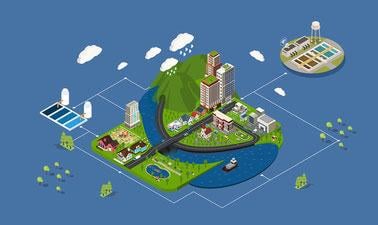
Este MOOC brinda herramientas para mejorar la gestión de los recursos hídricos en las ciudades bajo una visión integral y sostenibilidad. ¿Sabes cuáles son los desafíos a los que se enfrentan las ciudades relativos al agua? ¿Sabes cuáles son las acciones que puedes realizar para el mejor gestión del agua en tu ciudad?

Class Deals by MOOC List - Click here and see EdX's Active Discounts, Deals, and Promo Codes.

Este curso en línea gratis te presenta los principales desafíos y conceptos vinculados a la gestión del agua en el medio urbano relacionados con la gestión sostenible e integrada de los servicios de agua potable, saneamiento y drenaje y su vínculo con el entorno natural.
Para ello se revisan los aspectos institucionales, financieros y técnicos de la gestión del agua urbana y se examinan los enfoques de la economía circular, de visión de cuenca, de resiliencia y adaptación al cambio climático como mecanismos para garantizar el desarrollo sostenible de las ciudades.
Disponer de agua en cantidad y calidad es un elemento necesario para el bienestar de todos y para la prosperidad económica de cualquier territorio.
El curso está dirigido a funcionarios públicos, privado, técnicos, investigadores, docentes, estudiantes y todos vinculados con los procesos de gestión de aguas urbanas.
El futuro del agua y de las ciudades está en tus manos.

What you'll learn

  1. Identificar las características de las ciudades y la gestión de las aguas urbanas junto a los principales desafíos desde lo institucional, la gestión, la sostenibilidad financiera, aspectos de género y comunidades vulnerables.
  2. Identificar los enfoques integrales de gestión que vinculan el sistema de agua potable con el drenaje y saneamiento; y la vinculación con otras áreas urbanas.
  3. Reconocer enfoques de la economía circular, la resiliencia y visión de cuenca.
  4. Reconocer las fuentes principales y alternativas de suministro de agua.
  5. Reconocer los sistemas de saneamiento y drenaje urbano con énfasis en en sistemas resilientes y sostenibles.
  6. Describir la relación entre drenaje, saneamiento y sostenibilidad para la prevención de inundaciones incorporando herramientas para la planificación hídrica (HydroBID).
  7. Valorar la importancia del entorno natural y los beneficios su integración en las ciudades.
  8. Reconocer mecanismos de planificación para una gestión integrada de aguas urbanas incorporando mecanismos innovadores de financiamiento y tecnologías inteligentes.
  9. Distinguir los roles de los diferentes actores y su impacto en la en la gestión de aguas urbanas (planificadores urbanos, empresas de agua y saneamiento, entes reguladores y rectores, sociedad) en general)

Al finalizar el curso los participantes serán capaces de:
A. Identificar los principales desafíos, principios y conceptos vinculados a la gestión integrada de los recursos hídricos en el medio urbano, considerando los enfoques de la economía circular, del desarrollo de bajo impacto, de resiliencia, adaptación al cambio climático y de baja huella hídrica, entre otros.
B. Reconocer las dimensiones (técnica, política, económica, social, cultural y ambiental) y los factores clave que contribuyen al logro de una buena gobernanza de los recursos hídricos en el medio urbano.
C. Reconocer los principios y procesos para el diseño y adecuada gestión del abastecimiento resiliente de agua potable urbana.
D. Describir los principales elementos/metodologías para la gestión integrada de los sistemas de saneamiento y drenaje urbano, incluyendo sistemas de drenaje sostenibles.
E. Identificar los factores del desarrollo urbano sostenible en torno al agua, incluyendo conceptos de economía circular.
F. Describir herramientas para identificar las necesidades de los diferentes grupos de beneficiarios, teniendo en cuenta los temas de género y diversidad, potenciando los instrumentos y enfoques participativos para la toma de decisiones en los proyectos de gestión del agua urbana.

Syllabus

  • Comienza aquí
  • Módulo 1: La gestión del agua en las ciudades
  • Módulo 2: Gestión integral del agua urbana
  • Módulo 3: Gestion del agua para las ciudades del futuro
  • Finaliza aquí
Go to Class
MOOC List is learner-supported. When you buy through links on our site, we may earn an affiliate commission.

Related Courses

Innovative Environmental Management Models: Case Studies and Applications (edX) EdX
University System of Maryland - USM,USMx,University of Maryland Center for Environmental Science - UMCES,UMCES

Innovative Environmental Management Models: Case Studies and Applications (edX)

Utilizing extensive case studies of various ecosystems, you will learn how to effectively utilize science-based management to mitigate anthropogenic impacts and ensure resiliency and sustainability in your community. Case studies are the best means to analyze real world problems and assess viability of proposed solutions. We will explore a variety of ecosystems and determine how effectively they are managed given the specific challenges of each locale.

Self Paced
Self-Paced
Sustainable Supply Chain Planning, Sourcing, and Procurement (edX) EdX
International Supply Chain Education Alliance,ISCEA

Sustainable Supply Chain Planning, Sourcing, and Procurement (edX)

Learn the fundamental concepts of planning, sourcing, and procurement with applied sustainable techniques. The course will begin with content on how to integrate sustainability and circularity into planning and sourcing. The course demonstrates the importance of efficiency and long-term planning to ensure the minimization of waste and the maximization of productive Supply Chain flow.

Self Paced
Self-Paced
Sustainable Global Food Systems (edX) EdX
University of Edinburgh,EdinburghX

Sustainable Global Food Systems (edX)

How do we feed 11 billion people? Discover the importance of sustainable food systems on a global scale. We are currently facing one of the biggest challenges worldwide: how to feed a growing population without exhausting global resources. This course examines food security from a food systems perspective and illustrates the major global challenges present, from the environmental impact of food production to the public health impacts of current and future diets.

Self Paced
Self-Paced
Climate Change Science and Negotiations (edX) EdX
SDGAcademyX,SDG Academy

Climate Change Science and Negotiations (edX)

Humanity is up against a tight timeline to address climate change. Learn how we can deeply decarbonize the global energy systems, and put the world on a 2°C pathway. In this course, learn solutions to mitigate the effects of the global greenhouse gas emissions causing temperature rise, and how to apply these solutions in different national contexts improvements.

Self Paced
Self-Paced
Industrial Biotechnology (edX) EdX
Delft University of Technology,DelftX

Industrial Biotechnology (edX)

Learn the basics of sustainable processing for biobased products to further understand their impact on global sustainability. As fossil-based fuels and raw materials contribute to climate change, the use of renewable materials and energy as an alternative is increasingly important and common. This transition is not a luxury, but rather a necessity.

Self Paced
Self-Paced
Transforming Our World: Achieving the Sustainable Development Goals (edX) EdX
SDGAcademyX,SDG Academy

Transforming Our World: Achieving the Sustainable Development Goals (edX)

What will it take to achieve the Sustainable Development Goals by 2030? In this course, learn all about the 17 Sustainable Development Goals (SDGs). In September 2015, the world’s leaders signed on to this new agenda, answering the call for a global vision of important social, economic and environmental needs to support the planet and its people in long-term prosperity and survival.

Self Paced
Self-Paced
Sustainability & Major Sport Events: Principles (edX) EdX
Hamad Bin Khalifa University - HBKU,HBKUx

Sustainability & Major Sport Events: Principles (edX)

Learn the five pillars of sustainability and how to apply these when planning and hosting a major sport event. While any major sport event can pose great opportunities for the host city or region, there are also challenges associated with hosting these events. The environmental impact on the country's natural resources, the workforce, and infrastructure are just some of the considerations. It is essential to ensure that your major sport event is sustainable for your city throughout the event, but also after the event has been completed.

Self Paced
Self-Paced
Circular Economy for a Sustainable Built Environment (edX) EdX
Delft University of Technology,DelftX

Circular Economy for a Sustainable Built Environment (edX)

Learn how the principles of the Circular Economy can be applied to the built environment ranging from products and buildings to metropolitan and regional development strategies. In this course you will become familiar with circularity as a systemic, multi-disciplinary approach, concerned with the different scale, from material to product, building, city, and region.

Self Paced
Self-Paced