EdX

Global Housing Design (edX)

Global Housing Design (edX)

Learn about the key design strategies required to develop adequate housing and inclusive dwelling environments for sustainable urban development. Building adequate housing is a pressing issue worldwide. With close to a billion people currently living in slums, accommodating a growing population, and improving dwelling conditions is a critical issue for society.

Class Deals by MOOC List - Click here and see EdX's Active Discounts, Deals, and Promo Codes.

This challenge cannot be solved with a one-size-fits-all approach. Every city, region and country demand their own housing models and prototypes. That’s why housing design needs to negotiate many aspects simultaneously to achieve sustainable urban environments and inclusive dwelling communities.
This course uncovers how social, economic and environmental factors are interrelated in the design of housing settlements. For this, the course dives into three key aspects that anyone involved in housing design should take into consideration: time, environment, and community. Each of these aspects will be examined through a specific design approach, respectively:

  • Incrementality : how dwelling environments should be able to accommodate growth and change through time.
  • Typological mix : how design can be responsive to different patterns of inhabitation, aspirations and cultural backgrounds, creating inclusive dwelling environments.
  • Clustering : what methods and strategies can shape the association of dwelling units in order to create meaningful communities.

In this course, each of these themes will be discussed in detail and exemplified by a new analytical approach to award-winning housing projects developed in different historical periods.
While each of these themes will examine aspects related to the design decision-making process, the course aims at addressing concerns that go beyond the design disciplines. Hence, regardless of background or level of expertise, this course will introduce learners to the core issues and challenges of global housing design, using examples from different regions.
This course is part of the Inclusive and Sustainable Cities Professional Certificate.

What you'll learn

  • Identify social practices and spatial configurations that determine the qualities of existing dwelling communities.
  • Understand how incrementality, typological mix and clustering can become key design approaches in enhancing the living conditions of urban communities.
  • Recognize design approaches that can contribute to the development of adequate housing in low- and middle-income countries.
  • Compare the characteristics of housing schemes designed by different architects taking account of different social, political and geographical contexts.
  • Evaluate the performance of dwelling communities taking into consideration the relation between social, economic and environmental factors.
  • Formulate a design hypothesis and/or a managerial strategy to develop an inclusive housing cluster located in a city of a low- or middle- income country.

Prerequisites

  • Undergraduate-level education in architecture, urban design, or planning;

or

  • Previous knowledge in disciplines that deal with the built environment in general, and the development of housing in particular in social sciences (e.g. art and architectural history, anthropology, sociology) or applied sciences (e.g. civil engineering).

Syllabus

Week 1:
The course begins with an introduction to the main design themes, course structure and some other more practical matters. This week also provides opportunities for you to introduce yourself to all the other participants.
In the following weeks, the themes will be discussed in detail and exemplified by a new analytical approach to housing projects that have won the prestigious Aga Khan Award for Architecture, and that were developed in the 1970s and 1980s, a period of intense advancement in housing design and theory.

Week 2:
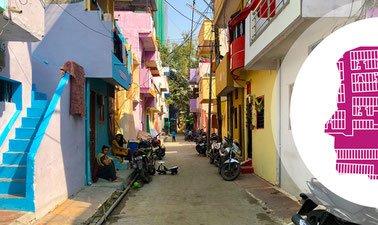
This module focuses on incrementality. We will discuss how housing can be designed to accommodate growth and change through time. This approach to housing design has been widely discussed and debated over the last century, and it is usually associated with a period of resource scarcity and economic austerity. The Indian architect, B.V. Doshi’s Aranya Low-Cost Housing project in Indore is a very good example of allowing people to build and mould their own houses, and best demonstrates his ideas for low-income housing and incrementality – that architecture must allow for growth and change. Designed for a population of about 60,000 people across some 85 hectares, Aranya, today, has grown to resemble a typical Indian town where narrow streets are shaded by a variety of houses, ranging from ground story dwellings to even three-floor high urban townhouses.

Week 3:
This module will discuss the importance of creating a typological mix in housing settlements. This design approach will be discussed through a close look to Shushtar New Town, a project designed by the Iranian architect, Kamran Diba. Shushtar was designed to house 30,000 industrial workers along the principles of traditional urban patterns typically found in old Iranian towns and cities. In this project, an interwoven urban fabric built in (mud) brick construction houses a diverse set of dwelling types that at the same time are carefully orchestrated in a master plan consisting of gardens, paved squares, covered and shaded resting places, arcades and bazaars.

Week 4:
This module focuses on clustering as a design strategy to create meaningful communities. We will study in-depth the Dar Lamane Housing project in Casablanca, Morocco. We will analyse how a low-income residential community built for 25,000 people, and consisting of over 4,000 units, makes use of an ingenious clustering of four-and five-story apartment blocks, organized around a large central square in which the mosque, markets and festival hall are located.

Week 5:
We will introduce the final assignment in which you will develop a critical stance towards the housing challenges in your own context, using the theories and tools presented during the course.

Week 6:
Review and final feedback.

Go to Class
MOOC List is learner-supported. When you buy through links on our site, we may earn an affiliate commission.

Related Courses

Machine Learning Foundations: A Case Study Approach (Coursera) Coursera
University of Washington

Machine Learning Foundations: A Case Study Approach (Coursera)

Do you have data and wonder what it can tell you? Do you need a deeper understanding of the core ways in which machine learning can improve your business? Do you want to be able to converse with specialists about anything from regression and classification to deep learning and recommender systems? In this course, you will get hands-on experience with machine learning from a series of practical case-studies.

Sep 14th 2026
5-12 Weeks
Machine Learning Algorithms (Coursera) Coursera
Sungkyunkwan University - SKKU

Machine Learning Algorithms (Coursera)

In this course you will: understand the naïve Bayesian algorithm; understand the Support Vector Machine algorithm; understand the Decision Tree algorithm; understand the Clustering. Please make sure that you’re comfortable programming in Python and have a basic knowledge of mathematics including matrix multiplications, and conditional probability.

Sep 28th 2026
4 Weeks
Data Science for Smart Cities (edX) EdX
Purdue University,PurdueX

Data Science for Smart Cities (edX)

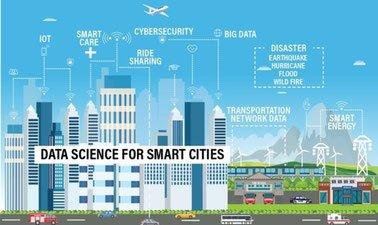
Learn various scientific techniques that will allow the analysis, inference and prediction of large-scale data (e.g. GPS vehicular data, social media data, mobile phone data, individual social network data etc.) that are present in city networks. The availability of low cost and ubiquitous sensors in city infrastructure provides high granular data at unprecedented spatiotemporal scales. “Smart Cities” envision to utilize this data to provide a healthy, happy and sustainable urban ecosystem by integrating the information and communication technology (ICT), Internet of things (IoT) and citizen participation to effectively manage and utilize city infrastructure and services.

No sessions available
13-24 Weeks
Building Inclusive Cities: Tackling Urban Inequality and Segregation (edX) EdX
Delft University of Technology,DelftX

Building Inclusive Cities: Tackling Urban Inequality and Segregation (edX)

Discover how urban design can help tackle inequality and socio-economic segregation in cities. Learn how to use analytical tools to measure these two phenomena and make urban design part of the solution. Urban design, inequality and segregation are strongly connected.

Self Paced
Self-Paced
Sustainable Cities: Governing Urban Adaptation Under Climate Change (FutureLearn) FutureLearn
University of Groningen,Global Center on Adaptation

Sustainable Cities: Governing Urban Adaptation Under Climate Change (FutureLearn)

Discover expert governance strategies for preparing urban areas to face the challenges posed by climate change. Learn how cities can successfully adapt to environmental change. In this course, you will investigate how governance strategies and policies for making cities more sustainable and resilient in the face of increasing climate risks can be financed and implemented.

Self Paced
3 Weeks
Machine Learning (Coursera) Coursera
Stanford University

Machine Learning (Coursera)

Machine learning is the science of getting computers to act without being explicitly programmed. In the past decade, machine learning has given us self-driving cars, practical speech recognition, effective web search, and a vastly improved understanding of the human genome. Machine learning is so pervasive today that you probably use it dozens of times a day without knowing it. Many researchers also think it is the best way to make progress towards human-level AI. In this class, you will learn about the most effective machine learning techniques, and gain practice implementing them and getting them to work for yourself. More importantly, you'll learn about not only the theoretical underpinnings of learning, but also gain the practical know-how needed to quickly and powerfully apply these techniques to new problems.

Sep 21st 2026
5-12 Weeks
Deep Learning and Reinforcement Learning (Coursera) Coursera
IBM

Deep Learning and Reinforcement Learning (Coursera)

This course introduces you to two of the most sought-after disciplines in Machine Learning: Deep Learning and Reinforcement Learning. Deep Learning is a subset of Machine Learning that has applications in both Supervised and Unsupervised Learning, and is frequently used to power most of the AI applications that we use on a daily basis. First you will learn about the theory behind Neural Networks, which are the basis of Deep Learning, as well as several modern architectures of Deep Learning.

Sep 14th 2026
5-12 Weeks
Build Regression, Classification, and Clustering Models (Coursera) Coursera
CertNexus

Build Regression, Classification, and Clustering Models (Coursera)

In most cases, the ultimate goal of a machine learning project is to produce a model. Models make decisions, predictions—anything that can help the business understand itself, its customers, and its environment better than a human could. Models are constructed using algorithms, and in the world of machine learning, there are many different algorithms to choose from. You need to know how to select the best algorithm for a given job, and how to use that algorithm to produce a working model that provides value to the business. This third course within the Certified Artificial Intelligence Practitioner (CAIP) professional certificate introduces you to some of the major machine learning algorithms that are used to solve the two most common supervised problems: regression and classification, and one of the most common unsupervised problems: clustering.

Sep 21st 2026
5-12 Weeks
Microsoft Azure Machine Learning (Coursera) Coursera
Microsoft

Microsoft Azure Machine Learning (Coursera)

Machine learning is at the core of artificial intelligence, and many modern applications and services depend on predictive machine learning models. Training a machine learning model is an iterative process that requires time and compute resources. Automated machine learning can help make it easier. In this course, you will learn how to use Azure Machine Learning to create and publish models without writing code.

Sep 21st 2026
4 Weeks
Entender el diseño (Coursera) Coursera
Arizona State University

Entender el diseño (Coursera)

¿Qué es el diseño? ¿Qué hacen los diseñadores para practicar su arte y que crean? ¿Qué importancia tiene el diseño de las corporaciones en la sociedad y la cultura? ¿Quiénes son algunos de los diseñadores más importantes de nuestra época y que han hecho? ¿Cómo uno puede convertirse en diseñador? Estas son algunas de las preguntas que exploraremos en este cuso introductorio de diseño.

Sep 21st 2026
5-12 Weeks
Data Warehousing and Business Intelligence (Coursera) Coursera
University of California, Irvine

Data Warehousing and Business Intelligence (Coursera)

This course builds on “The Nature of Data and Relational Database Design” to extend the process of capturing and manipulating data through data warehousing and data mining. Once the transactional data is processed through ETL (Extract, Transform, Load), it is then stored in a data warehouse for use in managerial decision making. Data mining is one of the key enablers in the process of converting data stored in a data warehouse into actionable insight for better and faster decision making.

Sep 21st 2026
4 Weeks
Unsupervised Learning, Recommenders, Reinforcement Learning (Coursera) Coursera
Stanford University,DeepLearning.AI

Unsupervised Learning, Recommenders, Reinforcement Learning (Coursera)

In the third course of the Machine Learning Specialization, you will: Use unsupervised learning techniques for unsupervised learning: including clustering and anomaly detection; Build recommender systems with a collaborative filtering approach and a content-based deep learning method; Build a deep reinforcement learning model.

Sep 21st 2026
3 Weeks