EdX

Fundamentals of Biomedical Imaging: Magnetic Resonance Imaging (MRI) (edX)

Fundamentals of Biomedical Imaging: Magnetic Resonance Imaging (MRI) (edX)

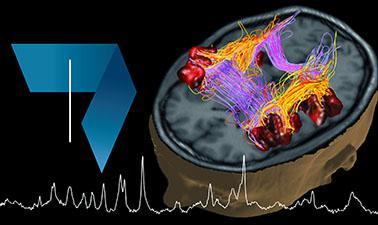
Learn about magnetic resonance, from the physical principles of Nuclear Magnetic Resonance (NMR) to the basic concepts of image reconstruction (MRI). This physics course covers the physical principles of major in vivo bio-imaging modalities.

Class Deals by MOOC List - Click here and see EdX's Active Discounts, Deals, and Promo Codes.

This course will focus on magnetic resonance imaging, also known as an MRI. In the first part of the course, the dynamic of spins in a magnetic field is described, leading to the essential notions of magnetic resonance (MR), excitation and relaxation. We will also discuss the basic mechanisms of image reconstruction, MR spectroscopy and functional MRI.
You will learn how existing physical principles transcend into bio-imaging and establish an important link into life sciences, illustrating the contributions physics can make to life sciences. Practical examples will be shown to illustrate the respective imaging modality, its use, premise and limitations, and biological safety will be touched upon.
During this course, you will develop a good understanding of the mechanisms leading to tissue contrast of the bio-imaging modalities covered in this course, including the inner workings of the scanner and how they define the range of possible biomedical applications. You will be able to judge which imaging modality is adequate for specific life science needs and to understand the limits and promises of each modality.

What you'll learn:

  • Understand the essential principles of operation of magnetic resonance (MRI).
  • Differentiate the imaging modalities, describe their fundamental promises and limitations.
  • Deduce which imaging technique is appropriate for a given situation.
  • Describe/analyze typical applications.

Course Syllabus

  1. Introduction to biological magnetic resonance (MR) - Boltzmann distribution, from spins to magnetization
  2. Excitation of spins, Relaxation, the Basis of MR contrast (The Bloch Equations)
  3. MR spectroscopy
  4. From Fourier to image: principles of MR image formation, k-space - echo formation
  5. Basic MRI contrast mechanisms, BOLD fMRI, contrast agents
  6. Advanced contrast mechanisms & overview of imaging modalities

Prerequisites
It is recommended to have followed Biomedical Imaging: Ultrasounds, X-ray, positron emission tomography (PET) and applications. It is also recommended to have followed introductory physics at the Bachelor level and to be familiar with the concept of Fourier transformation.

Go to Class
MOOC List is learner-supported. When you buy through links on our site, we may earn an affiliate commission.

Related Courses

Identifying Food Fraud (FutureLearn) FutureLearn
University of East Anglia

Identifying Food Fraud (FutureLearn)

An introduction to modern analytical science techniques and how they can be used to uncover food fraud. The food industry is one of the most important commercial sectors in the world. Everyone uses it, but how many people abuse it? As we witness the increasing globalisation of the supply chain, a growing challenge is verifying the questionable identity of raw materials in the food we eat.

Self Paced
4 Weeks
Caer o No caer. El secreto de las estructuras (edX) EdX
Universidad Carlos III de Madrid - UC3M,UC3Mx

Caer o No caer. El secreto de las estructuras (edX)

Las estructuras están presentes en todos los sistemas que nos rodean. Descubrirlas y comprender cómo funcionan es sencillo y fascinante. Las estructuras están implicadas en nuestras vidas: las plantas, los animales, casi todo lo que fabrica el ser humano, incluso nuestro propio cuerpo, deben soportar una serie de fuerzas sin romperse, y por lo tanto prácticamente cualquier elemento de nuestro entorno es una estructura de una clase u otra.

Self Paced
Self-Paced
Visualizing the Living Body: Diagnostic Imaging (Coursera) Coursera
Yale University

Visualizing the Living Body: Diagnostic Imaging (Coursera)

This course teaches learners the underlying principles behind conventional radiography, computerized axial tomography (CT), magnetic resonance imaging (MRI), and ultrasound. The radiology of chest, abdomen, pelvis, extremities, spine and brain are taught in this course using a combination of lectures and extensive practical activities and assessments.

Jul 27th 2026
5-12 Weeks
Vocal Recording Technology (edX) EdX
Berklee College of Music,BerkleeX

Vocal Recording Technology (edX)

Explore emerging innovations in vocal production, audio engineering, recording, and mixing. We are in the midst of an explosion of musical creativity as a result of technologies that allow you to record music using your laptop or tablet. Whether you are a singer, music producer, audio engineer, or just someone that likes to make good music with vocals, it is essential to have an understanding of vocal technologies for music production.

Self Paced
Self-Paced
Fundamental Neuroscience for Neuroimaging (Coursera) Coursera
Johns Hopkins University

Fundamental Neuroscience for Neuroimaging (Coursera)

Neuroimaging methods are used with increasing frequency in clinical practice and basic research. Designed for students and professionals, this course will introduce the basic principles of neuroimaging methods as applied to human subjects research and introduce the neuroscience concepts and terminology necessary for a basic understanding of neuroimaging applications.

Aug 10th 2026
4 Weeks
Basics of Nuclear Magnetic Resonance (FUN) FUN
Université Lille

Basics of Nuclear Magnetic Resonance (FUN)

Nuclear Magnetic Resonance (NMR) phenomenon is currently exploited for many purposes, including medical imaging using the MRI technique as well as the characterization of the structure and the dynamics of matter at atomic scale by NMR spectroscopy, which is a key tool in chemistry, structural biology, pharmacology and material sciences. NMR is also employed for oil exploration or the inspection of artworks. "Basics of Nuclear Magnetic Resonance" is the first course of a comprehensive three-part online learning programme on NMR.

Oct 5th 2021
5-12 Weeks
Nuclear Magnetic Resonance a Compass to Nanoworld (FUN) FUN
Université Lille

Nuclear Magnetic Resonance a Compass to Nanoworld (FUN)

Nuclear Magnetic Resonance (NMR) phenomenon is currently exploited for many purposes, including medical imaging using the MRI technique but also the characterization of the structure and the dynamics of matter at atomic scale by NMR spectroscopy, which is a key tool in chemistry, structural biology, pharmacology and material sciences. NMR is also employed for oil exploration or the inspection of artworks.

No sessions available
5-12 Weeks
Fundamentos de Mecánica para Ingeniería (edX) EdX
Universitat Politècnica de València,UPValenciaX

Fundamentos de Mecánica para Ingeniería (edX)

Estudiaremos la cinemática y la dinámica del punto, los conceptos de trabajo y potencia y la energía mecánica. Se aborda el estudio del universo físico analizando objetos en movimiento. Se definen y analizan todas las magnitudes y leyes físicas que permiten describir geométrica y causalmente el movimiento de cuerpos representados por un punto.

Self Paced
Self-Paced
Principles of fMRI 2 (Coursera) Coursera
Johns Hopkins University,University of Colorado Boulder

Principles of fMRI 2 (Coursera)

Functional Magnetic Resonance Imaging (fMRI) is the most widely used technique for investigating the living, functioning human brain as people perform tasks and experience mental states. It is a convergence point for multidisciplinary work from many disciplines. Psychologists, statisticians, physicists, computer scientists, neuroscientists, medical researchers, behavioral scientists, engineers, public health researchers, biologists, and others are coming together to advance our understanding of the human mind and brain. This course covers the analysis of Functional Magnetic Resonance Imaging (fMRI) data.

Jul 27th 2026
4 Weeks
Super-Earths And Life (edX) EdX
HarvardX,Harvard University

Super-Earths And Life (edX)

Learn about the Earth, life, and how we can search for life elsewhere in the universe. Are we alone in this universe? What new information and observations on exoplanets have we discovered? In the past decade, astronomers have made incredible advances in the discovery of planets outside our solar system. Thirty years ago, we knew only of the planets in our own solar system. Now we know of thousands circling nearby stars.

Self Paced
Self-Paced
Fundamentos de Comunicaciones Ópticas (edX) EdX
Universitat Politècnica de València,UPValenciaX

Fundamentos de Comunicaciones Ópticas (edX)

Se tratan conceptos básicos de las comunicaciones ópticas como el guiado, los modos, la atenuación o la dispersión y el diseño de sistemas. Este curso está destinado a estudiantes universitarios de la rama de las Tecnologías de la Información y las Comunicaciones que quieran conocer los mecanismos fundamentales de las comunicaciones por fibra óptica.

Self Paced
Self-Paced
Introduction to Neurohacking In R (Coursera) Coursera
Johns Hopkins University

Introduction to Neurohacking In R (Coursera)

Neurohacking describes how to use the R programming language and its associated package to perform manipulation, processing, and analysis of neuroimaging data. We focus on publicly-available structural magnetic resonance imaging (MRI). We discuss concepts such as inhomogeneity correction, image registration, and image visualization.

Aug 10th 2026
4 Weeks