Extracellular Vesicles in Health and Disease (Coursera)

Extracellular Vesicles in Health and Disease (Coursera)

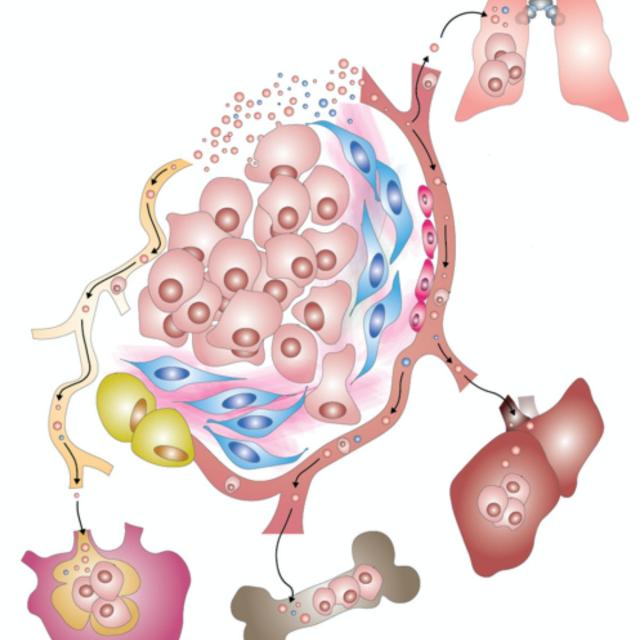
This course aims to provide current understanding about extracellular vesicles (EVs) and their role in health and diseases. The EVs are known to be involved in cell to cell communication. Apart from maintaining normal cell physiology, EVs deliver messages that can drive or influence the progression of a disease. This course discusses recent advances made in the field to give an introduction on their function in health as well as in disease.

Class Deals by MOOC List - Click here and see Coursera's Active Discounts, Deals, and Promo Codes.

This course includes four modules. Module 1 is an introduction to the course, and provides an overview of the previous MOOC on EVs “Basics of Extracellular Vesicles”. Module 2 focuses on the role of EVs in physiological conditions and gives various examples on their role in metabolism, inflammation, immunity and pregnancy and coagulation. This module also briefly covers the topic of microorganism-derived EVs such as vesicles from bacteria and discusses EVs from apoptotic and senescent cells. In Module 3, we focus on the role of EVs in cancer: how EVs can mediate communication between the tumour and its microenvironment, the functional role of immune cell-derived EVs in development of cancer, as well as the role of EVs in cancer cell proliferation, survival, metastasis and drug resistance. In Module 4, the role of EVs in diseases of the cardiovascular, haematopoietic, nervous, respiratory and urinary systems, and infectious diseases will be presented. This course is recommended for intermediate learners or anyone who is interested in the field of extracellular vesicles and their role in a particular disease including scientists, clinicians, or cell and molecular biologists who look to broaden their understanding of the field.

Syllabus

WEEK 1
Course Goals and Learning Objectives
This course aims to provide current understanding about extracellular vesicles (EVs) and their role in health and diseases. The EVs are known to be involved in cell to cell communication. Apart from maintaining normal cell physiology, EVs deliver messages that can drive or influence the progression of a disease. This course discusses recent advances made in the field to give an introduction on their function in health as well as in disease.
This course includes four modules. Module 1 is an introduction to the course, and provides an overview of the previous MOOC on EVs “Basics of Extracellular Vesicles”. Module 2 focuses on the role of EVs in physiological conditions and gives various examples on their role in metabolism, inflammation, immunity and pregnancy and coagulation. This module also briefly covers the topic of microorganism-derived EVs such as vesicles from bacteria and discusses EVs from apoptotic and senescent cells. In Module 3, we focus on the role of EVs in cancer: how EVs can mediate communication between the tumour and its microenvironment, the functional role of immune cell-derived EVs in development of cancer, as well as the role of EVs in cancer cell proliferation, survival, metastasis and drug resistance. In Module 4, the role of EVs in diseases of the cardiovascular, haematopoietic, nervous, respiratory and urinary systems, and infectious diseases will be presented. This course is recommended for intermediate learners or anyone who is interested in the field of extracellular vesicles and their role in a particular disease including scientists, clinicians, or cell and molecular biologists who look to broaden their understanding of the field.

WEEK 2
Physiological Function of EVs
In this module, we will discuss the role of extracellular vesicles in maintaining cellular homeostasis, why they are important for this process. How microorganism such as in gram positive and negative bacteria can secrete EVs, will be discussed. Altered EV secretion as a response to inflammation, stress and apoptosis or senescence will be highlighted. Furthermore, some examples will be provided on how EV cargo can influence cellular metabolism and the function of EVs in maintaining physiology of cells in pregnancy and coagulation.

WEEK 3
Pathophysiology of EVs in Cancer
This module will highlight the role of EVs in the progression of cancer and how the cargo delivered via EVs can directly influence cancer cell proliferation or metastatic properties. The communication between tumour and immune cells, stromal, and endothelial cells will be discussed. We will cover some of the considerations and guidelines that are important in utilising EVs as cancer biomarkers. Techniques that are commonly used to detect EVs, selection of biofluid for tumour EV biomarker analysis, model used in studying EVs, selection of specific EV cargo as biomarker and examples for studies on EVs as cancer biomarkers will be highlighted.

WEEK 4
Pathophysiology of EVs in Various Diseases
We will discuss the reported role of EVs in mediating the development of various diseases such as cardiovascular diseases, hematological disorders, neurological diseases, urological, respiratory diseases and infectious diseases. This module will also highlight some of the proposed EV associated biomarkers and some therapeutic strategies by utilizing EVs to deliver inhibitory molecule.

Go to Class
MOOC List is learner-supported. When you buy through links on our site, we may earn an affiliate commission.

Related Courses

HI-FIVE: Health Informatics For Innovation, Value & Enrichment (Administrative/IT Perspective) (Coursera) Coursera
Columbia University

HI-FIVE: Health Informatics For Innovation, Value & Enrichment (Administrative/IT Perspective) (Coursera)

HI-FIVE (Health Informatics For Innovation, Value & Enrichment) Training is an approximately 10-hour online course designed by Columbia University in 2016, with sponsorship from the Office of the National Coordinator for Health Information Technology (ONC). The training is role-based and uses case scenarios. No additional hardware or software are required for this course. Our nation’s healthcare system is changing at a rapid pace.

Jun 8th 2026
4 Weeks
Overcoming Dyslexia (Coursera) Coursera
Yale University

Overcoming Dyslexia (Coursera)

Dyslexia is everywhere, touching so many children and adults, and while science has made extraordinary progress in understanding and clarifying the condition, this incredible powerful knowledge rarely reaches those who most need to know and would greatly benefit from it. Our goal is to change all this with the Coursera you are about to view, produced by Dr. Sally Shaywitz, the Audrey G. Ratner Professor in Learning Development, both the leading scientist studying dyslexia and the most devoted advocate for helping those who are dyslexic.

Jun 13th 2026
5-12 Weeks
Health Across the Gender Spectrum (Coursera) Coursera
Stanford University

Health Across the Gender Spectrum (Coursera)

This course offers an intimate, story-based introduction to the experiences of six transgender children and their families. Through illustrated stories and short teaching videos, learners will gain a better understanding of gender identity and the gender spectrum. Stanford physicians, K-12 educators, and transgender faculty members offer practical tips for parents, teachers, healthcare providers and anyone who wants to help create a more gender-expansive environment - one in which all people can live authentically. As a global community of unique individuals, we can begin to build a world that is ready to nurture and love each and every child.

Jun 8th 2026
3 Weeks
Positive Psychology Specialization Project: Design Your Life for Well-hebeing (Coursera) Coursera
University of Pennsylvania

Positive Psychology Specialization Project: Design Your Life for Well-hebeing (Coursera)

You are encouraged to take the first four courses of the Foundations of Positive Psychology Specialization before starting this course and completing the Specialization Project. This course, taught by Dr. Martin E.P. Seligman brings all the key concepts from the first four courses to practice as you develop and test a new positive intervention for an audience of your choice.

Jun 8th 2026
4 Weeks
Public Involvement in Research (Coursera) Coursera
Imperial College London

Public Involvement in Research (Coursera)

This course focuses on participatory approaches in research, known as 'public involvement' in the UK. You'll specifically, consider why citizens and patients would be involved in research and explore participatory approaches across and within the research cycle in more detail, diving into questions such as: What kinds of participation can be undertaken at each of the 7 stages of the cycle? How can you utilise participation in research? What examples of using participatory approaches exist in research?

Jun 10th 2026
4 Weeks
Primeros Auxilios Psicológicos (PAP) (Coursera) Coursera
Universitat Autònoma de Barcelona

Primeros Auxilios Psicológicos (PAP) (Coursera)

Este curso on-demand (ABIERTO, se puede cursar en cualquier momento), impartido en castellano por la Universidad Autónoma de Barcelona y el Centro de Crisis de Barcelona, está destinado a entrenar en la aplicación de primeros auxilios psicológicos (PAP) a personas afectadas por situaciones altamente estresantes, abarcando tanto emergencias cotidianas (incidentes críticos estadísticamente frecuentes que afectan de manera muy intensa: un accidente de tráfico, una hospitalización, una agresión o la muerte traumática o repentina de una persona, etc.) como emergencias comunitarias y/o masivas (sucesos infrecuentes, que afectan a muchas personas o a una comunidad entera y que sobrepasan con mucho lo que sucede habitualmente en ella: una catástrofe natural, un accidente ferroviario o aéreo o un atentado).

Jun 8th 2026
5-12 Weeks
Doping : Sports, Organizations and Sciences (Coursera) Coursera
University of Lausanne

Doping : Sports, Organizations and Sciences (Coursera)

The objective of this course is to encourage a critical understanding of doping. To achieve this goal, this course will rely on a multidisciplinary approach that allow you to see how different disciplines get into a single object, in different perspectives and in often complementary ways. This approach will also allow us to appreciate the complexity of a subject like doping. Doping in sports is a complex practice whose definition and identification is the result of socially and historically constructed norms. This course offers to shed light on the processes that led to the use and prohibition of doping substances.

Jun 8th 2026
4 Weeks
HI-FIVE: Health Informatics For Innovation, Value & Enrichment (Clinical Perspective) (Coursera) Coursera
Columbia University

HI-FIVE: Health Informatics For Innovation, Value & Enrichment (Clinical Perspective) (Coursera)

HI-FIVE (Health Informatics For Innovation, Value & Enrichment) Training is a 12-hour online course designed by Columbia University in 2016, with sponsorship from the Office of the National Coordinator for Health Information Technology (ONC). The training is role-based and uses case scenarios. Also, it has additional, optional modules on other topics of interest or relevance. Although we suggest to complete the course within a month's timeframe, the course is self-paced and so you can start and finish the course at anytime during a month's time period. No additional hardware or software are required for this course.

Jun 8th 2026
4 Weeks
Genomics: Decoding the Universal Language of Life (Coursera) Coursera
University of Illinois at Urbana-Champaign

Genomics: Decoding the Universal Language of Life (Coursera)

What is a genome? A genome contains all of the information that a cell needs to develop, function, and reproduce itself, and all the information needed for those cells to come together to form a person, plant, or animal. Genomes contain an organism’s complete set of genes, and also the even tinier genetic structures that help regulate when and how those genes are used. The ability to regrow a torn ligament, the clues that might predict the onset of mental illness, the nutritional potential of crops, and even the history of life itself, are all encoded in genomes. By taking this course, you will discover how scientists are deciphering the language of genomes to learn how to develop sustainable food and fuel supplies, improve disease treatment and prevention, and protect our environment.

Jun 8th 2026
5-12 Weeks
Living with Dementia: Impact on Individuals, Caregivers, Communities and Societies (Coursera) Coursera
Johns Hopkins University

Living with Dementia: Impact on Individuals, Caregivers, Communities and Societies (Coursera)

Health professionals and students, family caregivers, friends of and affected individuals, and others interested in learning about dementia and quality care will benefit from completing the course. Led by Drs. Nancy Hodgson and Laura Gitlin, participants will acquire foundational knowledge in the care of persons with Alzheimer’s Disease and other neurocognitive disorders.

Jun 8th 2026
5-12 Weeks
Positive Psychology: Resilience Skills (Coursera) Coursera
University of Pennsylvania

Positive Psychology: Resilience Skills (Coursera)

Learn how to incorporate resilience interventions into your personal and professional life with Dr. Karen Reivich. In this course, you are exposed to the foundational research in resilience, including protective factors such as mental agility and optimism. Several types of resilience interventions are explored including cognitive strategies; strategies to manage anxiety and increase positive emotions such as gratitude; and a critical relationship enhancement skill.

Jun 8th 2026
4 Weeks