Exploring the Cell (Canvas.net)

Exploring the Cell (Canvas.net)

With content based on Next Generation Science Standards, this course explores the properties of life through the cell.

Participants will explore:

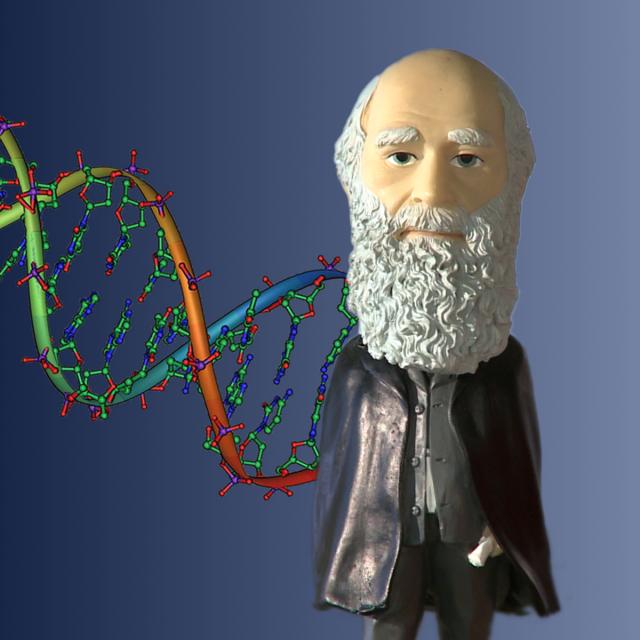
  • The structure and role of DNA and components of the cell.
  • Basic macromolecules, chemical bonding, energy transformation, and the role of enzymes.
  • The relationships between photosynthesis and cellular respiration, along with cell division.

More info:https://www.canvas.net/courses/exploring-the-cell

Go to Class
MOOC List is learner-supported. When you buy through links on our site, we may earn an affiliate commission.
Related Courses

The Little Stuff: Energy, Cells, and Genetics (Coursera) Coursera
University of Colorado Boulder

The Little Stuff: Energy, Cells, and Genetics (Coursera)

In this course, we will explore the smaller side of biology: molecular biology. We’ll cover basic topics including cell biology and how cells can go “rogue” and turn into cancer, how energy from the sun is transferred to fuel our bodies, basics of genetics and inheritance, and genetic technologies. At the end of this course, we will discuss ethical and moral implications of several exciting and new genetic technologies.

Jun 29th 2026
4 Weeks
The Brain and Space (Coursera) Coursera
Duke University

The Brain and Space (Coursera)

This course is about how the brain creates our sense of spatial location from a variety of sensory and motor sources, and how this spatial sense in turn shapes our cognitive abilities. Knowing where things are is effortless. But “under the hood,” your brain must figure out even the simplest of details about the world around you and your position in it.

Jun 22nd 2026
5-12 Weeks
Genetics and Society: A Course for Educators (Coursera) Coursera
American Museum of Natural History

Genetics and Society: A Course for Educators (Coursera)

How have advances in genetics affected society? What do we need to know to make ethical decisions about genetic technologies? This course includes the study of cloning, genetic enhancement, and ownership of genetic information. Course participants will acquire the tools to explore the ethics of modern genetics and learn how to integrate these issues into their classrooms.

Jun 29th 2026
4 Weeks
Introduction to Genomic Technologies (Coursera) Coursera
Johns Hopkins University

Introduction to Genomic Technologies (Coursera)

This course introduces you to the basic biology of modern genomics and the experimental tools that we use to measure it. We'll introduce the Central Dogma of Molecular Biology and cover how next-generation sequencing can be used to measure DNA, RNA, and epigenetic patterns. You'll also get an introduction to the key concepts in computing and data science that you'll need to understand how data from next-generation sequencing experiments are generated and analyzed.

Jun 22nd 2026
4 Weeks
Introduction to Forensic Science (Coursera) Coursera
Nanyang Technological University

Introduction to Forensic Science (Coursera)

We have all seen forensic scientists in TV shows, but how do they really work? What is the science behind their work? The course aims to explain the scientific principles and techniques behind the work of forensic scientists and will be illustrated with numerous case studies from Singapore and around the world.

Jun 29th 2026
5-12 Weeks
Epidemics - the Dynamics of Infectious Diseases (Coursera) Coursera
Pennsylvania State University

Epidemics - the Dynamics of Infectious Diseases (Coursera)

Not so long ago, it was almost guaranteed that you would die of an infectious disease. In fact, had you been born just 150 years ago, your chances of dying of an infectious disease before you've reached the tender age of 5 would have been extremely high. Since then, science has come a long way in understanding infectious diseases - what they are, how they spread, and how they can be prevented. But diseases like HIV/AIDS, Malaria, Tuberculosis, or the flu are still major killers worldwide, and novel emerging diseases are a constant threat to public health. In addition, the bugs are evolving. Antibiotics, our most potent weapon against bacterial infections, are losing their power because the bacteria are becoming resistant. In this course, we'll explore the major themes of infectious diseases dynamics.

Jun 22nd 2026
5-12 Weeks
The Big Stuff: Evolution and Ecology (Coursera) Coursera
University of Colorado Boulder

The Big Stuff: Evolution and Ecology (Coursera)

In this course, we will explore how evolution works to generate new species, the wide variety of life on earth. We will also touch on the importance of biodiversity for the overall health of our planet, and for our well being as humans. Then we will discuss ecology and the interconnectedness of life and touch on one big ecological issue in today’s society, conservation.

Jun 29th 2026
4 Weeks
Finding Mutations in DNA and Proteins (Bioinformatics VI) (Coursera) Coursera
University of California, San Diego

Finding Mutations in DNA and Proteins (Bioinformatics VI) (Coursera)

In previous courses in the Specialization, we have discussed how to sequence and compare genomes. This course will cover advanced topics in finding mutations lurking within DNA and proteins. In the first half of the course, we would like to ask how an individual's genome differs from the "reference genome" of the species.

Jun 22nd 2026
5-12 Weeks