Experimental Design Basics (Coursera)

Experimental Design Basics (Coursera)

This is a basic course in designing experiments and analyzing the resulting data. The course objective is to learn how to plan, design and conduct experiments efficiently and effectively, and analyze the resulting data to obtain objective conclusions. Both design and statistical analysis issues are discussed. Opportunities to use the principles taught in the course arise in all aspects of today’s industrial and business environment. Applications from various fields will be illustrated throughout the course. Computer software packages (JMP, Design-Expert, Minitab) will be used to implement the methods presented and will be illustrated extensively.

Class Deals by MOOC List - Click here and see Coursera's Active Discounts, Deals, and Promo Codes.

All experiments are designed experiments; some of them are poorly designed, and others are well-designed. Well-designed experiments allow you to obtain reliable, valid results faster, easier, and with fewer resources than with poorly-designed experiments. You will learn how to plan, conduct and analyze experiments efficiently in this course.
What You Will Learn
By the end of this course, you will be able to:

  • Approach complex industrial and business research problems and address them through a rigorous, statistically sound experimental strategy
  • Use modern software to effectively plan experiments
  • Analyze the resulting data of an experiment, and communicate the results effectively to decision-makers.

Course 1 of 4 in the Design of Experiments Specialization.

Syllabus

WEEK 1: Getting Started and Introduction to Design and Analysis of Experiments
WEEK 2: Simple Comparative Experiments
WEEK 3: Experiments with a Single Factor - The Analysis of Variance
WEEK 4: Randomized Blocks, Latin Squares, and Related Designs
WEEK 5: Project

Go to Class
MOOC List is learner-supported. When you buy through links on our site, we may earn an affiliate commission.

Related Courses

Applied Text Mining in Python (Coursera) Coursera
University of Michigan

Applied Text Mining in Python (Coursera)

This course will introduce the learner to text mining and text manipulation basics. The course begins with an understanding of how text is handled by python, the structure of text both to the machine and to humans, and an overview of the nltk framework for manipulating text. The second week focuses on common manipulation needs, including regular expressions (searching for text), cleaning text, and preparing text for use by machine learning processes. The third week will apply basic natural language processing methods to text, and demonstrate how text classification is accomplished. The final week will explore more advanced methods for detecting the topics in documents and grouping them by similarity (topic modelling).

Sep 14th 2026
4 Weeks
Response Surfaces, Mixtures, and Model Building (Coursera) Coursera
Arizona State University

Response Surfaces, Mixtures, and Model Building (Coursera)

Factorial experiments are often used in factor screening.; that is, identify the subset of factors in a process or system that are of primary important to the response. Once the set of important factors are identified interest then usually turns to optimization; that is, what levels of the important factors produce the best values of the response. This course provides design and optimization tools to answer that questions using the response surface framework.

Aug 24th 2026
4 Weeks
Manufacturing Process Control II (edX) EdX
MIT,MITx

Manufacturing Process Control II (edX)

Learn how to control process variation, including methods to design experiments that capture process behavior and understand means to control variability. As part of the Principles of Manufacturing MicroMasters program, this course will build on statistical process control foundations to add process modeling and optimization.Building on formal methods of designed experiments, the course develops highly applicable methods for creating robust processes with optimal quality.

Oct 17th 2023
5-12 Weeks
Behavioural Economics in Action (edX) EdX
University of Toronto,University of TorontoX

Behavioural Economics in Action (edX)

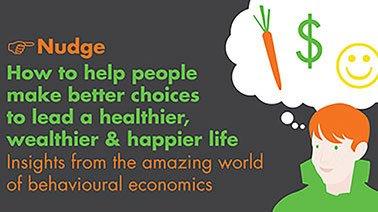
Learn to use principles and methods of behavioural economics to change behaviours, improve welfare and make better products and policy. How can we get people to save more money, eat healthy foods, engage in healthy behaviors, and make better choices in general? There has been a lot written about the fact that human beings do not process information and make decisions in an optimal fashion.

Self Paced
Self-Paced
ANOVA and Experimental Design (Coursera) Coursera
University of Colorado Boulder

ANOVA and Experimental Design (Coursera)

This second course in statistical modeling will introduce students to the study of the analysis of variance (ANOVA), analysis of covariance (ANCOVA), and experimental design. ANOVA and ANCOVA, presented as a type of linear regression model, will provide the mathematical basis for designing experiments for data science applications. Emphasis will be placed on important design-related concepts, such as randomization, blocking, factorial design, and causality. Some attention will also be given to ethical issues raised in experimentation.

Aug 24th 2026
4 Weeks
Introduction to Genomic Technologies (Coursera) Coursera
Johns Hopkins University

Introduction to Genomic Technologies (Coursera)

This course introduces you to the basic biology of modern genomics and the experimental tools that we use to measure it. We'll introduce the Central Dogma of Molecular Biology and cover how next-generation sequencing can be used to measure DNA, RNA, and epigenetic patterns. You'll also get an introduction to the key concepts in computing and data science that you'll need to understand how data from next-generation sequencing experiments are generated and analyzed.

Sep 14th 2026
4 Weeks
Probabilistic Graphical Models 2: Inference (Coursera) Coursera
Stanford University

Probabilistic Graphical Models 2: Inference (Coursera)

Probabilistic graphical models (PGMs) are a rich framework for encoding probability distributions over complex domains: joint (multivariate) distributions over large numbers of random variables that interact with each other. These representations sit at the intersection of statistics and computer science, relying on concepts from probability theory, graph algorithms, machine learning, and more.

Sep 14th 2026
5-12 Weeks
The DMAIC Framework: Analyze, Improve, and Control Phase (Coursera) Coursera
SkillUp EdTech

The DMAIC Framework: Analyze, Improve, and Control Phase (Coursera)

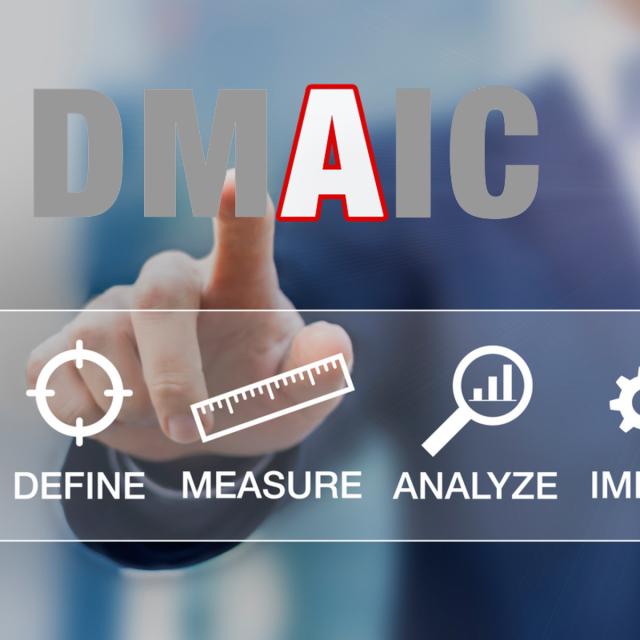
The course will teach you the competencies and essential skills required to pass the American Society for Quality (ASQ) Certified Six Sigma Green Belt (CSSGB) exam. This course focuses specifically on the last three phases of the define, measure, analyze, improve, and control (DMAIC) framework and will enable you to analyze the root causes of existing issues, implement solutions, and ensure the process's sustainability. You will gain insight into data analysis techniques such as hypothesis testing and regression analysis and be able to develop control plans for process improvement.

Aug 31st 2026
5-12 Weeks